Where AI meets robotics: humanoid robots and labs racing to ship them, embodied foundation models, warehouse and industrial deployments, and the investor and policy backdrop.
Stories
724
Latest source update
August 24, 2026
Coverage
Live
Topic brief
What to know about Robotics
Brief updated Aug 4, 2026
Robotics is the engineering of machines that sense, decide and act in the physical world, and its current wave is defined by the fusion of robotics with modern AI, often called physical AI or embodied AI. Where classical robots were programmed for narrow, repetitive tasks, today's systems increasingly learn general skills from data, using foundation models, world models and vision-language-action architectures to perceive their surroundings and adapt. Humanoids, autonomous trucks, robotaxis, drones, port equipment and industrial manipulators are the visible edge of the shift.
For AI and engineering practitioners, robotics is where models leave the screen and take on real-world consequences. It couples perception, control and learning with hard constraints such as safety, latency, energy and reliability that pure software systems rarely face. Data is the deepest bottleneck: action-conditioned demonstrations are expensive to collect, so much of the tooling effort now goes into teleoperation, licensed demonstration datasets, simulation-ready 3D asset pipelines and shared evaluation harnesses. Claims in this field also need harder reading than in software, because most headline success rates are company-reported on tasks the company chose.
The stakes are economic and geopolitical. Automakers, logistics firms, ports and defense agencies are among the earliest adopters, national governments are funding domestic robot industries and writing procurement and import restrictions, and safety standards for autonomous machines are being drafted in real time. Because physical AI touches manufacturing, transport, defense and labor, decisions about which robots to deploy, how to train them and how to govern them carry weight well beyond the lab.
What changed recently
The model layer split cleanly into two tiers in late July. Google launched Gemini Robotics ER 2 on July 30 through the Gemini API and Google AI Studio as a high-level orchestrator that coordinates lower-level robot controls, monitors video for task progress and supports collaboration between robots, reporting 57.4% accuracy on progress classification and 91.3% on moment finding, both company-published figures rather than independently reproduced benchmarks. Google DeepMind launched Gemini Robotics 2 the same day, extending its vision-language-action model from upper-body actions to whole-body humanoid control covering walking, crouching and two-handed manipulation. Mimic Robotics and Black Forest Labs unveiled FLUX-mimic on July 23, an industrial-manipulation video-action model built on FLUX 3 that pairs the multimodal backbone with an action decoder; Mimic reports 95% success on a soft-body kitting test against 55% for an adapted pi0.5 and 70% for a task-trained baseline, tested at Audi and still company-reported. Mistral released Robostral Navigate on July 8, an 8B navigation model trained entirely in simulation that uses a single RGB camera instead of LiDAR or depth sensors, reporting 76.6% success on R2R-CE validation unseen and 79.4% on validation seen. Because essentially every headline figure here is vendor-published, the tooling that lets you re-run the claim matters as much as the model: Hugging Face released LeRobot v0.6.0 on July 7 with world-model policies, reward-model support, six simulation benchmarks under lerobot-eval and rollout tooling with human corrections, and NVIDIA and Hugging Face made Isaac GR00T 1.7 and Isaac Teleop available through LeRobot.
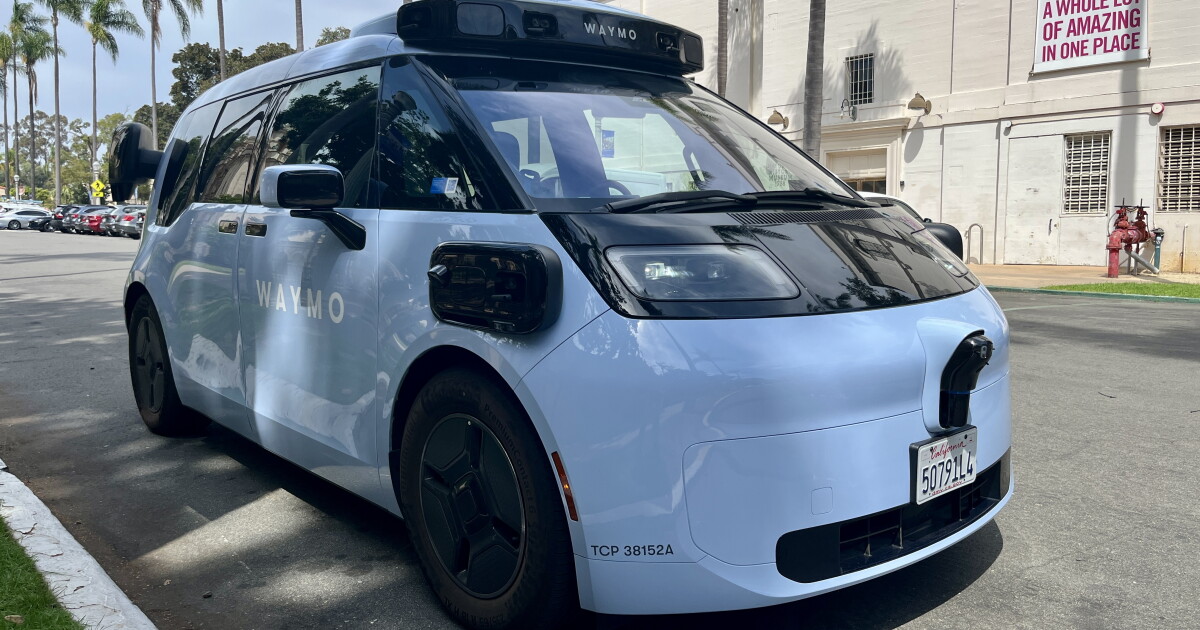
Policy moved just as fast, and it now bites at procurement. On July 28 the FCC added foreign-produced advanced robotic devices and power inverters to its Covered List, which blocks covered new models from receiving the equipment authorization generally required for U.S. marketing or import; previously authorized models are not retroactively barred, and manufacturers can seek conditional approval from designated federal departments. The House passed its fiscal 2027 defense authorization bill on July 22 with a Section 163 provision that would bar the Pentagon from procuring, leasing or operating certain humanoid robots tied to foreign adversaries, leaving U.S. commercial sales untouched according to the South China Morning Post. On the road, NHTSA granted Zoox a temporary exemption on July 30 to deploy up to 2,500 purpose-built robotaxis in each 12-month period for two years, with Zoox planning to start charging in Las Vegas in August once state requirements are met, and IIHS reported on July 23 that Waymo's driverless Level 4 vehicles had 68% fewer police-reportable crash involvements per mile than human drivers in San Francisco, Phoenix, Los Angeles and Austin while warning that federal reporting and mileage data are inadequate for continuous monitoring. If you are specifying or buying robots now, production origin and authorization status belong in the same diligence packet as sensor redundancy, supervised test miles and first-responder procedures.
What to watch
On the regulatory side, watch whether the FCC's conditional-approval route through designated federal departments is actually used and by which manufacturers, whether the Section 163 humanoid restriction survives into an enacted fiscal 2027 defense authorization, whether New Jersey's S1677 advances with its requirement for cameras plus two distinct sensing modalities and 50,000 miles of in-state supervised testing, and whether Rep. Kevin Mullin's AV Emergency Response Coordination Act moves beyond proposal with its standardized emergency guides and 30-second hotline standard. On deployment, the checkable items are whether Zoox begins charging in Las Vegas in August after clearing remaining state requirements, whether IIHS obtains the public mileage denominators and consistent crash definitions it says are missing, whether Xpeng holds its end-2026 mass-production target for the Iron humanoid after robotics head Mi Liangchuan's departure, whether Tesla's late-2026-or-early-2027 Semi autonomy target survives the roughly six-month deprioritization Musk described, whether Humanoid starts the Q4 2026 beta deployments it funded with its $152 million Series A, and whether Anduril and Archer fly Thunder in 2027 as planned. On evidence quality, the open questions are whether Mimic's 95% soft-body kitting result is independently reproduced, whether Figure publishes repeatability, failure-case or verification data for the Figure 03 ladder climb Brett Adcock described as fully autonomous, and whether Jack Technology names a supplier, factory tasks or rollout timetable for the 2,000 humanoids Siemens reported it ordered.
Comparison
role
model
developer
availability
reported results
Embodied-reasoning orchestrator that coordinates lower-level robot controls, monitors video for task progress and supports multi-robot collaboration
Gemini Robotics ER 2
Google
Launched July 30, 2026 through the Gemini API and Google AI Studio
Google reports 57.4% accuracy on progress classification and 91.3% on moment finding; both are company-published figures, not independently reproduced
Vision-language-action model translating vision and language into motor commands, extended from upper-body actions to whole-body humanoid control
Gemini Robotics 2
Google DeepMind
Launched July 30, 2026
DeepMind describes motions from walking and crouching to two-handed object manipulation; no independent benchmark has been published
Video-action model for industrial manipulation built on the FLUX 3 backbone with an action decoder that converts latent video predictions into robot actions
FLUX-mimic
Mimic Robotics with Black Forest Labs
Unveiled July 23, 2026; tested at Audi on named manipulation tasks
Mimic reports 95% success on a soft-body kitting test versus 55% for an adapted pi0.5 and 70% for a task-trained baseline, and about 30 minutes of data for some tasks; all company-reported
8B robotics-navigation model that uses a single RGB camera rather than LiDAR, depth sensors or multi-camera rigs, trained entirely in simulation
Robostral Navigate
Mistral
Released July 8, 2026
Mistral reports 76.6% success on R2R-CE validation unseen and 79.4% on validation seen
4-billion-parameter world model for local vision reasoning and robot-action workflows on edge hardware including Jetson Thor
Cosmos 3 Edge
NVIDIA
Introduced for NVIDIA edge systems; more than 20 Japanese organizations intend to join the Cosmos Coalition
NVIDIA's one-day adaptation and six-times-faster development claims are vendor benchmarks that still require independent, workload-specific validation
Frequently asked questions
What did the FCC's July 28 action change for anyone buying robots in the US?+
The FCC added foreign-produced advanced robotic devices and power inverters to its Covered List, which prevents covered new models from receiving the equipment authorization generally required for U.S. marketing or import. Previously authorized models are not retroactively barred, according to Associated Press reporting, and manufacturers can seek conditional approval from designated federal departments. The rule is written around foreign production rather than named Chinese companies, though independent reporting expects the immediate market impact to fall heavily on Chinese manufacturers. In practice, teams should verify model authorization status, production origin, remote access and firmware-update controls before procurement. Separately, the House passed its fiscal 2027 defense authorization bill on July 22 with a Section 163 provision restricting Pentagon procurement, leasing and operation of certain humanoid robots tied to foreign adversaries; the South China Morning Post reports the current language leaves U.S. commercial sales untouched.
Which robot-policy models shipped recently, and how solid are their numbers?+
Gemini Robotics ER 2 is available through the Gemini API and Google AI Studio as of July 30, with Google reporting 57.4% progress-classification accuracy and 91.3% moment-finding accuracy, both company-published rather than independently reproduced. Gemini Robotics 2 from Google DeepMind, launched the same day, adds whole-body humanoid control. FLUX-mimic, unveiled July 23 by Mimic Robotics with Black Forest Labs, reports 95% success on a soft-body kitting test versus 55% for an adapted pi0.5 and 70% for a task-trained baseline, tested at Audi. Mistral's Robostral Navigate, released July 8, is an 8B single-RGB-camera navigation model trained entirely in simulation reporting 76.6% on R2R-CE validation unseen and 79.4% on validation seen. Every one of those figures is published by the developer, so held-out tasks, failure recovery, safety and end-to-end latency remain your own tests to run.
Where does paid robotaxi authorization stand right now?+
NHTSA granted Zoox a temporary exemption on July 30 allowing commercial deployment of up to 2,500 purpose-built robotaxis in each 12-month period for two years, and Zoox says it will begin charging in Las Vegas in August after completing remaining state requirements. The exemption covers specified vehicle-safety standards for a car without conventional driver controls; it is not a blanket endorsement of the driving system or an authorization for unrestricted nationwide service. IIHS reported on July 23 that Waymo's driverless Level 4 fleet had 68% fewer police-reportable crash involvements per mile than human drivers in four cities, while cautioning that federal reporting and mileage data cannot support continuous monitoring as deployments grow. Two proposals are pending rather than in force: New Jersey's S1677 would require cameras plus two distinct sensing modalities and 50,000 miles of in-state supervised testing before driverless commercial service, and Rep. Kevin Mullin's AV Emergency Response Coordination Act, introduced July 28, would require standardized emergency guides, a continuously staffed hotline answered within 30 seconds and a federal process for temporary geofence notices.
How much capital went into physical AI in this stretch, and on what terms?+
Atoms announced a $1.7 billion equity investment led by Andreessen Horowitz on July 22, with Ben Horowitz joining its board; founder Travis Kalanick said the company consolidated its businesses under one equity structure to pursue industrial AI across mining, heavy transport and food production, and the announcement disclosed no product performance or deployment metrics. Humanoid announced a $152 million Series A on July 21 at a $1.35 billion post-money valuation, taking total funding to $270 million, with beta deployments planned for Q4 2026. Augmodo raised $21 million at a $350 million valuation led by TQ Ventures to push its Smartbadge spatial AI platform beyond retail. Mowito raised $3 million in a pre-seed led by Version One Ventures for demonstration-based teaching of unmodified industrial arms. Worldmodeldata announced a GBP 7 million seed for licensed gameplay datasets, though Tech Funding News reported that round closed in December 2025 without finalized customer contracts.
What are teams doing about the demonstration-data bottleneck?+
Three approaches show up. Collect from humans instead of robot fleets: Orbbec told Lets Data Science its capture module pairs dual 2MP global-shutter fisheye cameras at 1600x1200 with a 6-axis IMU sampling at 400 to 1000Hz, synchronized across modalities to 1ms or better, across head-mounted EGO, handheld UMI and wrist-mounted WristCam frameworks. Standardize the training loop: Hugging Face's LeRobot v0.6.0 added world-model policies, reward-model support, six simulation benchmarks under lerobot-eval and rollout tooling with human corrections, and NVIDIA put Isaac GR00T 1.7 and Isaac Teleop inside those workflows. Generate or license data: NVIDIA's Omniverse libraries include ovrtx for RTX-based sensor simulation, ovphysx for GPU-accelerated physics and CAD-to-SimReady skills for converting CAD data into OpenUSD-based SimReady assets, while Worldmodeldata is building licensed gameplay datasets with synchronized video, controls, telemetry and 3D state.
How much weight should I put on humanoid demonstrations?+
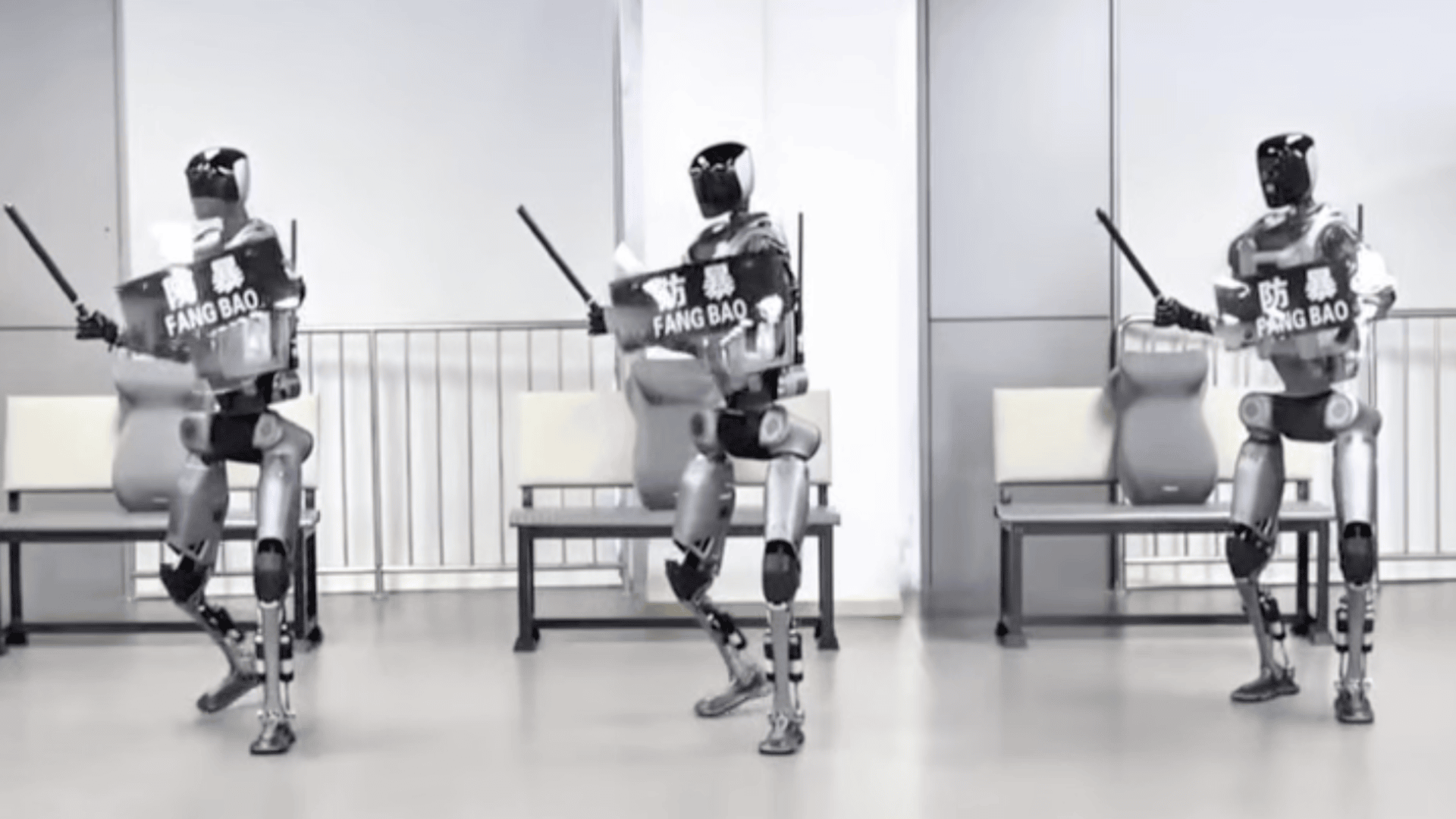
Treat them as company demonstrations unless conditions are published. Figure CEO Brett Adcock posted a video on August 1 of Figure 03 climbing a ladder and described it as fully autonomous with no teleoperation or pre-mapped path, but the public material discloses no test conditions, repeatability data, failure cases or independent verification. A Qualcomm Dragonwing IQ10-powered humanoid fell during a Computex 2026 presentation in June; Qualcomm called it a designed safe-collapse during a controlled shutdown after a communication glitch but has not released telemetry or an engineering postmortem. A viral Indonesian clip of a robot appearing to attack office staff was a choreographed demonstration, according to Interesting Engineering. The more useful public evidence is competitive and operational: RoboCup staged a full 11-vs-11 humanoid soccer match on hardware in Incheon on July 5, where B-Human beat HTWK Robots 4-0, and Tau Robotics began invite-only humanoid home cleaning in San Francisco at $30 per hour with human operators assisting each task.