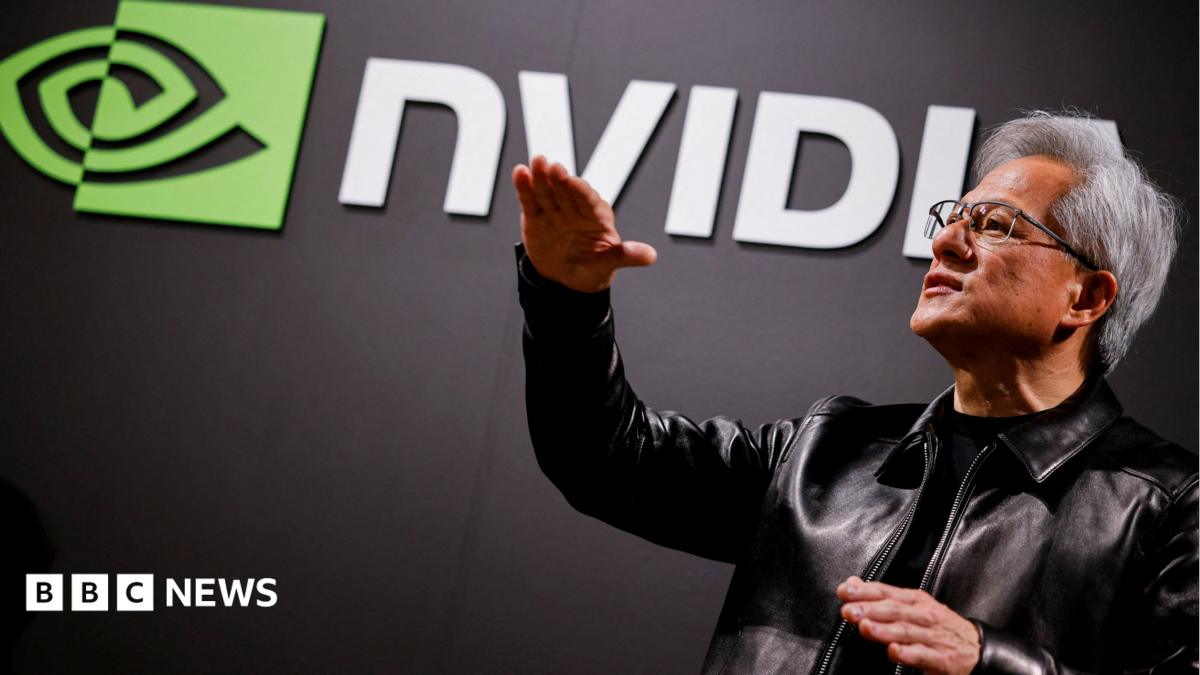
NVIDIA introduces Cosmos 3 Edge for Japan's physical-AI push
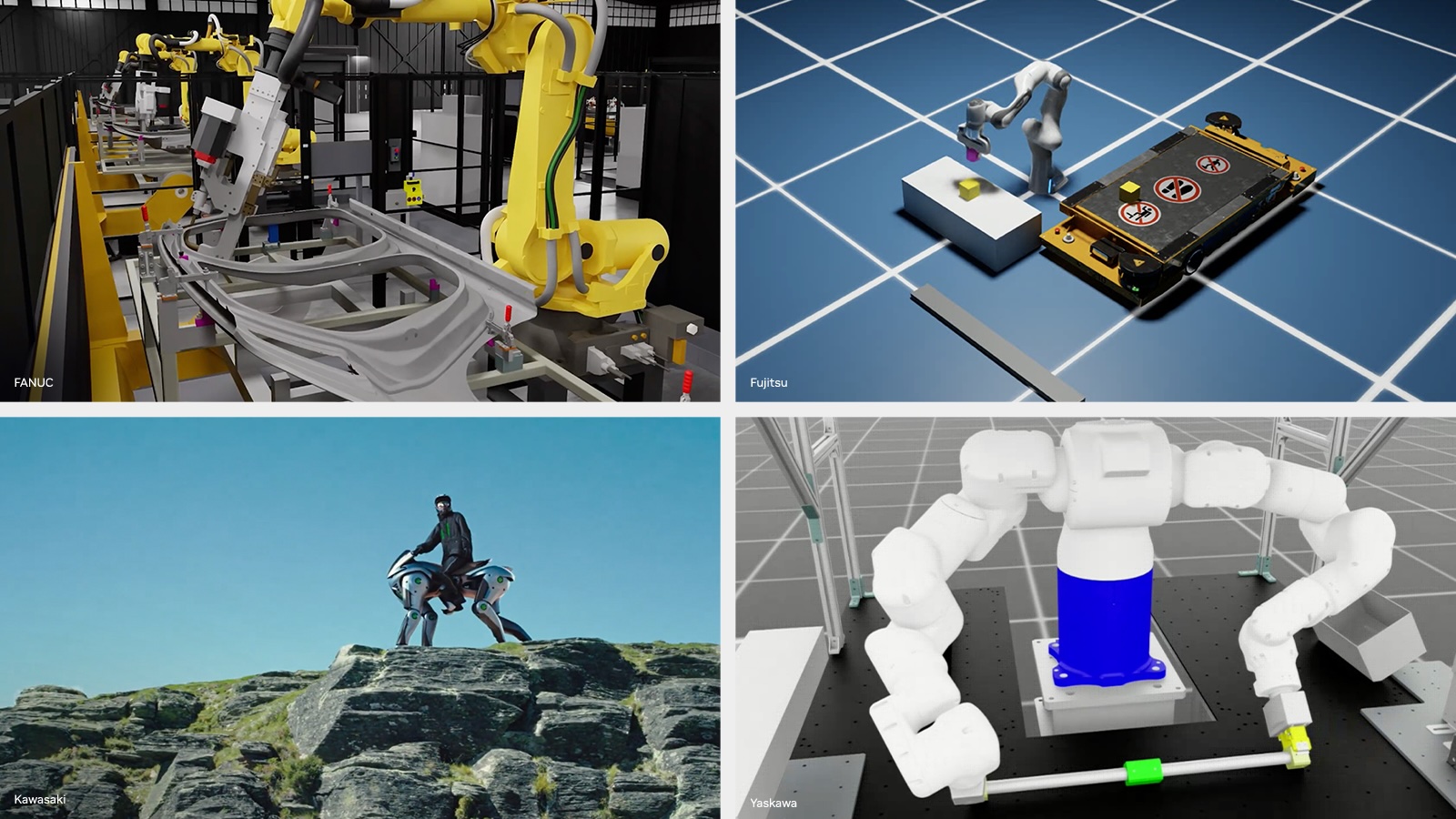
NVIDIA has introduced Cosmos 3 Edge, a 4-billion-parameter world model designed for local vision reasoning and robot-action workflows on edge hardware including Jetson Thor. The company also says more than 20 Japanese organizations intend to join its Cosmos Coalition, while Fujitsu and several robotics manufacturers are exploring a broader physical-AI platform. The release connects a compact model, deployment hardware and an industrial ecosystem, but it does not prove production-scale adoption or independently measured performance. Teams should treat NVIDIA's one-day adaptation and six-times-faster development claims as vendor benchmarks until reproducible workload evidence is available.
What NVIDIA announced
NVIDIA introduced Cosmos 3 Edge, a 4-billion-parameter model in its Cosmos 3 open world-model family. The company says it is built on NVIDIA Nemotron and is designed to help robots and vision-AI systems understand their surroundings, reason locally and generate actions on edge computers.
The model can run across NVIDIA RTX GPUs, DGX systems and Jetson hardware, including the newly announced T2000 and T3000 modules. NVIDIA also announced Cosmos-based Metropolis libraries for developing and operating video-intelligence agents.
The Japan ecosystem component
The model launch is part of a wider Japan-focused physical-AI announcement. NVIDIA says more than 20 organizations intend to join the Cosmos Coalition, including AIRoA, FANUC, Fujitsu, Hitachi, Kawasaki Heavy Industries, Kubota, NEC, SoftBank, Sony and Yaskawa Electric.
Associated Press independently reported that NVIDIA CEO Jensen Huang and Fujitsu CEO Takahito Tokita presented a physical-AI initiative in Tokyo alongside leaders from FANUC, Yaskawa Electric and Kawasaki Heavy Industries. That confirms the industrial collaboration, but participation and exploration should not be described as completed deployment.
| Announced element | What is established | What still needs proof |
|---|---|---|
| Cosmos 3 Edge | A 4B-parameter edge-oriented world model was announced | Independent task accuracy, latency, power and reliability results |
| Coalition expansion | More than 20 Japanese organizations intend to participate | Concrete contributions, release schedules and production use |
| Fujitsu-led platform work | Fujitsu and robotics companies are exploring physical-AI opportunities | Final architecture, commercial terms and deployment dates |
| Faster development claims | NVIDIA reports one-day model adaptation and at least 6x faster Metropolis workflows | Reproducible methods and results on customer workloads |
Why edge execution matters
Robots and industrial vision systems cannot always wait for a cloud round trip. Running perception and action models closer to sensors can reduce latency, limit bandwidth use and keep more operational data on site. It also moves difficult engineering constraints onto the device: memory, thermal limits, power consumption, failure recovery and end-to-end response time all become part of the model evaluation.
NVIDIA says developers can adapt Cosmos 3 Edge to specific robots, vehicles, sensors and environments in about a day. That is a vendor claim, not a universal expectation. Adaptation time depends on the quality of task data, simulation assets, hardware integration, safety requirements and the definition of success.
LDS assessment
The important shift is the combination of an adaptable edge model, deployment hardware and a large industrial ecosystem—not the model announcement alone. Japan's robotics and manufacturing base gives the program credible partners, while NVIDIA supplies the model, simulation and compute stack.
For practitioners, the release should trigger workload-specific testing rather than immediate platform commitment. Teams should measure task success, tail latency, power use, robustness to distribution changes and safe recovery after perception errors. Coalition membership and vendor benchmarks are useful signals, but dependable physical AI will be demonstrated only through reproducible evaluations and sustained production deployments.
Key Points
- 1Cosmos 3 Edge is a 4-billion-parameter model intended for local vision reasoning and robot-action workflows on NVIDIA edge systems.
- 2More than 20 Japanese organizations intend to join the Cosmos Coalition, but participation does not equal completed deployment.
- 3NVIDIA's adaptation-speed and development-speed claims require independent, workload-specific validation.
Scoring Rationale
A new edge-oriented world model combined with a broad Japanese industrial ecosystem is technically and strategically relevant, while availability, partner deployments and performance claims remain partly forward-looking.
Sources
Primary source and supporting public references used for this report.
Practice interview problems based on real data
1,625 SQL & Python problems across 15 industry datasets — the exact type of data you work with.
Try 250 free problems