GeoPT Uses Synthetic Dynamics to Pretrain Neural Simulators
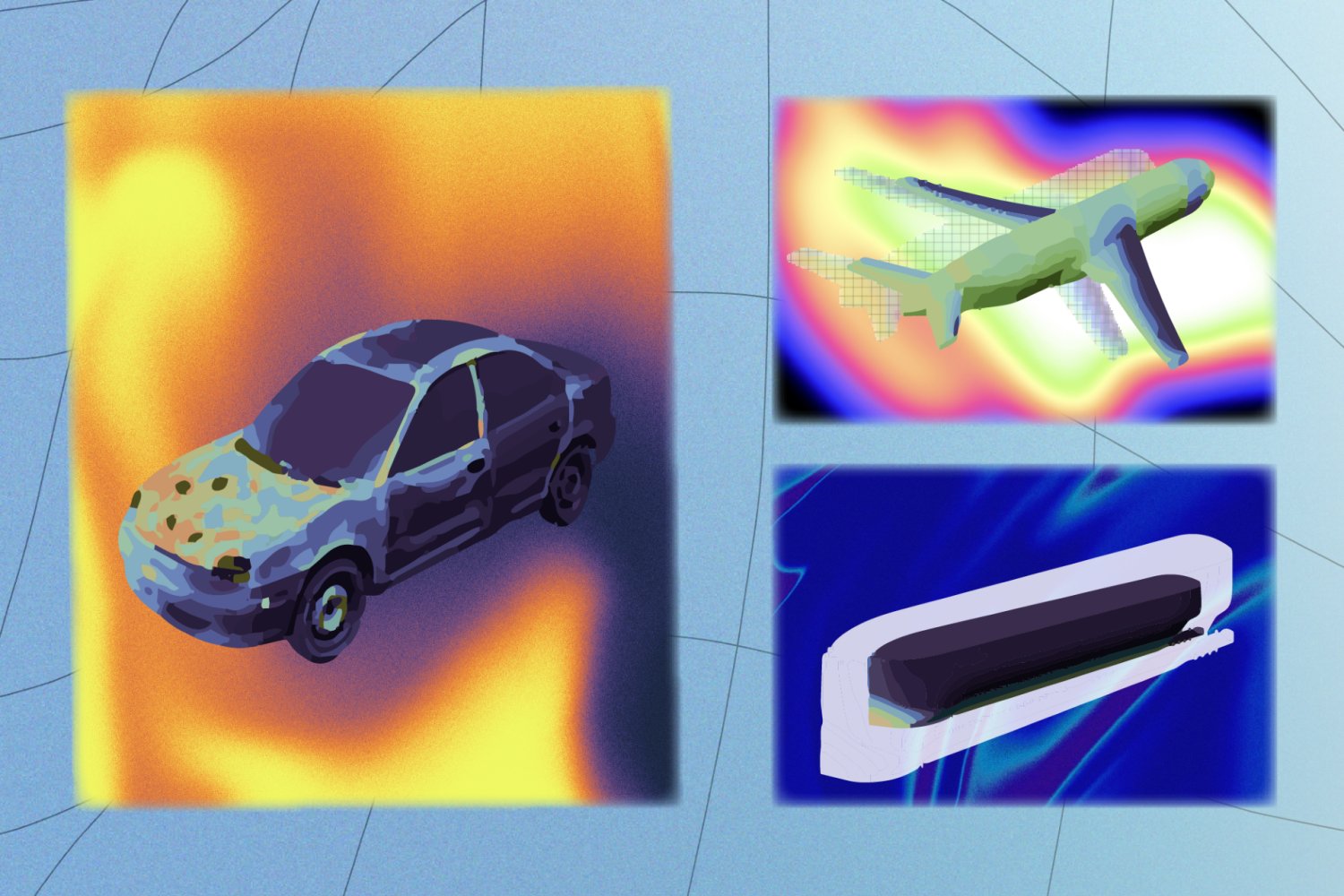
A February 23 paper from MIT CSAIL and Tsinghua University researchers presented GeoPT, a pretraining method that augments 3D geometry with synthetic dynamics; MIT highlighted the work on August 10. The ICML 2026 paper reports 20-60% lower labeled-data requirements and up to 2x faster convergence across fluid- and solid-mechanics benchmarks, with code released by the authors.
Researchers from MIT CSAIL and Tsinghua University presented GeoPT, a pretraining approach for neural physics simulators, in a paper first posted February 23 and later listed by ICML 2026. MIT highlighted the work on August 10. GeoPT adds synthetic dynamics to static 3D geometry during pretraining, then transfers the learned representation to fluid- and solid-mechanics tasks.
The method addresses a data bottleneck in learned simulation. High-fidelity numerical solvers can produce labels for engineering applications, but generating enough labeled runs across geometries and operating conditions is expensive. The authors instead generated more than one million solver-free geometric-walk samples from unlabeled shapes.
Reported benchmark results
The paper reports evaluations spanning car and aircraft aerodynamics, ship hydrodynamics, and crash simulation. Relative to the comparison models used by the authors, GeoPT reportedly:
- •reduced labeled-data requirements by 20-60%;
- •accelerated convergence by up to 2x; and
- •improved results across the reported fluid- and solid-mechanics benchmarks.
These are author-reported benchmark findings, not independently replicated production measurements. The paper and project code are public, which makes the method inspectable, but the published results do not establish performance for every geometry, solver, or operating regime.
How the pretraining signal works
Static geometry captures boundaries and structure but not how motion, flow, or collision evolves. GeoPT samples dynamics conditions such as velocity fields and uses geometry-bounded transport trajectories as self-supervision. The resulting representation is intended to encode interactions between shape and dynamics before task-specific fine-tuning with solver-generated labels.
For ML teams building surrogate models, the practical promise is data efficiency: a useful pretrained representation could reduce the number of costly simulations needed for a downstream design task. The important deployment questions remain transfer to unseen geometries and boundary conditions, fidelity against production solvers, and whether the reported gains persist under engineering constraints beyond the paper's benchmarks.
Key Points
- 1GeoPT uses synthetic dynamics during geometric pretraining to address the mismatch between static shape representations and downstream physics prediction.
- 2The ICML 2026 paper reports 20-60% lower labeled-data requirements and up to 2x faster convergence across fluid- and solid-mechanics benchmarks.
- 3The paper was first posted February 23; MIT's August 10 article was a later research highlight, not the method's original release date.
Scoring Rationale
GeoPT addresses a consequential bottleneck for physics-informed ML and engineering surrogate models: the cost of generating labeled simulation data. Its reported gains span multiple industrial simulation domains, though the results remain author-reported and require broader validation for production adoption.
Sources
Primary source and supporting public references used for this report.
Practice interview problems based on real data
1,625 SQL & Python problems across 15 industry datasets — the exact type of data you work with.
Try 250 free problems