Asian Sell-Off Hits Tech Stocks, Pressures AI Valuations
An Asian sell-off hit technology stocks and put pressure on AI-related valuations. The market analysis covers S&P 500, Nikkei 225, Hang Seng, and NVIDIA Corporation.
Everything on NVIDIA: GPU architectures and launches, CUDA and software updates, AI platform partnerships, data center wins, and the earnings that keep moving the industry.

An Asian sell-off hit technology stocks and put pressure on AI-related valuations. The market analysis covers S&P 500, Nikkei 225, Hang Seng, and NVIDIA Corporation.

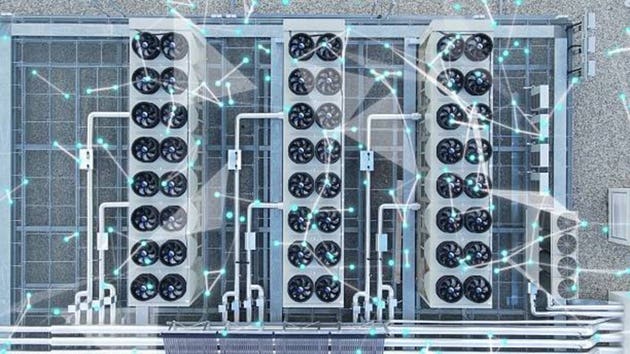
Per NVIDIA's blog post, the company presented the Rubin reference design, a fully liquid-cooled AI infrastructure that achieves 100% liquid cooling and "zero water consumption" through a closed-loop coolant system (NVIDIA blog). NVIDIA states the coolant can operate at 45 degrees C (113 degrees F) and that the design removes the need for evaporative water cooling except in rare climates, a claim quoted from Ali Heydari, director of data center cooling and infrastructure at NVIDIA (NVIDIA blog; Fortune). Axios reports Josh Parker, NVIDIA's chief sustainability officer, saying "The water consumption challenge for data centers is largely solved" ahead of London Climate Week (Axios). Press coverage notes this design could materially reduce cooling-related water and energy use, but real-world impact will depend on deployment scale, build cost, and site-specific conditions (Fortune; Gizmodo; Axios).
The AI chip sector experienced a sharp two-day sell-off in early June that erased significant market value across semiconductor names. The Motley Fool reports the Philadelphia Semiconductor Index fell 10.3% on June 5, 2026, and that Marvell Technology (NASDAQ: MRVL) dropped about 20% over two days. The Motley Fool also reports Broadcom missed an AI revenue whisper by roughly $1.2 billion, and a stronger-than-expected U.S. jobs report reduced hopes for a near-term rate cut, according to the same piece. TipRanks and NBC News report the weakness spread globally, hitting Nvidia, AMD, Micron, Intel, and regional markets such as South Korea's Kospi. Bloomberg reports Nvidia CEO Jensen Huang described the rout as a buying opportunity, and several market outlets framed the moves as profit-taking amid valuation concerns.
Autobrains, an Israeli autonomous-driving startup, announced a robotaxi programme in Munich in partnership with Uber and Nvidia, according to a joint press release posted on Uber's investor site. The partners say the programme will combine Autobrains' Agentic AI driving software, Nvidia DRIVE Hyperion compute, and Uber's ride-hailing platform, and will be OEM-agnostic and compatible with standard vehicle sensor setups, per coverage in Electrive and Automotive World. Regulatory approval in Germany is pending, the press release and reporting note. Autobrains founder and CEO Igal Raichelgauz told The Jerusalem Post, "We created a unique system for autonomous driving through agentic artificial intelligence, which breaks down the reasoning into small tasks," and described features such as human-supervised test drives and passenger-facing explanations.

At ISC High Performance 2026 and in concurrent Nvidia releases, the company highlighted agentic AI workflows for scientific research and new supercomputing platforms. At a media briefing, Dion Harris, Nvidia's senior director of HPC and AI Factory Solutions, said "We are currently witnessing a massive inflection point with agentic AI," and described agents that call simulators, surrogate models and tools as part of unified workflows (The Register). Nvidia's June 22 press materials announce the Vera Rubin rack-scale platform delivering 7 Exaflops of AI for Science and 5 Petaflops of native FP64, and a separate Nvidia blog details the Los Alamos National Laboratory systems Mission, Vision and Veritas built with HPE and Nvidia hardware, including about 2,300 and 1,150 standalone Vera CPUs in planned configurations (Nvidia blog; Nvidia press release). Reporting also names new software components ALCHEMI, DAQIRI and cuPhoton as part of Nvidia's scientific stack (The Register).

According to NVIDIA's press release and coverage by HPCWire and Wccftech, 35 NVIDIA AI HPC supercomputers are in development across 23 European countries, representing about 800 AI exaflops of deployed or announced capacity since last year. NVIDIA and partners describe the program as equipping more than 3 million researchers via national supercomputing centers, AI factories and academic sites; named deployments include Barcelona Supercomputing Center's MareNostrum5 AI upgrade and BavariaAI's Blue Swan, among others (sources: NVIDIA press release; HPCWire; Wccftech). The announced stacks cite NVIDIA platforms such as Blackwell, Hopper, NVIDIA Quantum InfiniBand, CUDA-X, NIM microservices and NVIDIA AI Enterprise software (source: NVIDIA press release as carried by HPCWire). Editorial analysis: industry observers will watch capacity allocation, software stacks, and access models as Europe absorbs this scale of AI compute.

Fervo Energy announced a collaboration with NVIDIA and the Pacific Northwest National Laboratory to develop EGS-Twin, a next-generation digital twin platform for Enhanced Geothermal Systems, according to a press release distributed via GlobeNewswire. The release says PNNL researchers will use Fervo field data to train scalable AI models on NVIDIA AI infrastructure and that the trained models will be integrated into Omniverse libraries to help operators identify subsurface changes and optimize generation. PNNL will develop workflows and data pipelines using high-performance computing, including U.S. Department of Energy supercomputing resources, and the platform is scheduled for implementation by 2029, per the release. Seeking Alpha reported Fervo stock rose 8.3% pre-market on the announcement.

NVIDIA and Microsoft announced RTX Spark, a Windows PC platform built for local AI agents, creative workflows and RTX graphics, unveiled at Computex 2026 on May 31. According to NVIDIA's newsroom release, RTX Spark delivers 1 petaflop of AI performance, up to 128GB of unified memory, a Blackwell GPU with up to 6,144 CUDA/RTX cores and a 20-core Arm-based CPU co-developed with MediaTek, with OEM partners including Microsoft Surface, ASUS, Dell, HP, Lenovo, MSI, Acer and GIGABYTE (NVIDIA Newsroom; Windows Experience Blog). NVIDIA and Microsoft say Adobe is rearchitecting Photoshop and Premiere for the platform (NVIDIA Newsroom). Over 30 laptops and 10 desktops are expected this fall (Tom's Hardware). Jensen Huang said at the announcement: "The PC is being reinvented. For forty years, you launched apps. Click. Type. With RTX Spark and Microsoft Windows, you ask -- and the PC does the work" (NVIDIA Newsroom).

According to reporting in The Wall Street Journal, Alphabet's Google provided a $3.2 billion financial guarantee for the Lake Mariner AI data-center project in western New York so the site can lease computing power from thousands of Google Tensor Processing Units (TPUs) to Anthropic. Reporting summarized by The Next Web and other outlets frames the move as part of a broader set of guarantees, including a reported $7 billion River Bend project and a $1.4 billion guarantee tied to a Texas lease, and a reported $5 billion cloud deal with Blackstone that sources say will buy and lease TPUs. Reporting by The Next Web also notes that Google said in May it would begin selling TPUs directly to outside customers. These developments are described in press coverage as using financial guarantees and so-called "circular financing" to stimulate demand for Google hardware.

Nvidia's Nader Khalil spoke with The New Stack about the company's backing of the open-source OpenClaw agent framework and its Agent Toolkit blueprints. Khalil stated "an agent is an LLM and a harness," framing enterprise agent engineering as a problem of orchestration and tooling rather than model development. Nvidia formally endorsed OpenClaw at GTC in March 2026, launching NemoClaw - a policy-based security layer - and an Agent Toolkit combining OpenShell, AI-Q blueprints, and Nemotron open models. Major software platforms including Salesforce, SAP, Siemens, and Cadence are building enterprise agents on the toolkit, per Nvidia. The interview underscores Nvidia's bet on standardized agent frameworks as the next enterprise AI infrastructure layer.

The Korea Times reports that senior executives from LG Group affiliates are scheduled to visit Nvidia headquarters in California on Monday (local time) to negotiate practical cooperation in physical AI and robotics. The delegation is roughly 30 people and includes LG CNS CEO Hyun Shin-gyoon, LG Electronics CTO Kim Byoung-hoon, LG Sciencepark head Jeong Su-heon, and experts from LG AI Research, The Korea Times reports. The visit follows a June meeting in Seoul where Nvidia CEO Jensen Huang met LG Group Chairman Koo Kwang-mo; that meeting reportedly covered co-development of reference robots, AI infrastructure, and future mobility, The Korea Times reports.

KKR announced the launch of Helix Digital Infrastructure on June 10, a new company designed to serve as a single coordination point for hyperscalers' data center, power, and connectivity needs. Helix launched with more than $10 billion in total long-duration capital commitments, with anchor investors including KKR, the Kuwait Investment Authority (KIA), NVIDIA, and Vistra. Former Amazon Web Services CEO Adam Selipsky leads the company; KKR's Global Head of Digital Infrastructure Waldemar Szlezak serves as Chief Investment Officer. NVIDIA will serve as a strategic partner supporting deployment of its DSX AI factory-aligned infrastructure. Vistra, the preferred power provider, operates generation assets across 18 states and Washington, D.C. with expected capacity near 50,000 megawatts by year-end 2026. KKR's infrastructure platform manages over $100 billion in assets under management, including more than $70 billion across digital and power assets.

Seeking Alpha reports that IREN Limited is transitioning from a mining company to an AI infrastructure provider. Per Seeking Alpha, AI revenue rose 839% year-over-year to $33.6M in Q3'26, representing 23% of total revenue, and the company secured a five-year, $3.4B cloud services deal with NVIDIA. The article also reports secured power increasing to 5GW, contracted ARR reaching $3.1B, and upgraded GPU targets for 2026. Seeking Alpha's author maintains a BUY rating while flagging dilution and liquidity risks. The piece frames these developments as evidence that IREN's pivot is gaining commercial traction even though the market price may not reflect the change.

Multiple companies across the optical-photonics supply chain announced capacity expansions in mid-June 2026, driven by AI data center demand. Coherent Corp. (NYSE: COHR) signed a letter of intent on June 16 to receive up to $50 million under the CHIPS and Science Act from the U.S. Department of Commerce, funding a doubling of floor space and quadrupling of wafer production capacity at its 6-inch indium phosphide (InP) fab in Sherman, Texas - the world's first volume-production 6-inch InP platform (Coherent press release). In March 2026, NVIDIA invested $2 billion in Coherent and committed a multibillion-dollar purchase of laser and optical networking products (NVIDIA blog). Nokia plans a tenfold increase in photonic chip testing and packaging capacity at its Allentown, Pennsylvania facility by Q3 2026, backed by $30 million in investment (Nokia newsroom). JX Advanced Metals announced up to 120 billion yen in investment through fiscal 2030 to expand InP substrate capacity by up to tenfold (TrendForce). IQE and Tower Semiconductor announced a multi-year InP epiwafer supply agreement on June 15 targeting 200 Gb/s-lane transceivers and next-generation 400 Gb/s modulators (GlobeNewswire).

Doosan Group is attracting market attention as multiple affiliates align with AI hardware and data-center supply chains. Per broker consensus tracked by FnGuide, Doosan Corp.'s second-quarter results are projected at 5.5 trillion won in sales and 465 billion won in operating profit, up 3% and 30% year-on-year respectively (Korea Times). The group's electro-materials arm reported first-quarter 2026 sales of 617.3 billion won, a 53.2% year-on-year rise, with operating profit of 185.6 billion won and operating margin above 30% (Korea Times). The company plans to invest 180 billion won to add CCL capacity in Thailand, with mass production targeted for second-half 2028 (Korea Herald). A June 7 NVIDIA blog post documents an expanding collaboration spanning physical AI, robotics, and AI factory infrastructure across Doosan Robotics, Doosan Bobcat, Doosan Enerbility, and Doosan Corporation Electro-Materials BG.

Nvidia stock has trailed the S&P 500 for much of 2026, and a Seeking Alpha analysis argues three factors may extend the underperformance: hyperscaler custom chip programs, AI spending sustainability concerns, and valuation normalization. Nvidia's trailing P/E ratio has fallen to 30.69x, well below its five-year median of 60.51x, per GuruFocus data from June 10. Insider selling totaled $388 million over the prior three months with no reported purchases.

CoreWeave announced in a June 1 press release that it completed industry-first bring-up and system-level validation of the NVIDIA Vera Rubin NVL72 on CoreWeave Cloud. Per CoreWeave's announcement, the NVL72 rack contains 72 GPUs and 36 CPUs with a 260 TB/s 6th-generation fabric; the company says the platform targets large-scale inference, agentic AI, and persistent reasoning workloads. The press release and CoreWeave blog attribute performance and efficiency gains to the rack-scale design, and quote Jane Street's Craig Falls on improved iteration speeds. DatacenterDynamics and SiliconANGLE supplement the coverage, citing Michael Dell's LinkedIn confirmation and analyst commentary from theCUBE Research about co-engineering between cloud providers, platform operators, and infrastructure vendors as agentic workloads scale.

According to a PR Newswire release and contemporaneous reporting by Bloomberg and Yahoo Finance Canada, Bell Canada (BCE) has announced a collaboration with Cohere, Hypertec, and BUZZ High Performance Computing (BUZZ HPC) to host and operate AI models on Bell AI Fabric infrastructure. PR Newswire states that compute capacity will come from Bell's data centre in Merritt, British Columbia, and that BUZZ HPC will deliver an AI-native cloud layer using Quebec-based Hypertec hardware and NVIDIA's DSX AI factory platform. Bloomberg frames the agreement as part of BCE's ongoing push to expand its AI strategy, and PR Newswire links the deal to the Canadian Sovereign AI Alliance initiative. Michel Richer, president of Bell AI Fabric, is quoted in the release on the partnership's role in moving workloads to production on Canada-located infrastructure.

Reporting by InsiderMonkey and Yahoo Finance notes that nVent Electric plc (NYSE:NVT) is anchoring a data center growth case on liquid cooling and high-density rack infrastructure. InsiderMonkey and Yahoo report that Siemens published a June 1, 2026 reference architecture for NVIDIA AI data centers that incorporated nVent-aligned design considerations targeting NVIDIA DSX Vera Rubin NVL72 deployments. InsiderMonkey and Yahoo also report nVent has said it deployed more than 2 gigawatts of liquid cooling capacity globally, and that nVent's first-quarter 2026 sales rose 53% year over year, with Systems Protection sales up 76%. Investor's Business Daily reports nVent's backlog tripled to $2.3 billion in 2025. CNBC reports Melius Research initiated coverage with a buy rating and a $214 price target, citing the company's data center exposure and NVIDIA collaboration. nVent's corporate news page additionally announces a collaboration with NVIDIA on GB200 NVL72 liquid-cooling deployments.

Coherent broke ground on an expanded indium phosphide (InP) wafer fab in Sherman, Texas, the company and NVIDIA reported at a June 16 ceremony attended by NVIDIA CEO Jensen Huang and Coherent CEO Jim Anderson, according to NVIDIA's corporate blog and Coherent's official press release. NVIDIA and trade coverage describe the site as the world's first volume-production 6-inch InP facility that will scale lasers, optical components and compound semiconductors used for data-center optical interconnects. The expansion is backed by a $50 million CHIPS Act award (a Letter of Intent requiring a separate binding funding agreement) plus approximately $20 million in prior Texas-level support via the Texas Semiconductor Innovation Fund and the Sherman Economic Development Corporation, per Coherent's official press release. Trade reporting notes NVIDIA has made multibillion-dollar photonics commitments including a confirmed $2 billion investment in Coherent, per AI Weekly and The Next Web.

NVIDIA GEAR Lab, in collaboration with Carnegie Mellon University and UC Berkeley, has released ENPIRE, an agentic robotics framework that lets frontier coding agents autonomously learn dexterous manipulation tasks on real robot hardware - including GPU insertion into a motherboard - with no human intervention, per the official NVIDIA research page and trade coverage. Linxi 'Jim' Fan, NVIDIA's Director of AI & Distinguished Scientist and GEAR Lab co-lead, described the system as enabling AutoResearch in the physical world for the first time. ENPIRE comprises four modules: Environment (EN), Policy Improvement (PI), Rollout (R), and Evolution (E). Coding agents - including Codex (GPT-5.5), Claude Code, and Kimi Code variants - were tested in fleet sizes of 1, 4, and 8 robots, achieving a 99% success rate on challenging tasks such as GPU insertion, pin organization, and zip-tie cutting. The NVIDIA research page indicates an open-source release is planned.

NVIDIA disclosed three high-severity vulnerabilities in the NeMo Framework, tracked as CVE-2026-24155, CVE-2026-24252, and CVE-2026-24228, each assigned a CVSS v3.1 base score of 7.8, according to NVIDIA's security bulletin. Per the bulletin, CVE-2026-24252 affects Linux NeMo deployments and enables OS command injection; CVE-2026-24155 is a code injection issue affecting all platforms; and CVE-2026-24228 involves unsafe deserialization on Linux. NVIDIA lists affected versions as up to 2.7.2 and published a patched release, NeMo 2.7.3, with fixes, per the vendor advisory. CVE.org and stack.watch confirm CVE-2026-24155 and CVE-2026-24228 as June 16, 2026 publications at CVSS 7.8. The flaws require local access with low privileges and no user interaction but pose meaningful risk in shared compute and multiuser AI infrastructure, per public reporting.
In an Associated Press interview in Sherman, Texas, Nvidia CEO Jensen Huang said society must adopt "new social norms" as artificial intelligence becomes more widely used, and he urged people to "just go engage it," according to AP reporting. Huang told the AP he supports government regulation and safety standards for AI and said national security should be a priority, per the interview. He compared societal adaptation to the arrival of automobiles and said, "When I was growing up, I used to play in the streets," adding that cars changed those norms, AP reports. The interview also notes criticism of Huang's close relationship with President Donald Trump and reports Nvidia's market capitalization at roughly $5 trillion, according to AP reporting.

Per the announcement, Nvidia plans to raise $25B via a seven-tranche bond deal maturing between 2028 and 2056. The deal carries yields up to 5.625% and features tight spreads across the tranches.
Showing 24 articles