South Korea’s Lee meets OpenAI, Nvidia, Anthropic and Broadcom chiefs
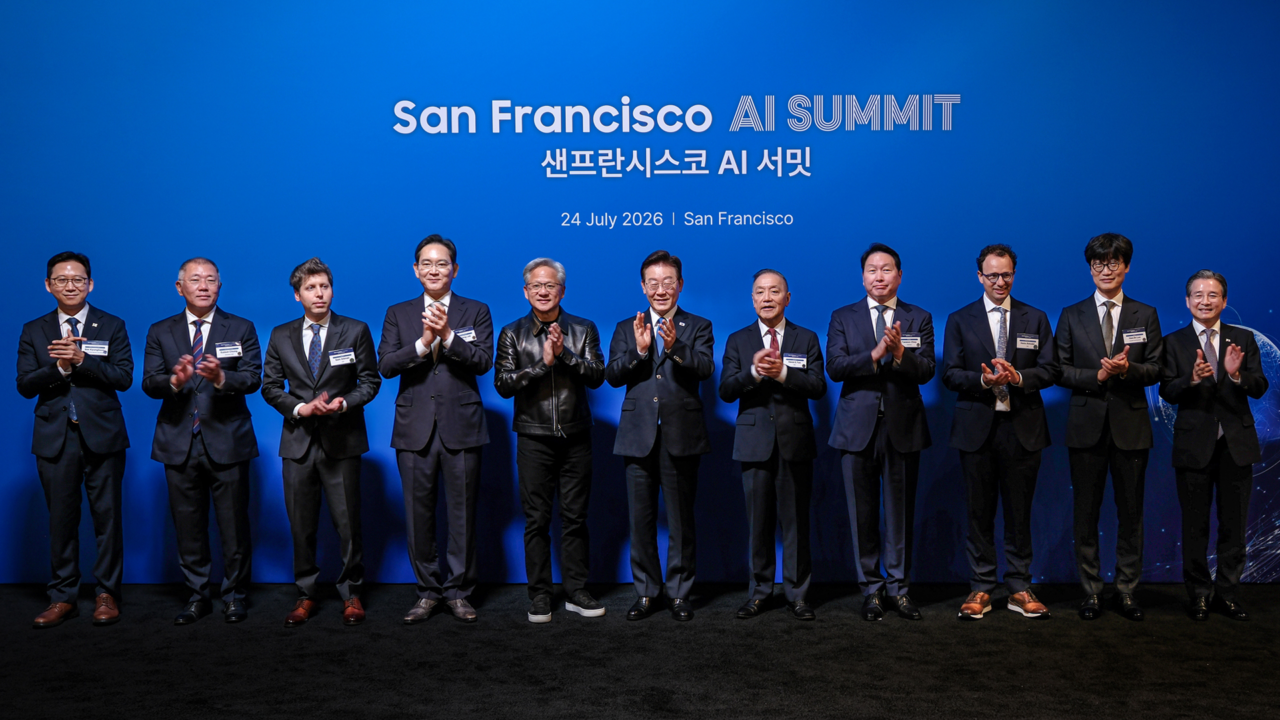
South Korean President Lee Jae Myung met the leaders of Anthropic, OpenAI, Nvidia and Broadcom in San Francisco on July 24, asking them to participate in the country’s semiconductor, data-center and physical-AI investment plans. The meetings produced public cooperation statements and a planned Anthropic-government memorandum on AI security, but the official briefings disclosed no new investment total tied specifically to the four meetings.
South Korean President Lee Jae Myung held separate meetings with Anthropic CEO Dario Amodei, OpenAI CEO Sam Altman, Nvidia CEO Jensen Huang and Broadcom CEO Hock Tan in San Francisco on July 24. The meetings completed an itinerary that Lee’s office had announced two days earlier and focused on South Korea’s plans for semiconductor production, AI data centers and physical AI.
From scheduled talks to completed meetings
Lee’s office said he asked each company to expand its role in South Korea’s AI investment program. The post-meeting briefings described cooperation priorities and statements of intent, not four newly signed investment deals. That distinction matters because the earlier itinerary had said memorandums and corporate announcements were expected around the wider San Francisco AI Summit.
Anthropic and the Korean side discussed advanced-memory supply, large AI-data-center investment and responsible AI. Yonhap reported that Anthropic expected to sign a memorandum with South Korea’s science ministry covering AI security and the cyber industry. The official briefing did not attach a project value or implementation schedule to that memorandum.
What the companies put on the record
OpenAI’s Altman described South Korea as an important partner and expressed interest in using the country as a testbed for a next-generation AI device expected in the first quarter of 2027. That was an expression of interest in the presidential briefing, not a disclosed deployment contract.
Nvidia’s Huang pointed to the company’s work with major Korean groups and a joint AI research laboratory with KAIST. Nvidia separately described the lab and broader Korean partnerships around national AI factories, physical AI and agentic-AI research. The meeting briefing did not announce a new GPU quantity beyond existing supply commitments.
Broadcom’s Tan highlighted HBM cooperation with Samsung Electronics and SK Hynix, as well as work with Korean AI-chip startups. He said AI-infrastructure demand should keep expanding through at least 2029, while the briefing again stopped short of naming a new purchase commitment.
Why the follow-through matters
The meetings show senior political support for connecting Korean memory, manufacturing and data-center capacity with leading model and accelerator companies. For practitioners and infrastructure planners, the useful next evidence will be named counterparties, signed scopes, GPU or power capacity, deployment dates and measurable research outputs. Until those details appear, the July 24 meetings are best understood as a high-level cooperation milestone rather than proof that every discussed project is funded or scheduled.
Key Points
- 1President Lee met the CEOs of Anthropic, OpenAI, Nvidia and Broadcom in San Francisco on July 24 after the meetings were announced two days earlier.
- 2Public outcomes included cooperation statements, a planned Anthropic-government AI-security memorandum and discussion of Nvidia’s joint KAIST AI lab, but no new investment total tied specifically to the four meetings.
- 3The next evidence to watch is signed project scope, named counterparties, compute or power capacity, deployment dates and measurable research output.
Scoring Rationale
The completed meetings brought South Korea’s president together with major model, accelerator and custom-chip executives and produced several concrete cooperation signals. The impact remains moderate because the official meeting records did not disclose a new investment total, compute allocation or deployment schedule tied specifically to the four meetings.
Sources
Primary source and supporting public references used for this report.
Practice with real Ad Tech data
90 SQL & Python problems · 15 industry datasets
250 free problems · No credit card
See all Ad Tech problems