
NVIDIA Releases Open Medical Robotics Simulation Framework
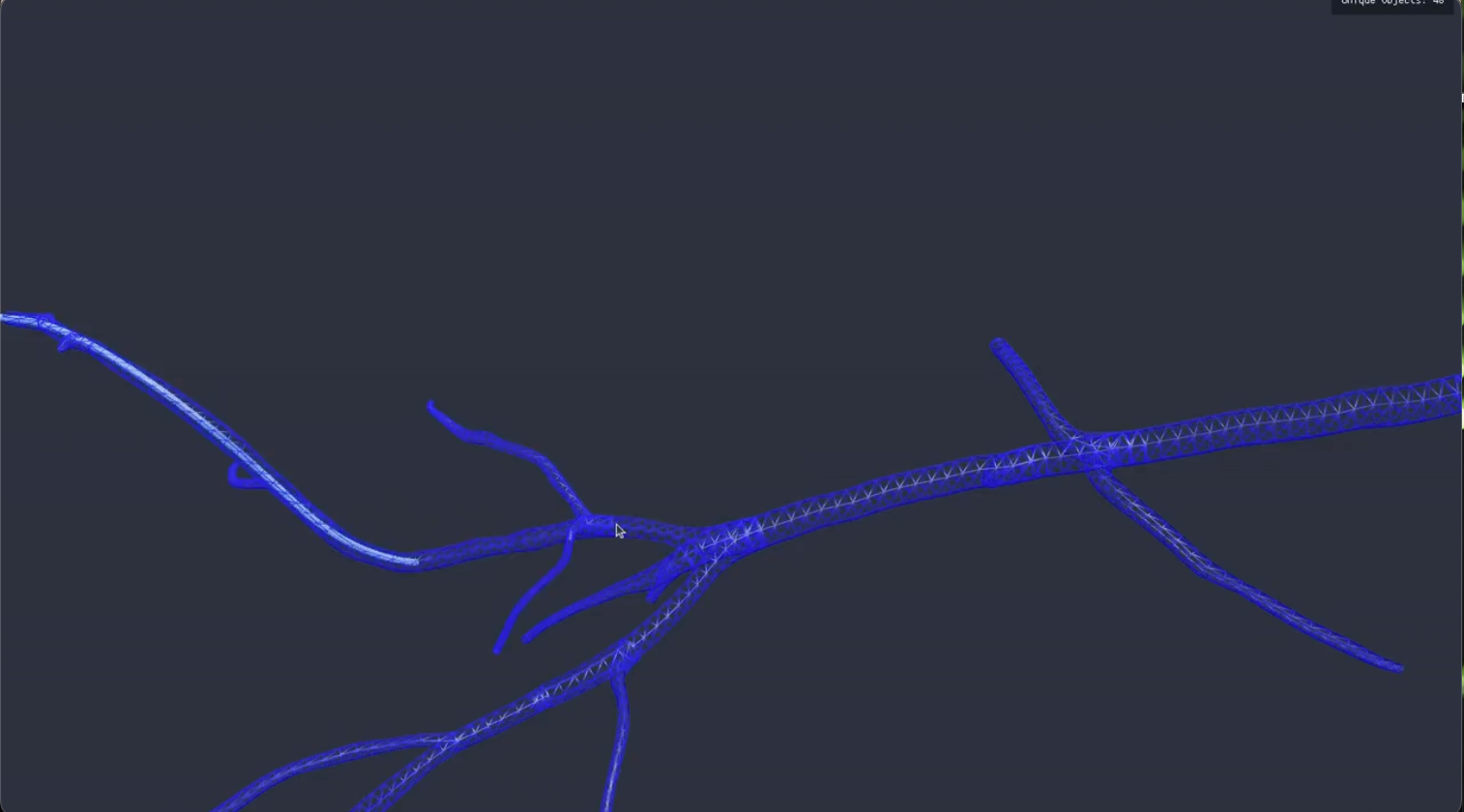
NVIDIA released Medical Physics Simulation, an open-source, GPU-accelerated framework within Isaac for Healthcare, on July 22. It models anatomy-device interactions, sensor inputs and robot-learning workflows so developers can train and evaluate policies before hardware-heavy testing. NVIDIA reports benchmarks of 8,192 parallel training environments and a reduction in policy-training time from more than five hours to under two minutes; those are vendor-reported simulation results, not clinical outcomes.
A simulation framework for medical robot learning
NVIDIA released Medical Physics Simulation, an open-source, GPU-accelerated capability within Isaac for Healthcare, on July 22. The framework is designed to model anatomy-device interactions, sensor inputs and robot-learning workflows so developers can train and evaluate policies before moving to hardware-heavy testing.
The official project combines anatomy and device behavior with reusable sensor and learning environments. NVIDIA says the framework can represent contact, friction, motion, flexible instruments and simulated imaging, including workflows that connect vascular anatomy, catheters or guidewires, X-ray sensing and reinforcement learning.
Physics, world models and parallel training
The framework combines classical simulation with generative visual simulation. NVIDIA identifies Warp and Newton as components for physical behavior, while Cosmos-H Dreams models visual scene dynamics. This hybrid design is intended to cover both known physical rules and harder-to-model visual changes.
NVIDIA reports a benchmark of 8,192 robot-training environments running in parallel, with training time reduced from more than five hours to under two minutes. That figure is useful as a throughput signal, but it is vendor-reported and depends on the task, hardware, simulator configuration and policy being trained. It is not evidence of clinical performance or safe transfer to patients.
MassDevice reports that developers can connect vascular anatomy, flexible medical devices, simulated imaging and reinforcement learning in reusable environments. The publication also describes applications involving CMR Surgical, XCath, Johnson & Johnson MedTech and Medtronic.
What open access changes
NVIDIA says open-source access lets teams inspect and adapt the framework, reproduce experiments across scenarios, identify limitations and assemble evidence for regulatory review. The code and reference workflows can reduce the need to rebuild a bespoke simulation environment for every device or anatomy.
Open code does not remove the need for physical validation. Medical-robotics teams still need to measure simulator accuracy, sensor realism, scenario coverage and sim-to-real transfer against hardware and representative data. Regulatory and clinical claims would require evidence beyond the framework's published throughput benchmark.
The release therefore gives developers a more inspectable and reusable simulation layer for medical robotics. The next important evidence will be task-specific results showing how accurately policies trained in these environments transfer to physical systems and how validation methods perform across devices, anatomies and failure cases.
Key Points
- 1NVIDIA's open framework combines device-anatomy physics, sensor simulation and robot learning within Isaac for Healthcare.
- 2NVIDIA reports 8,192 parallel training environments and a reduction from more than five hours to under two minutes, but the benchmark is vendor-reported.
- 3Open access can improve reproducibility and inspection, while clinical use still requires physical validation and sim-to-real evidence.
Scoring Rationale
The release provides open, GPU-native tooling for medical-robotics simulation and policy training. Its reported parallelism could improve experimentation speed, while clinical relevance still depends on simulation fidelity and physical-world validation.
Sources
Primary source and supporting public references used for this report.
View 4 more sources
- Medical Physics Simulationisaac-for-healthcare.github.io
- Nvidia unveils new simulation framework for surgical roboticsmassdevice.com
- NVIDIA Launches Open-Source Medical Physics Simulation Frameworkhitconsultant.net
- NVIDIA Cuts Surgical Robot Training From Hours to Minutes With Open-Source Simulatortechtimes.com
Practice with real Health & Insurance data
90 SQL & Python problems · 15 industry datasets
250 free problems · No credit card
See all Health & Insurance problems


