Gradium Raises $100M Seed Extension Backed by Nvidia

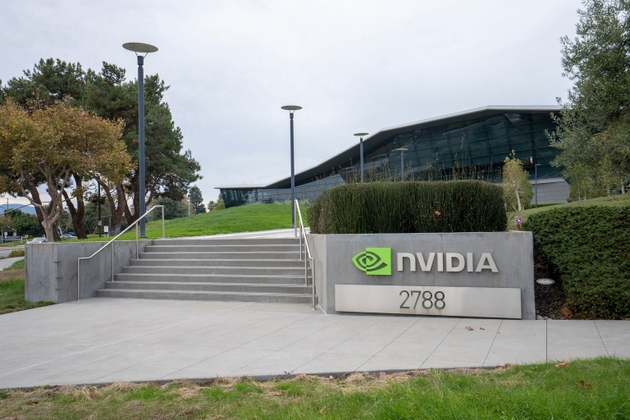
Gradium said on July 8, 2026 that it extended its seed funding to $100 million, added Nvidia as an investor, and is opening a San Francisco Bay Area office. The voice-AI startup says it was founded in September 2025 by researchers behind Kyutai and builds real-time speech-to-text, text-to-speech, translation, and voice-agent infrastructure. TechCrunch and Sifted also report that the Paris startup reopened its seed round, added roughly $30 million in fresh capital, and is seven months old. For practitioners, the signal is that low-latency voice infrastructure is becoming a funded application layer for agents, customer experience, healthcare, and media workflows.
The funding matters because voice is becoming a production interface for agents, not only a demo surface. Low-latency speech recognition, text-to-speech, turn detection, and speech-to-speech translation can determine whether an agent feels usable in customer support, healthcare intake, media tools, and field-work workflows.
What happened
Gradium announced on July 8, 2026 that it extended its seed funding to $100 million, welcomed Nvidia as a new investor, and will expand to the San Francisco Bay Area. The company says it was founded in September 2025 by researchers behind Kyutai and develops infrastructure for real-time voice AI. TechCrunch and Sifted report that the extension added roughly $30 million to the original seed financing and brought the total round above $100 million.
Technical context
Gradium's announcement points to text-to-speech, speech-to-text, live translation, voice cloning, on-device TTS, semantic turn detection, and an open-source GradBot framework. Those details are more useful to practitioners than the funding total alone because voice agents fail when latency, interruption handling, pronunciation, and turn completion are poor. In production, the voice layer becomes part of the reliability budget for the whole agent.
Market context
Nvidia's participation signals that speech and agent interfaces remain tied to accelerated compute demand, even when the product looks like application software. TechCrunch and Sifted frame the company as a young Paris startup moving fast in a crowded voice-AI market. The commercial question is whether enterprise buyers will pay for specialized voice infrastructure rather than bundling voice through general-purpose model providers.
Buyers should separate component benchmarks from end-to-end agent performance. A fast speech model can still produce a poor interaction if network delay, turn detection, retrieval, model reasoning, or synthesis adds pauses and interruptions. Evaluation should capture full response latency, recovery from crosstalk, accent and language coverage, and the rate at which a human must take over.
Funding and investor participation provide capacity to build, but they do not establish production reliability. Security review should cover audio retention, voice-cloning controls, consent, regional processing, and incident response before the interface is used for sensitive customer or employee conversations.
What to watch
Watch customer disclosures, latency benchmarks, enterprise security evidence, and whether Gradium's on-device and translation models move beyond demos into repeatable production deployments. Also watch how quickly voice-agent builders standardize evaluation for turn-taking, interruption recovery, and pronunciation accuracy.
Key Points
- 1Gradium's $100 million seed total shows investor appetite for specialized, low-latency voice infrastructure around AI agents.
- 2The product claims focus on speech recognition, synthesis, translation, turn detection, and developer tooling, not only generic voice generation.
- 3Practitioners should evaluate latency, interruption handling, pronunciation, security, and on-device behavior before adopting voice-agent stacks.
Scoring Rationale
A $100 million seed round backed by Nvidia for real-time voice AI infrastructure is notable for agent-interface and enterprise voice workflows. The impact is still below major because customer adoption, technical benchmarks, and durable market share remain to be proven.
Sources
Public references used for this report.
Practice with real Ad Tech data
90 SQL & Python problems · 15 industry datasets
250 free problems · No credit card
See all Ad Tech problems