Teams Shift From Task Management to System Management
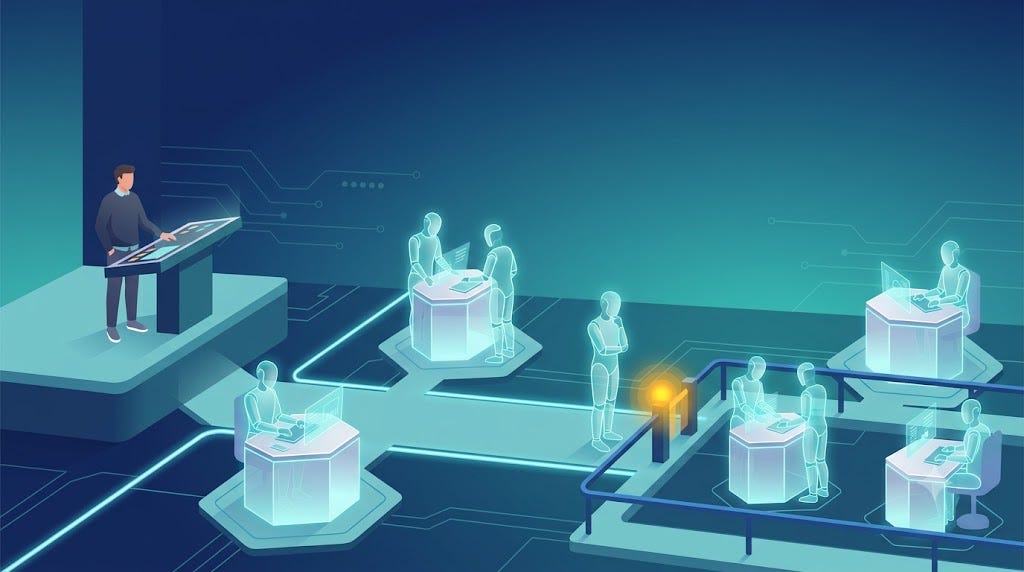
AI-agent work is pushing teams from task management toward system management, because outputs increasingly arrive through multi-step workflows that need boundaries, monitoring, and ownership. A Medium archive listing for a Stackademic member story describes five practical shifts grounded in Anthropic's AI-work research, and Anthropic's own research says engineers report moving toward higher-level work managing AI systems. For practitioners, the safe takeaway is operational rather than universal: agent adoption should come with permission boundaries, evals, observability, escalation paths, and named owners. The source base is thin, so treat the article as applied guidance, not as a broad benchmark or settled management doctrine.
The value in this item is the operating-model reminder: once an agent can plan, call tools, edit artifacts, and coordinate across apps, teams are no longer supervising one task at a time. They are managing a system with permissions, failure modes, audit trails, and owners. What happened: A Medium archive listing for Stackademic describes a member story titled Stop Managing Tasks Start Managing a System: What Working With AI Agents Every Day Actually Teaches You, summarized as five practical shifts grounded in Anthropic's own work. Anthropic's published research on AI use inside its company says engineers report shifting toward higher-level work managing AI systems and seeing productivity gains, while also raising career and workflow questions. Technical context: The operational pattern is familiar from distributed systems. Agent workflows need scope boundaries, policy checks, structured traces, evals, rollback paths, and review workflows because failures can happen across planning, retrieval, tool use, generated content, and final actions. Treating an agent as a system also clarifies where observability and incident ownership belong. For practitioners: Teams should define allowed actions before assigning work to agents, review final outcomes as well as intermediate traces, and plan capabilities such as data access, tool permissions, test coverage, and monitoring. This is especially important when managers or engineers receive outputs they did not watch being produced. What to watch: Watch whether vendors add first-class agent observability, policy-boundary controls, and eval workflows that non-specialist teams can use. Also watch whether organizations create explicit agent-system owner roles rather than leaving accountability spread across prompt authors, tool owners, and platform teams.
Key Points
- 1Agent workflows should be managed as systems with boundaries, monitoring, evals, and named ownership.
- 2Anthropic's research supports the shift toward higher-level system management, but the article source is thin.
- 3Practitioners should require policy controls, traces, review workflows, and escalation paths before scaling agents.
Scoring Rationale
The story is useful practitioner guidance about operating AI agents, but the event source is thin and mostly applied commentary. It deserves moderate visibility for engineering teams, not high-impact treatment.
Sources
Public references used for this report.
Practice interview problems based on real data
1,625 SQL & Python problems across 15 industry datasets — the exact type of data you work with.
Try 250 free problems