Google Rolls Back Earth AI Image Tool After Misuse
Google rolled back its new Google Earth image-generation feature on July 31, one day after launch, after screenshots of synthetic scenes appeared to violate its policies. The company said generated images were watermarked and never entered the shared Earth imagery, but it is withdrawing the tool while it develops stronger guardrails.
Google rolled back its new image-generation feature in Google Earth on July 31, one day after releasing it globally on the web. In an update to the original product announcement, Google said it had seen screenshots of generated imagery that appeared to violate its policies and would withdraw the feature while it implemented stronger guardrails.
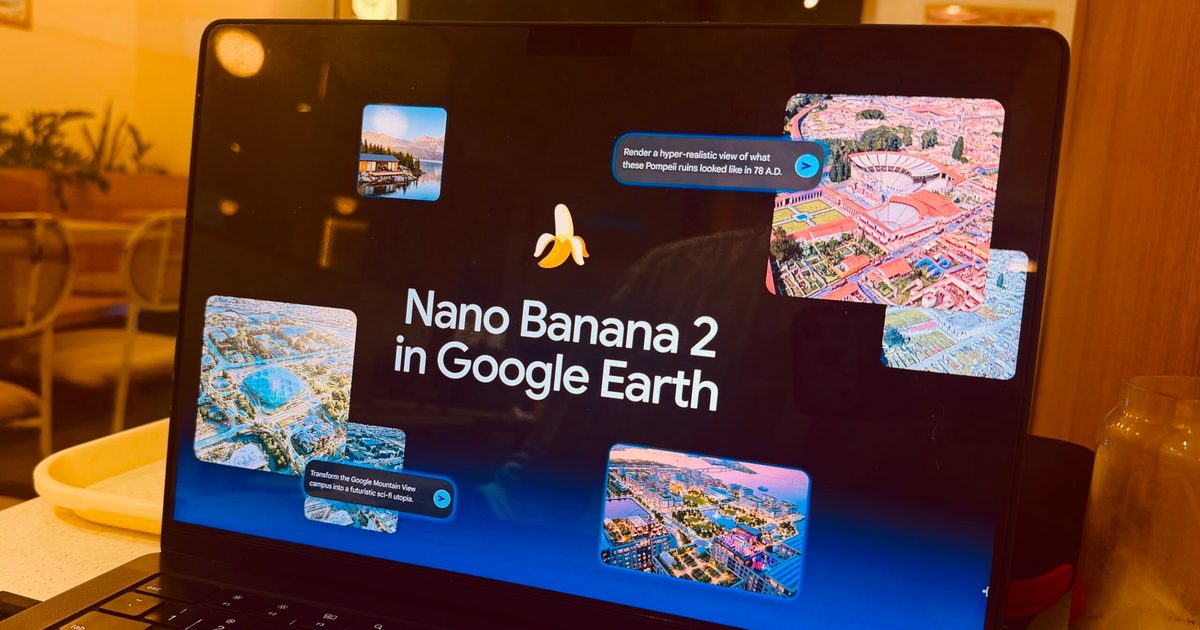
The tool combined a selected Google Earth view with Google's Nano Banana 2 model. Users could zoom to a location, choose "create image," and describe a scene. Google's launch examples focused on historical visualization, infographics, property concepts, and design mockups.
Why Google reversed the launch
Online-research specialist Henk van Ess documented tests in which he asked the feature to add refugees near the Mexican border, a nuclear plant in Iran, a fatal crash in Amsterdam, and a bomb crater near a hospital in Gaza. He reported that those prompts were not refused. His tests do not establish that the depicted events occurred; they demonstrate how the product could place invented objects or damage into a recognizable geographic setting.
Google initially responded that every image created with Nano Banana in Earth included a SynthID digital watermark and could be checked with the Gemini app or Lens in Search. The company also said it blocked harmful topics and continued to update its protections. In its July 31 rollback notice, Google acknowledged that people uniquely trust Earth as a reliable view of the world and said it had seen screenshots that appeared to breach its policies.
What changed, and what did not
Google said generated images did not appear in the main Earth experience for other users and were watermarked as AI-generated. The rollback therefore concerns a separate creation workflow, not a replacement of Google's underlying satellite, aerial, or 3D imagery archive.
That distinction matters for verification. A synthetic screenshot can circulate without the surrounding interface or provenance cues that explain how it was made, even when the canonical Earth imagery remains unchanged. Van Ess recommended checking acquisition details and comparing suspicious images with independent satellite sources rather than relying on appearance alone.
The feature is no longer available while Google works on stronger safeguards. The company has not given a date for its return or described the additional controls it plans to add.
Key Points
- 1Google withdrew the Google Earth image generator on July 31, one day after launch, while it develops stronger guardrails.
- 2A researcher documented sensitive fabricated scenes that were not refused, while Google said generated images were watermarked and never entered the shared Earth imagery.
- 3The rollback leaves the underlying satellite archive unchanged but underscores the need to verify circulated screenshots against provenance and independent imagery.
Scoring Rationale
Google's one-day rollback materially changes the product state and confirms that policy-violating synthetic geospatial screenshots were a significant trust and verification risk. The underlying Earth imagery remains unchanged, and the feature's future safeguards and return date are unresolved.
Sources
Primary source and supporting public references used for this report.
Practice interview problems based on real data
1,625 SQL & Python problems across 15 industry datasets — the exact type of data you work with.
Try 250 free problems