AI Tools Generate Novel Functional Proteins
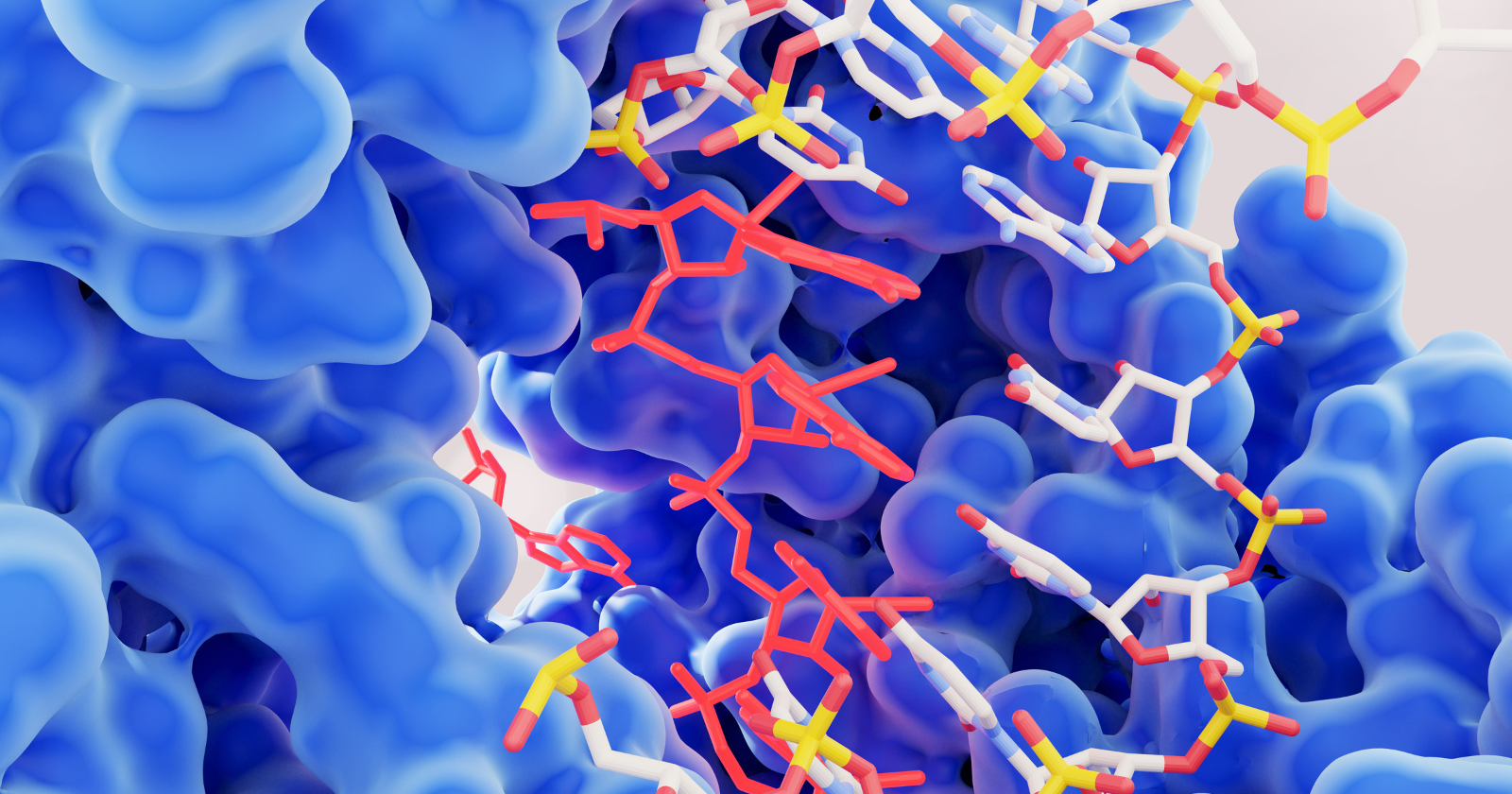
Space Daily reported on August 21, 2026, that AI protein-design workflows are generating proteins outside known natural sequence space. The report describes a pipeline using RFdiffusion to generate backbones, ProteinMPNN to select amino-acid sequences, and AlphaFold for structural validation. Separately, Baker Lab reported laboratory-validated designed serine hydrolases that bind and cleave ester compounds.
Space Daily reported on August 21, 2026, that AI-enabled protein design is expanding the search for functional proteins beyond molecules documented in nature. Its account describes an inverse-design workflow: specify a desired molecular function and structure, generate a candidate backbone, select an amino-acid sequence, and evaluate whether that sequence is likely to fold as intended.
The article identifies RFdiffusion for protein-backbone generation, ProteinMPNN for sequence design, and AlphaFold for structural evaluation. These tools address different stages of the sequence-structure-function problem. A protein's amino-acid sequence determines its three-dimensional structure, while its structure constrains properties such as binding and catalysis.
Laboratory evidence for designed enzymes
Baker Lab reported in February 2025 that its researchers had computationally designed serine hydrolases to accelerate ester-bond cleavage. According to the lab's account of the Science study, in silico modeling and laboratory validation found that the designed enzymes bound and cleaved ester compounds as intended.
The laboratory described these hydrolases as unlike enzymes found in nature. Co-lead author Sam Pellock compared conventional enzyme engineering, which modifies existing proteins, with AI-enabled design: "Traditional enzyme design is like buying a suit from a thrift store: the fit will probably be a little off. With AI, we can now tailor-make enzymes to ensure a perfect fit for every step of the reaction."
What the workflow changes
Traditional protein engineering commonly begins with a natural scaffold and introduces mutations. De novo design instead searches for sequences that can realize a specified structural arrangement, including an active site with multiple catalytic residues. Baker Lab characterized custom enzyme creation as a longstanding challenge in protein science and cited possible applications including pharmaceutical synthesis and microplastic degradation.
For ML and computational-biology teams, the important distinction is that generative models are being coupled to structure prediction and experimental validation rather than used as standalone sequence generators. In comparable protein-design programs, wet-lab testing remains decisive: a plausible folded structure does not by itself establish expression, stability, substrate specificity, catalytic activity, or performance under industrial conditions.
The reported serine-hydrolase results provide a concrete example of this design-test loop. Broader claims about drugs, materials, and other enzyme classes remain application directions described by Space Daily and Baker Lab, rather than evidence that every such use has already been demonstrated.
Key Points
- 1AI protein-design pipelines combine backbone generation, sequence design, structure prediction, and wet-lab testing to search beyond natural protein scaffolds.
- 2Baker Lab reported validated designed serine hydrolases that cleave ester bonds, providing experimental evidence beyond computational structural predictions.
- 3Comparable de novo design efforts require experimental assays because predicted folding alone does not establish catalytic activity, stability, specificity, or manufacturability.
Scoring Rationale
The story is relevant to computational biology and generative-model practitioners because it links protein generation with experimentally validated enzyme function. It is a broad research-development report rather than a newly announced foundation model, benchmark, or widely deployable product.
Sources
Public references used for this report.
Practice interview problems based on real data
1,625 SQL & Python problems across 15 industry datasets — the exact type of data you work with.
Try 250 free problems