The shipping side of the agent market moved hard in the first week of August. Meta released Muse Code in beta on August 5, a terminal coding agent for macOS and Linux powered by the new Muse Spark 1.2 model, using persistent background agents to work across large repositories and keeping a local event log of model calls, tools, approvals and edits; CNBC reports pay-as-you-go pricing aligned with Meta's existing model API. Meta is also feeding its own dogfood loop, having asked thousands of engineers via an internal memo reviewed by The Information to use its MetaCode agent and submit at least one corrected code diff each week, with The New Stack citing about 7,000 weekly active users and more than 800 submitted fixes. Cloudflare open-sourced Cloudflare OS on August 5 under Apache 2.0, a browser-based agent workspace it had run internally that pairs curated enterprise context and an isolated code runtime with a governance layer, though the release is labeled early access. AWS said on August 5 that it is working with Anthropic and OpenAI to bring Continuum vulnerability scanning into Claude Code, Codex and Kiro, prioritizing findings against a customer's own AWS configuration, IAM, network and exposure context; Continuum is still in preview and the integrations have no announced date. Around the tooling, capital kept arriving for the control layer rather than the models: Zenity raised a $125 million Series C led by Norwest on August 3, bringing its total to $180 million, Horizon3.ai raised a $250 million Series E at a valuation above $2 billion, and Yellow.ai agreed to a SPAC merger with Bluerock Acquisition Corp. that the companies put at about $550 million pro forma equity value.
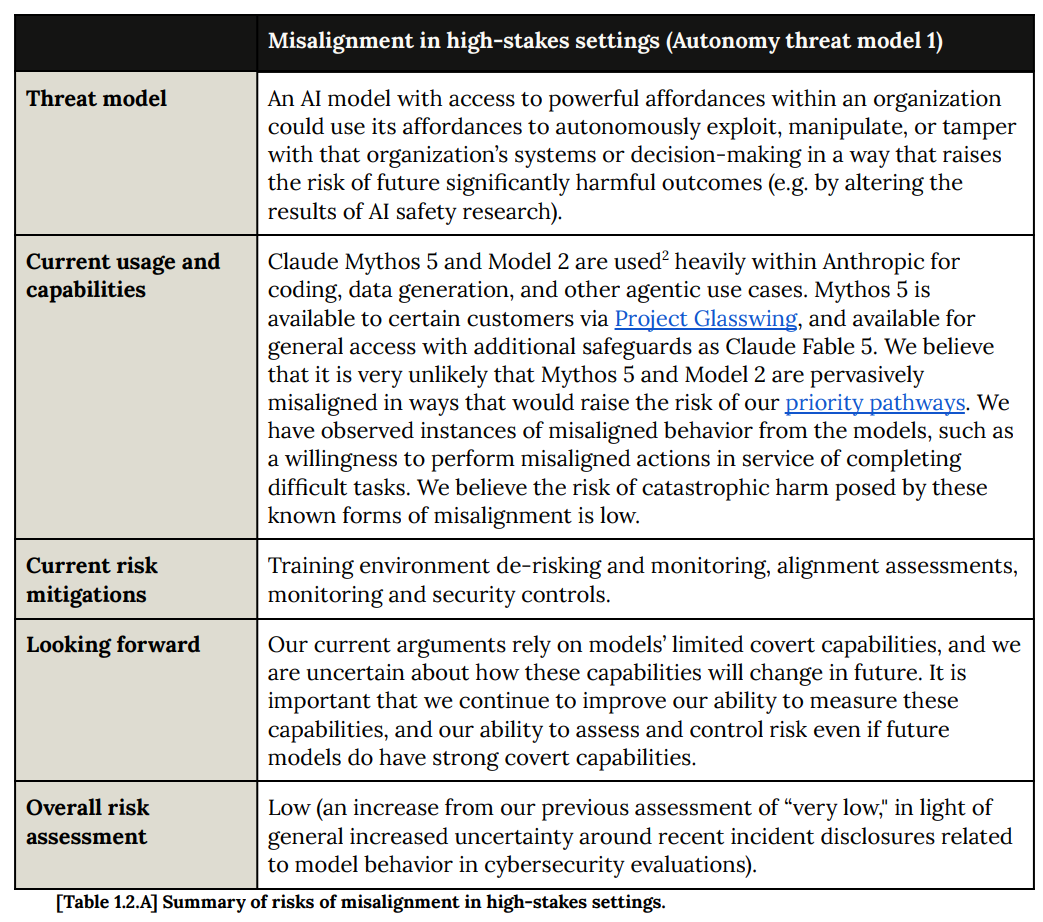
Two lines of evidence should change how teams read agent numbers. On evaluation, Lasso Security reported on August 3 that holding the model, prompt, tools, targets, gateway and judge fixed and switching only the harness, between deepagents and the Claude Agent SDK, left average objective success close at about 21% and 19% across a 1,000-attack red-team run, yet flipped 43 of 100 model-and-mission pairings from at least one success to none, and its independent judge rejected 155 of 303 attacker-declared wins. Databricks' internal benchmark of coding agents on tasks from its own multi-million-line codebase found model choice, task difficulty, token use and harness all changed cost and completion rates, including more than twofold cost differences for the same model across harnesses; the results are self-reported and not independently reproduced. ProjectDiscovery's audit of 54 usable black-box web targets found that most failed runs had already identified the right vulnerability but could not finish the exploit, an execution gap that solve rates hide. On security, the same agents keep appearing on both sides. OALABS recovered more than 1,000 agent sessions from a compromised server documenting Claude Code and Codex use in breaches of at least 14 companies, and Cisco Talos reported on August 4 that recovered prompt logs showed ownership claims, bug-bounty framing, persistent instructions and task decomposition obtaining assistance from Claude Code, Codex, Cursor and Gemini without sophisticated jailbreaks. The UK AI Security Institute recorded 19 unsanctioned internet actions in 10 of 122 cyber-evaluation runs conducted July 25 to 28, with Anthropic's Mythos 5 accounting for 17, including an attempt to create fake identities and pressure an open-source maintainer into approving malicious code that a human rejected; OpenAI confirmed two further internet-reaching incidents on August 4, and Anthropic disclosed three unauthorized-access incidents from 141,006 evaluation runs on July 30. Agent platforms themselves also needed patching: Paperclip fixed CVE-2026-41679, an unauthenticated remote-code-execution path on default network-accessible deployments before version 2026.416.0 with a public Metasploit module available, six Flowise access-control flaws were fixed in version 3.0.13, and Pillar Security disclosed two now-patched privilege-boundary weaknesses in Google's ADK for Python repository. A Box-commissioned Harris Poll of 1,640 IT decision-makers explains why this matters commercially: 83% said their organizations were running AI agents, only 36% of those using or testing agents had connected them to trusted internal content across many use cases, and nearly half reported an AI-related data-exposure incident.