Brian Solis Included in Wharton AI Agent Adoption Blueprint
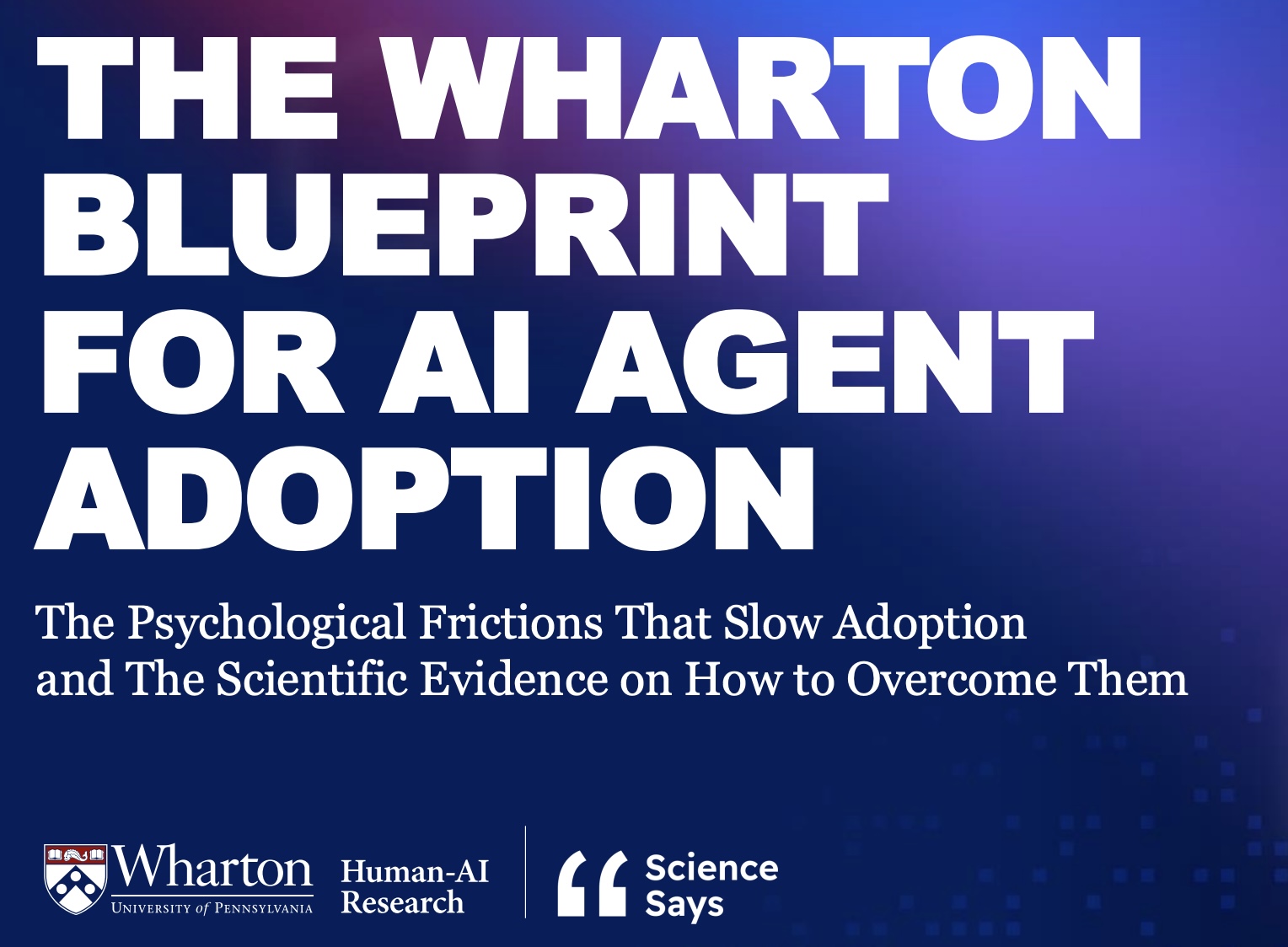
ServiceNow's Head of Global Innovation, Brian Solis, was included in "The Wharton Blueprint for AI Agent Adoption," a report from Wharton Human-AI Research and Science Says, according to a May 31, 2026 post on BrianSolis.com. The report frames AI agent adoption as shifting from a technical problem to a psychological one and organizes adoption frictions around perceived competence, trust, and delegation of control, per the post. Solis is quoted on the importance of preserving employee agency: "Giving up tasks is not the issue; employees do not want to lose their identity or give up agency," and on design practices: "Design agents like employees you'd like to hire and manage," both quoted in the BrianSolis.com post. The post lists other contributors, including academics and practitioners from Google, Zapier, Wolters Kluwer, and Workato.
What happened
ServiceNow's Head of Global Innovation, Brian Solis, was included in "The Wharton Blueprint for AI Agent Adoption," a report produced by Wharton Human-AI Research and Science Says, according to a May 31, 2026 post on BrianSolis.com. The post summarizes the report's central claim that AI agent adoption is shifting from a technical barrier to a psychological barrier and that Wharton organizes adoption frictions into three areas: perceived competence, trust, and delegation of control. The post quotes Solis directly: "Giving up tasks is not the issue; employees do not want to lose their identity or give up agency," and "Design agents like employees you'd like to hire and manage," both attributed to the BrianSolis.com post. The blog entry also lists other contributors named in the report, including academics and practitioners from Google, Zapier, Wolters Kluwer, Workato, and others.
Editorial analysis - technical context
Industry-pattern observations: research and practitioner commentary about AI agents increasingly emphasizes transparency, auditability, and human-in-the-loop governance rather than raw capability improvements. The Wharton framing of three adoption frictions-competence, trust, and control-aligns with prior literature on human-agent teaming that highlights explainability and role definitions as adoption enablers.
Context and significance
Editorial analysis
For enterprise teams exploring agent deployments, the report and Solis' quoted recommendations foreground nontechnical adoption levers: clear role definitions, permissions and escalation paths, onboarding analogous to hiring, and human management of agent behavior. These items are positioned by Solis as practical design and governance elements to increase user comfort with delegation.
What to watch
For practitioners
monitor whether vendor road maps and internal pilots start to publish agent job descriptions, permission models, and audit trails as discrete features. Observers should also watch for broader adoption studies that measure whether agent transparency and onboarding practices measurably raise delegation rates or task handoff velocity.
Quoted recommendations from the post
The BrianSolis.com entry includes several direct lines attributed to Solis: "AI agents are too often built in the image of yesterday's workflows. If we build agents that expose their decision logic in business terms people use, we gain agentic empathy, trust built through auditable reasoning," and "Agents need human managers. They will not behave like Agent Smith in the Matrix and take over your entire enterprise. Human oversight, governance, and training are essential in managing and collaborating with agents." These are reported as quotes in the blog post and summarize Solis' contribution to the Wharton report.
Key Points
- 1Wharton frames agent adoption around three frictions: perceived competence, trust, and delegation of control, highlighting psychological barriers to handoff.
- 2Practitioner recommendations prioritize transparency, role definitions, permissions, and onboarding to increase user comfort with delegating to agents.
- 3Observers should track whether vendors expose audit trails and agent job descriptions as product features to accelerate enterprise delegation.
Scoring Rationale
The Wharton report compiles academic and practitioner perspectives that matter to enterprise AI adopters and designers, offering actionable adoption framings. It is notable for practitioners but not a frontier-model or platform release, so relevance is meaningful but not industry-shaking.
Sources
Public references used for this report.
Practice with real Ad Tech data
90 SQL & Python problems · 15 industry datasets
250 free problems · No credit card
See all Ad Tech problems