Booster T2 Brings Nvidia Thor Compute to Humanoid Robotics
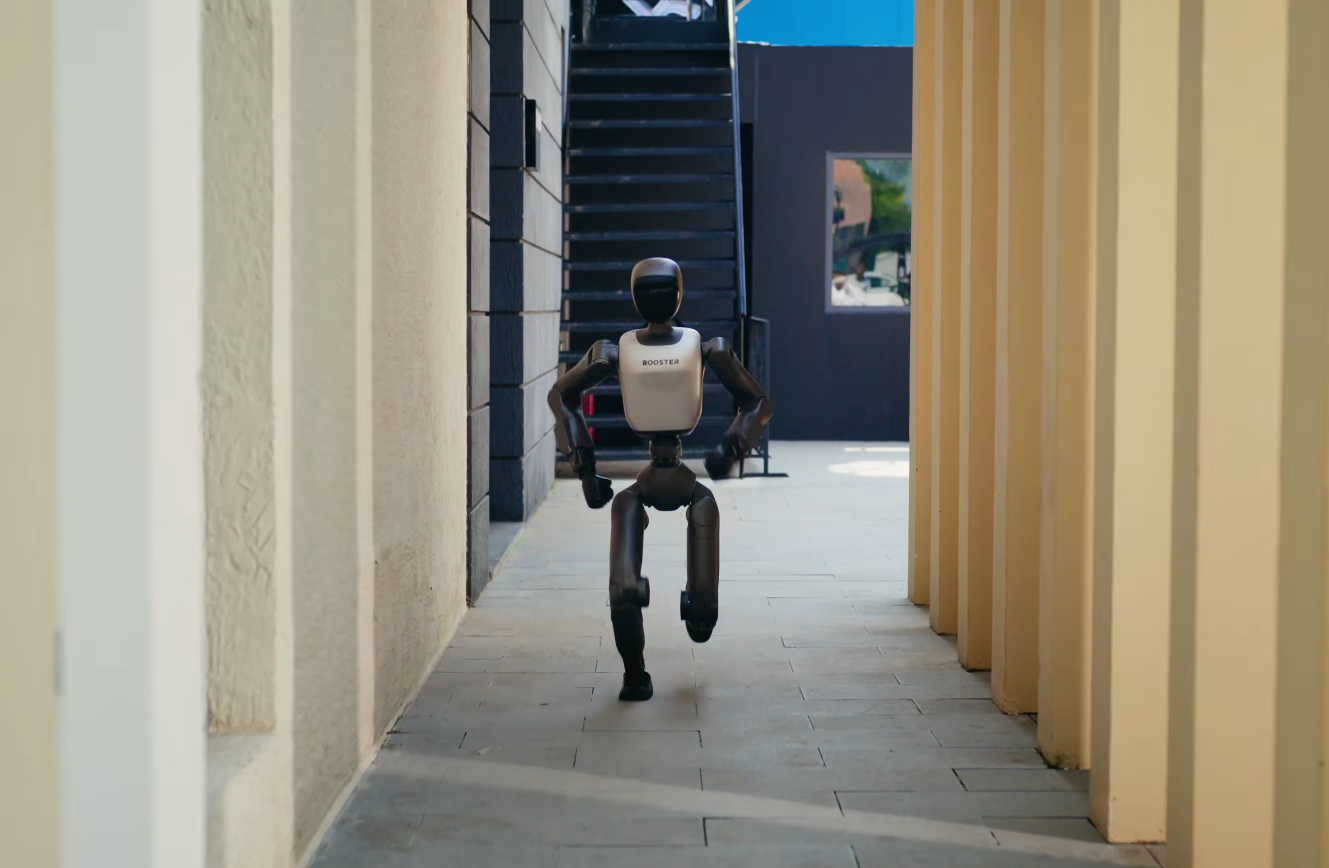
Booster Robotics launched the Booster T2, a humanoid development platform that combines whole-body motion control with onboard Nvidia Thor compute. The company positions the robot for embodied-AI research that must connect perception, planning, manipulation, and movement on one physical system. Independent reporting from Interesting Engineering confirms the launch and the product's emphasis on local compute, configurable hands, and an open development stack. For robotics teams, the meaningful shift is the attempt to package locomotion hardware, simulation, policy training, and deployment tools as one developer platform. The announcement does not prove autonomous performance in production, so the practical question is how reliably outside teams can reproduce the company's demonstrations and move trained policies from simulation into sustained real-world tasks.
For embodied-AI teams, the useful part of this launch is the integration boundary. Booster Robotics is selling a physical platform, onboard compute, and a development environment as one stack, reducing the amount of systems work required before a team can test perception-to-action policies on humanoid hardware. That can shorten experimentation cycles, but the announcement is still a vendor launch rather than independent proof of reliable production work.
What happened
Booster Robotics launched the Booster T2 as its flagship embodied-AI development platform. The official product page and an independent report from Interesting Engineering describe a humanoid designed around coordinated locomotion, perception, manipulation, and local decision-making. The Pro configuration uses Nvidia's Thor compute platform. Booster says the onboard system is intended to keep perception, reasoning, and whole-body control in a real-time loop without depending on remote infrastructure for every action.
The hardware is paired with configurable end effectors and a body designed for movement and manipulation at the same time. Interesting Engineering reports that the platform can be configured with grippers or dexterous hands, while the official material emphasizes coordinated control across the legs, waist, arms, head, and end effectors. Those details make the T2 relevant as a research platform, although they do not establish how it performs under unscripted workloads or prolonged field use.
Technical context
The development stack supports simulation, policy training, sim-to-real transfer, and deployment. Booster Studio is presented as the layer that connects those stages, with tools for building and testing control policies before moving them onto the robot. The official page also points developers toward open interfaces and resources intended for reinforcement learning, imitation learning, and vision-language-action work.
The key technical tradeoff is that strong onboard compute can reduce latency and keep more of the control loop local, but compute capacity alone does not guarantee robust behavior. Humanoid systems still depend on sensor quality, calibration, motion-policy stability, recovery behavior, and safe handling of unfamiliar environments. Teams evaluating the platform will need evidence that trained policies transfer reliably and that the robot can recover from distribution shifts rather than merely complete curated demonstrations.
For practitioners
Research groups should treat the T2 as an integration platform to benchmark, not as a finished autonomous worker. A useful evaluation would separate locomotion, manipulation, perception, task planning, and recovery, then test how failures in one layer affect the full closed loop. Reproducible trials should also document the exact hand configuration, sensors, model stack, policy-training data, and compute mode.
The open-development promise matters only if outside teams can inspect interfaces, export policies, reproduce training environments, and deploy without proprietary bottlenecks. Before adopting the platform, buyers should verify which components are actually open, what tooling is included, and whether support extends beyond showcase tasks.
What to watch
The next evidence should come from independent hands-on tests, sustained task trials, and developer documentation that shows the full simulation-to-hardware workflow. Pricing, availability, safety controls, and reproducible benchmarks will determine whether Booster T2 becomes a practical embodied-AI research platform or remains primarily a capable demonstration system.
Key Points
- 1Booster T2 combines humanoid motion hardware, Nvidia Thor compute, and development tooling in one embodied-AI research platform.
- 2The integrated stack targets simulation, policy training, sim-to-real transfer, and deployment without requiring teams to assemble every layer independently.
- 3Independent benchmarks must still test sustained tasks, recovery behavior, interface openness, and whether vendor demonstrations transfer to unscripted environments.
Scoring Rationale
Booster T2 is a notable embodied-AI development launch because it combines humanoid hardware, onboard compute, and a simulation-to-deployment workflow. Its broader impact depends on independent evidence of reliable real-world performance and genuinely open developer interfaces.
Sources
Primary source and supporting public references used for this report.
Practice interview problems based on real data
1,625 SQL & Python problems across 15 industry datasets — the exact type of data you work with.
Try 250 free problems