Auterion and SkyFall Supply AI-Enabled FPV Drones
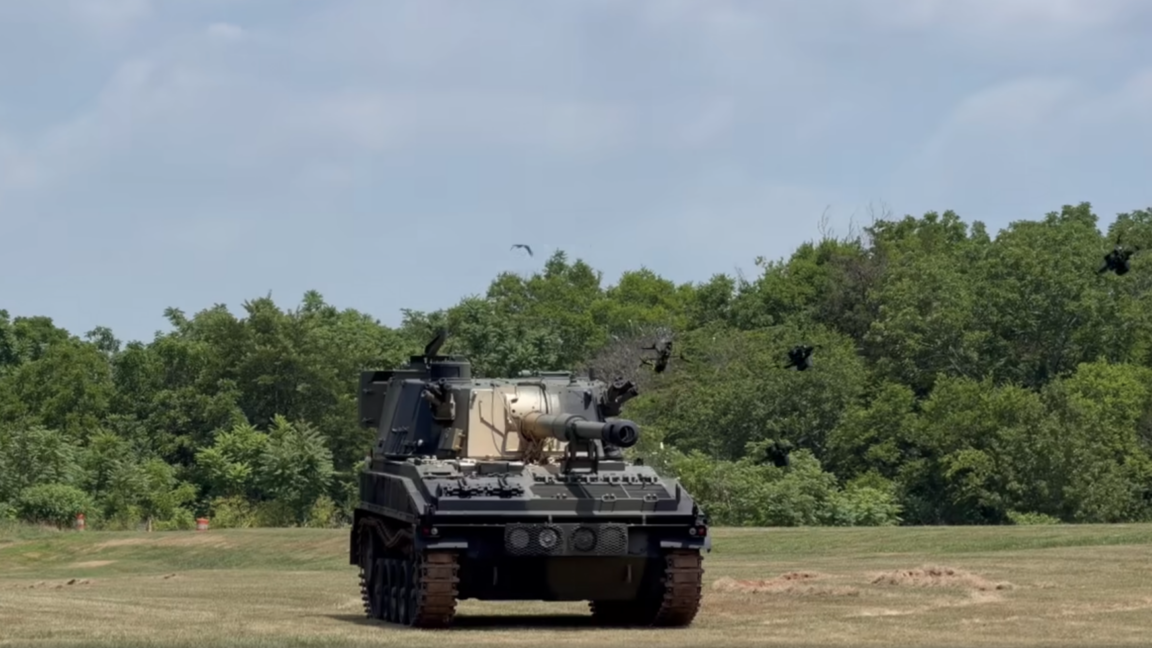
Auterion and Ukrainian manufacturer SkyFall began supplying Ukraine with 50,000 Shrike FPV drones fitted with AI-enabled Skynode S systems in mid-July. Auterion said an undisclosed European NATO country awarded the contract, while Reuters identified Germany as the funder of the approximately 90 million euro deal. The onboard computer-vision system is designed to continue terminal targeting when radio links are jammed.
Auterion and Ukrainian drone manufacturer SkyFall began supplying Ukraine with 50,000 Shrike first-person-view (FPV) drones equipped with Auterion's Skynode S autonomy hardware and software in mid-July. Auterion said an undisclosed European NATO country funded the contract, which was awarded to Auterion and jointly executed by the two companies.
Breaking Defense reported on July 13 that the deployment would generate $100 million in revenue for Auterion. Reuters reported on July 12 that Germany was financing the order. Reuters also reported that Auterion CEO Lorenz Meier valued the contract at about 90 million euros ($103 million) and that SkyFall confirmed Berlin's involvement while declining to discuss the purchase details. Germany's and Ukraine's defense ministries declined to comment.
Computer vision for contested radio environments
The Shrike is a Ukrainian-made FPV drone already used in combat. Auterion says the integration centers on its Skynode S hardware and software stack, which provides terminal guidance against moving and evasive targets when satellite navigation or radio links are degraded or denied.
Ars Technica reported that operators can fly a Shrike into a battlefield area, designate a target at a distance of up to half a mile, and then activate terminal guidance. Meier told Ars that an operator can abort the attack or select another target while the radio connection remains available. Ars further reported that the drone can continue tracking and flying toward a target after losing that connection because of terrain, buildings, or electronic jamming.
This is commonly described in defense technology reporting as last-mile or terminal guidance. The operational distinction is important: it transfers the final tracking task from a continuously connected pilot to onboard perception and control. The available reporting does not provide technical details such as the model architecture, training data, target-class taxonomy, confidence thresholds, or false-positive rates.
Deliveries and future swarm software
Auterion said deliveries began during the week of its July 13 announcement and would conclude over the coming months. Reuters separately reported that some drones had already reached Ukraine and the remainder was due during 2026.
Auterion also said a future software update is intended to give the Skynode S-equipped Shrike a swarming capability without airframe or hardware changes. The company has demonstrated its Nemyx swarm autonomy system in testing, according to Ars Technica, but the retrieved reporting does not establish a deployment date or operational configuration for swarm functions in Ukraine.
The new order is larger than Auterion's earlier reported Ukraine deployments. A company representative told Breaking Defense that prior deployments totaled about 40,000 units. Reuters reported that a separate $50 million Pentagon contract covered 33,000 drones and that Meier said those units had been delivered.
Implications for autonomy engineering
For ML and robotics practitioners, the reported deployment illustrates a demanding edge-autonomy setting: visual target tracking must operate on constrained airborne hardware while satellite navigation and command links may be degraded. Systems used in comparable environments face tradeoffs among perception accuracy, latency, compute and power limits, and operator override mechanisms.
The contract also highlights why robust perception is becoming a central capability in unmanned systems. In conventional FPV operations, link reliability can determine whether a drone reaches its target. In onboard terminal-guidance designs, evaluation shifts toward how reliably a model can maintain target identity and trajectory under motion, occlusion, changing viewpoints, and adversarial electronic conditions.
Key Points
- 1Auterion and SkyFall started delivering 50,000 AI-enabled Shrike FPV drones, expanding the reported scale of Auterion systems supplied to Ukraine.
- 2Skynode S uses computer vision for terminal guidance after radio-link loss, making onboard perception central in electronically contested environments.
- 3A future software update is reported to add swarm capabilities, though public reporting provides no Ukrainian deployment date or operational specifications.
Scoring Rationale
This is a large reported deployment of onboard AI autonomy into a live, electronically contested defense environment. It is materially relevant to edge AI, computer vision, robotics, and multi-agent systems practitioners, although the public sources do not disclose the underlying models or performance data.
Sources
Primary source and supporting public references used for this report.
Practice interview problems based on real data
1,625 SQL & Python problems across 15 industry datasets — the exact type of data you work with.
Try 250 free problems