China Tops TOP500 with LineShine Supercomputer
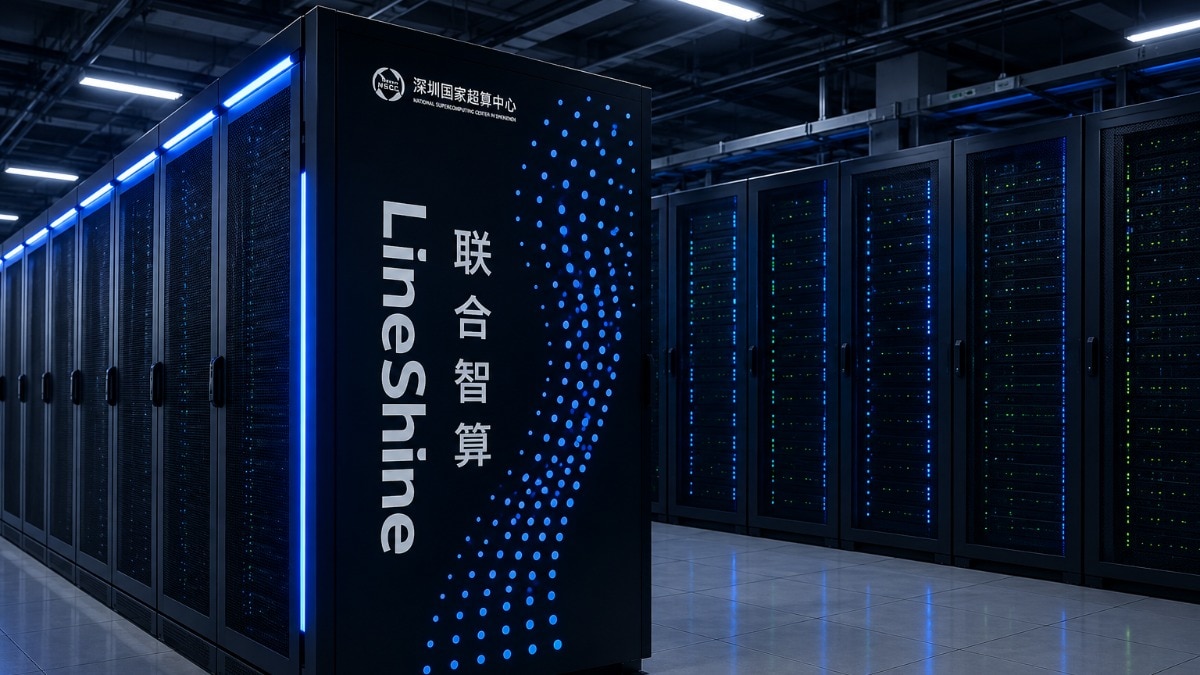
China has reclaimed the No. 1 spot on the biannual TOP500 supercomputing list with the LineShine system at the National Supercomputing Centre in Shenzhen, Reuters and India Today report. According to the TOP500 listing cited by India Today, LineShine delivered 2.198 exaflops on the High Performance Linpack benchmark, overtaking the U.S. system El Capitan. India Today reports the machine uses domestically developed components including LingKun processors, LingQi interconnect technology and the Kylin operating system. Reuters notes LineShine ranked fourth on a benchmark intended to simulate AI-like workloads and quotes experts who caution that TOP500 placement does not directly equate to leadership in AI-optimized computing. Industry observers will view this as evidence of advancing domestic chip and system capability, while continuing to separate HPL benchmark performance from AI workload performance.
What happened
China's LineShine system at the National Supercomputing Centre in Shenzhen won the top spot on the June 2026 TOP500 list, Reuters and India Today report. Per the TOP500 listing cited by India Today, LineShine achieved 2.198 exaflops on the High Performance Linpack (HPL) benchmark, placing it ahead of the previous titleholder, El Capitan, Reuters reported. India Today and Reuters both describe the LineShine installation as built from domestically developed components.
Technical details
India Today reports the LineShine stack combines China-developed hardware and software, including LingKun processors, LingQi interconnect technology and the Kylin operating system. Reuters notes that while LineShine leads the TOP500 HPL ranking, it placed fourth on a separate benchmark designed to approximate AI-style workloads, which industry observers use to show relative AI performance.
Context and significance
Editorial analysis
The TOP500 ranking is historically centered on the HPL benchmark, which measures dense linear algebra throughput. Industry-pattern observations note that HPL leadership reflects raw HPC capability for traditional scientific simulation, but does not directly measure the sparse, memory- and communication-bound patterns typical of many large-scale AI training workloads. Reuters reports experts who say the TOP500 result may reflect China reentering public submissions after a pause in 2023, and may also serve as a visible indicator of progress in domestic chip and system design.
What to watch
Industry context
Observers will follow whether China submits LineShine or similar systems to additional benchmarks that target AI workloads and mixed precision performance. Watch for public disclosures or third-party tests that report energy efficiency, interconnect topology, and performance on AI-relevant kernels. Also monitor whether U.S. and cloud providers continue to prioritize AI-optimized systems that do not compete in TOP500 submissions, a pattern Reuters identified in its coverage.
Attribution note
Reported benchmark numbers and component names are drawn from the June 2026 TOP500 listing and coverage by India Today; Reuters reporting and expert interviews provide context on the difference between HPL rankings and AI-oriented performance.
Key Points
- 1LineShine tops the TOP500 with 2.198 exaflops, showing China can field exascale-class systems using domestic components.
- 2HPL-focused rankings do not equal AI leadership; AI-style benchmarks emphasize different bottlenecks and were less favorable to LineShine.
- 3Domestic processor, interconnect, and OS stacks at national scale highlight how supply-chain independence can enable HPC program milestones.
Scoring Rationale
This is a notable infrastructure milestone for practitioners tracking national-scale HPC and chip ecosystems. The news matters for hardware and systems engineers, but TOP500 HPL leadership does not directly translate to AI training dominance, limiting immediate impact on most AI model development workflows.
Sources
Public references used for this report.
Practice interview problems based on real data
1,625 SQL & Python problems across 15 industry datasets — the exact type of data you work with.
Try 250 free problems