Sanders Pledges Bill Targeting Flock Surveillance
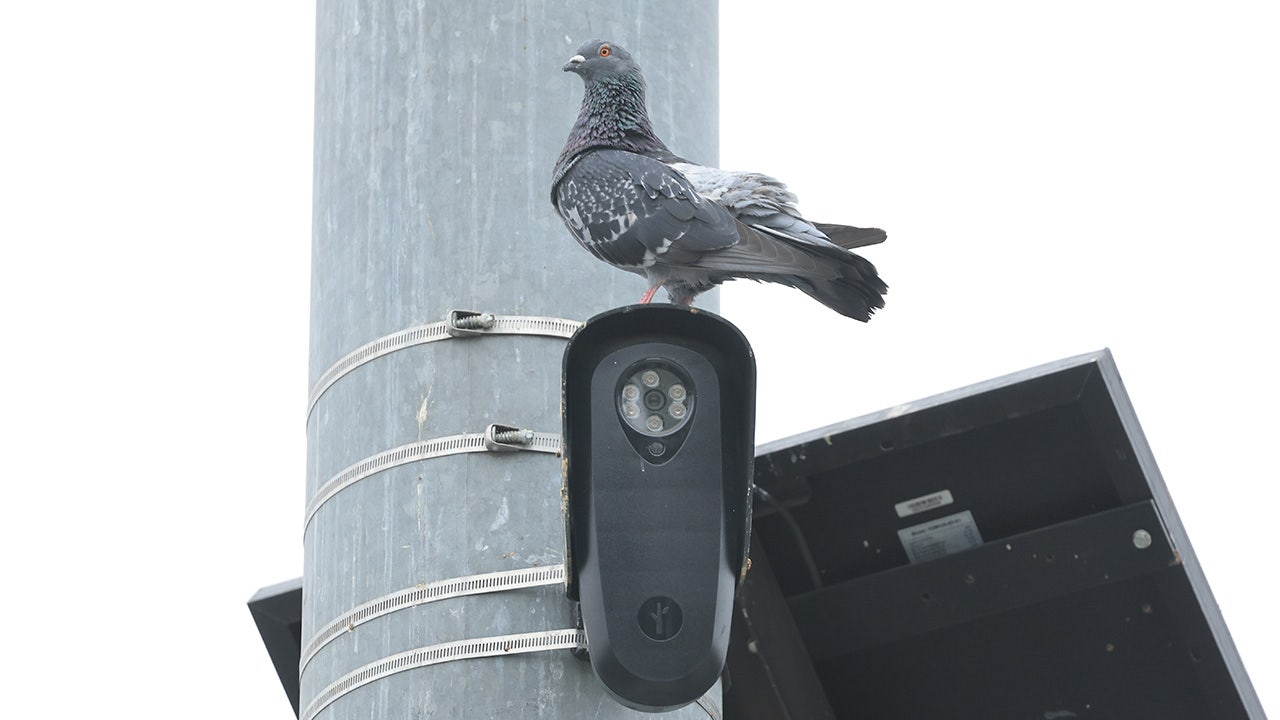
Sen. Bernie Sanders said Monday that he would introduce legislation to curb what he called Flock Safety's "AI mass surveillance." Truthout reports that Sanders criticized the company's AI-powered camera network and its tracking of vehicle movements. The pledge arrives amid bipartisan scrutiny of automated license plate reader systems, including a Senate inquiry launched by Sen. Josh Hawley.
Sen. Bernie Sanders said Monday that he would introduce legislation targeting what he called Flock Safety's "AI mass surveillance," escalating congressional attention on automated license plate reader networks.
In a statement quoted by Truthout, the Vermont independent wrote: "You may not know it, but you may already be being tracked by artificial intelligence." He said Flock, which he described as backed by Marc Andreessen and Peter Thiel, had installed AI-powered surveillance cameras across the United States. Sanders added that he was "soon introducing legislation to stop Flock and AI mass surveillance." No bill text, legislative timeline, or specific policy provisions were reported.
How the camera network works
Truthout describes Flock's products as cameras that record passing vehicles and use AI to add attributes such as make, model, and license plate information to a searchable database. Law-enforcement agencies and other customers can use that data in investigations, according to the report.
Flock has said its system "only captures vehicles," rather than biometric information about individuals, Truthout reports. The same report cites coverage asserting that the technology can identify and track people and their associates through vehicle movement patterns. Those competing characterizations are central to the policy dispute: automated license plate reading is not facial recognition, but longitudinal location data can still reveal sensitive patterns of activity.
Court House News reports that Flock cameras scan more than 20 billion vehicles per month through 120,000 devices in 49 states. Sen. Josh Hawley, a Missouri Republican and chair of the Senate Judiciary Committee's crime and counterterrorism panel, launched an investigation into Flock on Wednesday. In a letter to Flock CEO Garrett Langley, Hawley called the network an "unprecedented national surveillance network" and questioned its privacy and constitutional implications.
Bipartisan scrutiny and reported misuse
The policy response extends beyond Sanders and Hawley. Fox News reported on August 25 that Republican Reps. Greg Steube of Florida and Keith Self of Texas had called for legal parameters around the systems. Newsweek reported that Florida Gov. Ron DeSantis also criticized the cameras as "out of control" and called for privacy protections.
Hawley's inquiry cited reported misuse and accuracy concerns. According to Court House News, Hawley pointed to Wisconsin charges against a police officer accused of repeatedly searching his girlfriend's and her former boyfriend's license plates. He also cited a Florida case in which a woman spent 13 days in jail after a mistaken vehicle identification, and an LAPD finding of 161 incorrect stops over two months involving vehicles incorrectly identified as stolen.
Those accounts do not establish system-wide error rates, but they illustrate two technical and governance questions common to AI-enabled surveillance deployments: how often matching systems produce incorrect associations, and whether access logging, audits, retention controls, and authorization workflows catch abuse quickly enough.
The debate reaches beyond model accuracy for ML and data practitioners. Systems that convert vehicle observations into searchable, cross-jurisdictional location histories require evaluation of false matches, data provenance, access controls, retention policies, and downstream decision-making. Legislative proposals and the Hawley investigation could therefore affect not only camera deployments, but also procurement and governance standards for public-sector computer-vision systems.
Key Points
- 1Sanders pledged legislation against Flock's AI surveillance, but public reporting has not yet described bill language, scope, or a legislative timetable.
- 2Flock's network reportedly scans more than 20 billion vehicles monthly, making data governance and cross-jurisdictional search controls central technical issues.
- 3Reported misuse and mistaken identifications show why comparable computer-vision systems require accuracy testing, auditability, authorization controls, and retention safeguards.
Scoring Rationale
A proposed federal legislative response and a Senate investigation place AI-enabled vehicle surveillance under meaningful policy scrutiny. The story is relevant to computer-vision practitioners and public-sector AI vendors because it centers on deployment governance, audit controls, and false-match consequences rather than a new technical release.
Sources
Public references used for this report.
Practice with real Ad Tech data
90 SQL & Python problems · 15 industry datasets
250 free problems · No credit card
See all Ad Tech problems