China Scales Humanoid Production Amid Capability Gaps
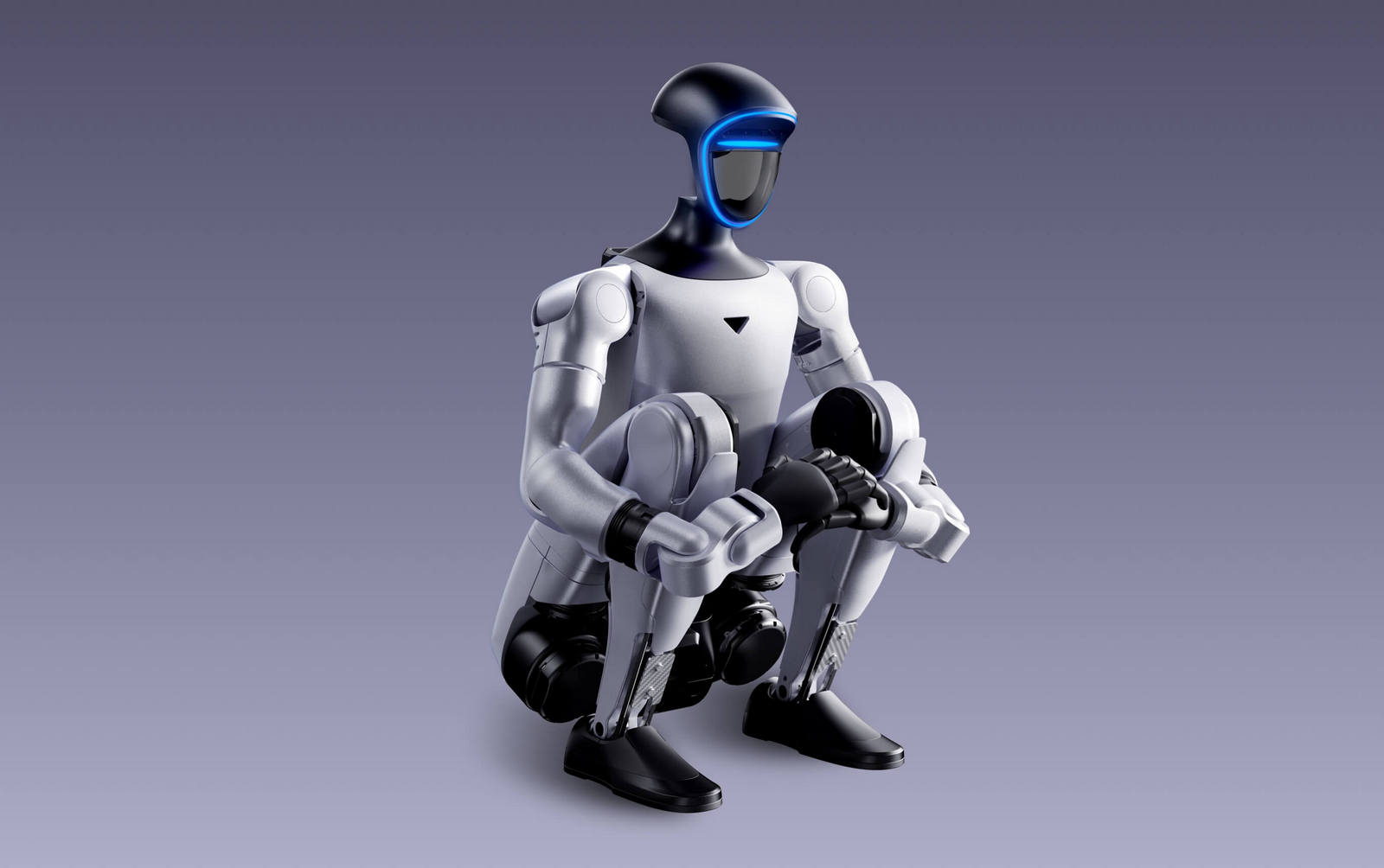
On August 27, 2026, Reuters reported that China is expanding humanoid-robot manufacturing and training infrastructure, while current systems remain too slow and error-prone for most factory work. Trainers in Liuzhou teach robots basic tasks through teleoperation, and reporting from Reuters and Notebookcheck describes persistent problems with environmental variation, throughput, and the supply of real-world data needed for capable physical intelligence.
China is expanding humanoid-robot manufacturing and embodied-AI training infrastructure even as current machines remain too slow and unreliable for most industrial work, according to a Reuters investigation published August 27.
Reuters visited a Liuzhou training center in southern China where more than 100 humanoids were being taught tasks including crate sorting, noodle packaging, and coffee preparation. Human trainers use headsets and sensor-equipped handheld controllers to guide the robots, generating data intended to train systems that can perceive, decide, and act in physical environments.
The training process remains highly inefficient. Reuters reports that a novice trainer may need about 300 attempts to produce one usable robot movement, while an experienced trainer may require about 50. The center, supplied by UBTech through an $18 million Guangxi regional-government tender in October 2025, aims to sell robot-training data to factories. Three staff members told Reuters that the subsidy-dependent project had no clear path to profitability because of operating costs and low data prices.
Manufacturing capacity outpaces deployment
According to Reuters, Chinese government entities spent at least $230 million on humanoid robots and related equipment in the first half of 2026, compared with $62 million a year earlier. Notebookcheck, citing the Reuters investigation, reports that Chinese manufacturers accounted for about 95% of roughly 20,000 humanoid robots shipped globally last year.
That manufacturing expansion has not resolved the deployment problem. Notebookcheck reports that robots can struggle when object orientation, equipment, or lighting differs from training conditions. It also reports that some robots perform simple tasks at roughly 20% of a human worker's speed or output. In structured factory settings, conventional industrial robots can therefore remain faster, cheaper, and more dependable for narrowly defined workflows.
The embodied-AI data constraint
The central technical challenge is not only robot mechanics. Humanoids rely on vision-language-action models that must connect visual perception and language-conditioned goals with precise motor actions. Notebookcheck reports an industry estimate of about 500,000 hours of real-world robot data, versus an estimated 100 million hours needed for highly capable physical intelligence.
Unlike language models used by chatbots, embodied systems require large amounts of real-world training data. For ML and robotics teams, the reporting underscores that compelling demonstrations do not by themselves establish robust task performance. Useful evaluations need measures of success rates, recovery from errors, cycle times, environmental variation, and total operator intervention, alongside model benchmarks.
Key Points
- 1Reuters found humanoid training in Liuzhou requires many teleoperated attempts, illustrating that usable manipulation data remains expensive to produce.
- 2Chinese government spending reached at least $230 million in early 2026, while reported factory capability remains limited by reliability and throughput.
- 3Embodied-AI programs generally require evaluation beyond demos, including recovery rates, cycle time, environmental robustness, and operator intervention.
Scoring Rationale
The report provides a significant view of China's large-scale investment in humanoid robotics and the practical bottlenecks facing embodied AI. It is especially relevant to robotics and ML practitioners working on training data, vision-language-action systems, and real-world evaluation, although it is not a new model or product release.
Sources
Public references used for this report.
Practice interview problems based on real data
1,625 SQL & Python problems across 15 industry datasets — the exact type of data you work with.
Try 250 free problems