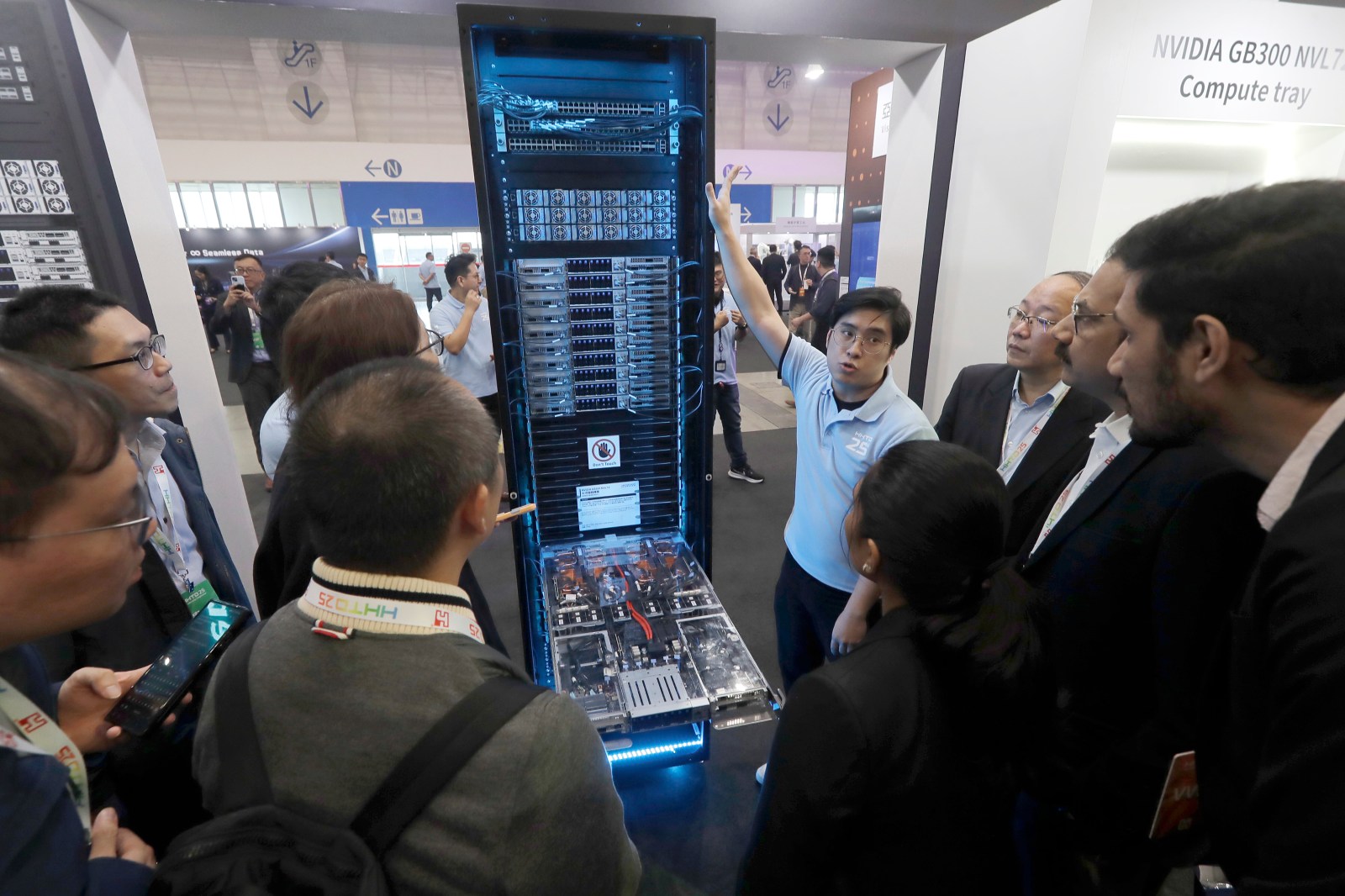
The contested control point has moved from where chips ship toward how model behavior is copied, who is permitted to use a frontier model, and what those models are doing inside military systems. White House technology adviser Michael Kratsios alleged on July 22 that Moonshot AI ran large-scale distillation of Anthropic's Fable while developing Kimi K3 and accessed Nvidia GB300 systems in Thailand; Reuters reported the claims from his public statement, said Moonshot had not responded, and published no evidence independently establishing either allegation, while Treasury officials described possible sanctions as under examination rather than decided. A Jamestown Foundation review published July 30 documented OpenAI and Anthropic model outputs in distillation work at Chinese military- and security-linked institutions covering code, monitoring and attack-related tasks, and SiliconANGLE's account of a Reuters review conducted with Jamestown put the underlying examination at more than 80 papers and patent applications; both describe evidence in published research rather than proof that a deployed Chinese defense model matches a U.S. frontier system. The same access question now runs in the other direction: Bloomberg reported on August 4 that Chinese officials raised concerns about Anthropic's Mythos and other U.S. frontier models ahead of expected U.S.-China AI talks in September, with people familiar telling Bloomberg that Beijing views such models as potential offensive weapons and questions Anthropic's restrictions on Chinese access for normal uses. That is not an abstract worry for vendors: a June 12 Commerce export-control directive required Anthropic to block foreign nationals from Claude Fable 5 and Mythos 5, and because it could not verify nationality in real time it suspended both models globally until the controls were lifted June 30 and access began returning July 1. Five Democratic senators wrote on August 3 that opaque and inconsistent federal interventions of this kind could push users toward Chinese open-weight models, and Hugging Face CEO Clement Delangue told CNBC on August 3 that China leads in open models and could reach the broader frontier by the end of 2026 or in 2027, though the interview supplied no model-by-model benchmark comparison. Scrutiny has also moved downstream to buyers, with House committee chairmen requesting DoorDash records on July 31 about its evaluation and deployment of China-developed systems after public disclosure that it used Moonshot's Kimi K2.6 for lower-level work.
The hardware, infrastructure and military perimeters moved in parallel. The FCC on July 28 added foreign-produced advanced robotic devices and power inverters to its Covered List, blocking covered new models from the equipment authorization generally required before a radio-frequency device can be marketed or imported, while Associated Press reporting says previously authorized models are not retroactively barred and manufacturers can seek conditional approval from designated federal departments; the House had already passed its fiscal 2027 defense authorization bill on July 22 with a Section 163 provision the South China Morning Post said would bar Pentagon procurement of covered humanoid robots tied to designated foreign adversaries while leaving U.S. commercial sales untouched. Access loosened where partnerships are close, with Commerce easing UAE export controls on July 10 so the UAE government and approved companies can receive advanced computing items without individual licenses subject to anti-diversion commitments, and CENTCOM and the UAE announcing plans on July 28 for Task Force Talon Synapse, an Abu Dhabi team of about 20 specialists whose memorandum of understanding a CENTCOM spokesperson told DefenseScoop was still being finalized. Compute buildout is now explicitly national policy on three continents: EuroHPC opened its AI Gigafactories tender on July 30 for up to seven facilities in at least seven member states with applications due November 12, 2026 and selection expected in early 2027, against 10 billion euros of public financing reported by the Associated Press and a stated aim of unlocking more than 20 billion euros of private investment; the U.S. Department of Energy announced a more than $100 billion partnership on July 29 with Brookfield, NextEra Energy and regional utilities to redevelop part of its Paducah, Kentucky site as a 1.8 GW AI campus; and NAVER, NVIDIA and Brookfield proposed expanding NAVER's GAK Sejong AI factory from 55 MW to 200 MW by 2028 with up to $9 billion from Brookfield and a planned $1 billion NVIDIA investment. Standards and battlefield deployment are the two quieter fronts. China published the seven-part GB/Z 185-2026 guidance series for AI-agent interconnection on May 22, covering architecture, identity codes, credentials, discovery, interaction and tool use with a lifecycle-managed identity for each registered agent, and a July 15 government interpretation said more than 70 organizations helped draft it; it is guidance rather than a mandatory law. Meanwhile a June 15 Justice Department filing says xAI's Grok Gov Model was deployed through Maven Smart Systems during Operation Epic Fury, with an attached Pentagon declaration attributing deployment of more than 2,000 munitions against 2,000 targets within 96 hours to Maven, though the filing does not specify Grok's exact tasks or whether it selected targets or authorized weapons releases, and Auterion and Ukrainian manufacturer SkyFall began supplying Ukraine with 50,000 AI-enabled Shrike FPV drones in mid-July under a contract Reuters identified Germany as funding at roughly 90 million euros.