White House official alleges Moonshot distilled Anthropic's Fable for Kimi K3
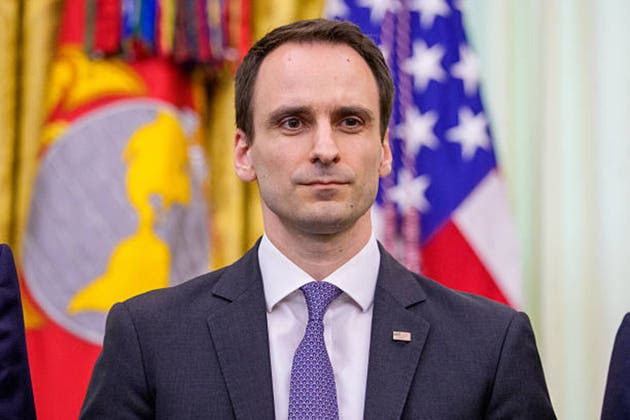
White House technology adviser Michael Kratsios alleged on July 22 that Moonshot AI used large-scale distillation of Anthropic's Fable to develop Kimi K3 and accessed Nvidia GB300 systems in Thailand. Moonshot had not responded to Reuters, and the public reporting did not include evidence independently establishing either allegation; Treasury officials said possible sanctions were under examination.
White House technology adviser Michael Kratsios alleged on July 22 that China-based Moonshot AI distilled Anthropic's Fable model while developing Kimi K3. He also alleged that Moonshot acquired Nvidia GB300-equipped servers and accessed GB300 systems in Thailand, likely for model training.
Reuters reported the claims from Kratsios's public statement and said Moonshot and the Chinese Embassy in Washington did not immediately respond to requests for comment. The reporting did not disclose technical evidence that independently establishes the alleged distillation or chip access.
What officials said
Kratsios said the US government had information that Moonshot built a platform for large-scale distillation that could switch among access methods to avoid detection. He characterized covert industrial distillation as theft of proprietary US technology, while distinguishing it from legitimate use of distillation to build smaller, more efficient systems.
The allegation followed comments from Treasury Secretary Scott Bessent that the administration was examining whether Chinese models incorporated US companies' intellectual property. Axios reported that Bessent said the government could sanction overseas entities if it found theft. No sanction against Moonshot was reported as completed, and Bessent's comments addressed Chinese models broadly rather than presenting a public finding specific to Kimi K3.
What remains unproven
Model distillation generally trains one system on outputs from another, but benchmark similarity alone cannot show how a model was trained. Establishing improper extraction would require evidence such as linked accounts, request patterns, output provenance or other access records. None of that evidence appears in the retrieved public reports.
Reuters said Moonshot unveiled Kimi K3 as a 2.8-trillion-parameter open-weight model with performance approaching Anthropic's Fable. Those company claims and reported benchmark results provide context for the political scrutiny, but they do not prove the US allegations.
Nvidia CEO Jensen Huang also disputed the broader policy case against open models. In an Axios interview, he argued that distillation is a normal part of learning and said enforcement should target contract or privacy violations rather than models as a category.
Why practitioners should care
The immediate issue is governance, not a verified technical finding against Kimi K3. Model providers need access logs, account-linkage controls and enforceable terms if they intend to investigate extraction campaigns. Teams adopting open-weight models may also need provenance records and sanctions screening as US policy develops. Until evidence or an enforcement action is published, the claims about Moonshot should remain clearly attributed allegations.
Key Points
- 1Michael Kratsios alleged Moonshot used Anthropic's Fable and Nvidia GB300 systems while developing Kimi K3.
- 2Retrieved reporting did not publish evidence independently proving the distillation or chip-access claims, and Moonshot had not responded to Reuters.
- 3Treasury officials discussed possible sanctions, but no completed action against Moonshot was reported.
Scoring Rationale
Direct allegations from a senior White House technology official and sanctions comments from Treasury make the event material to model governance and cross-border deployment, but no public evidence or completed enforcement action independently establishes the claims.
Sources
Public references used for this report.
Practice interview problems based on real data
1,625 SQL & Python problems across 15 industry datasets — the exact type of data you work with.
Try 250 free problems