Mobilint Launches MLD-R1 USB Edge AI Accelerator
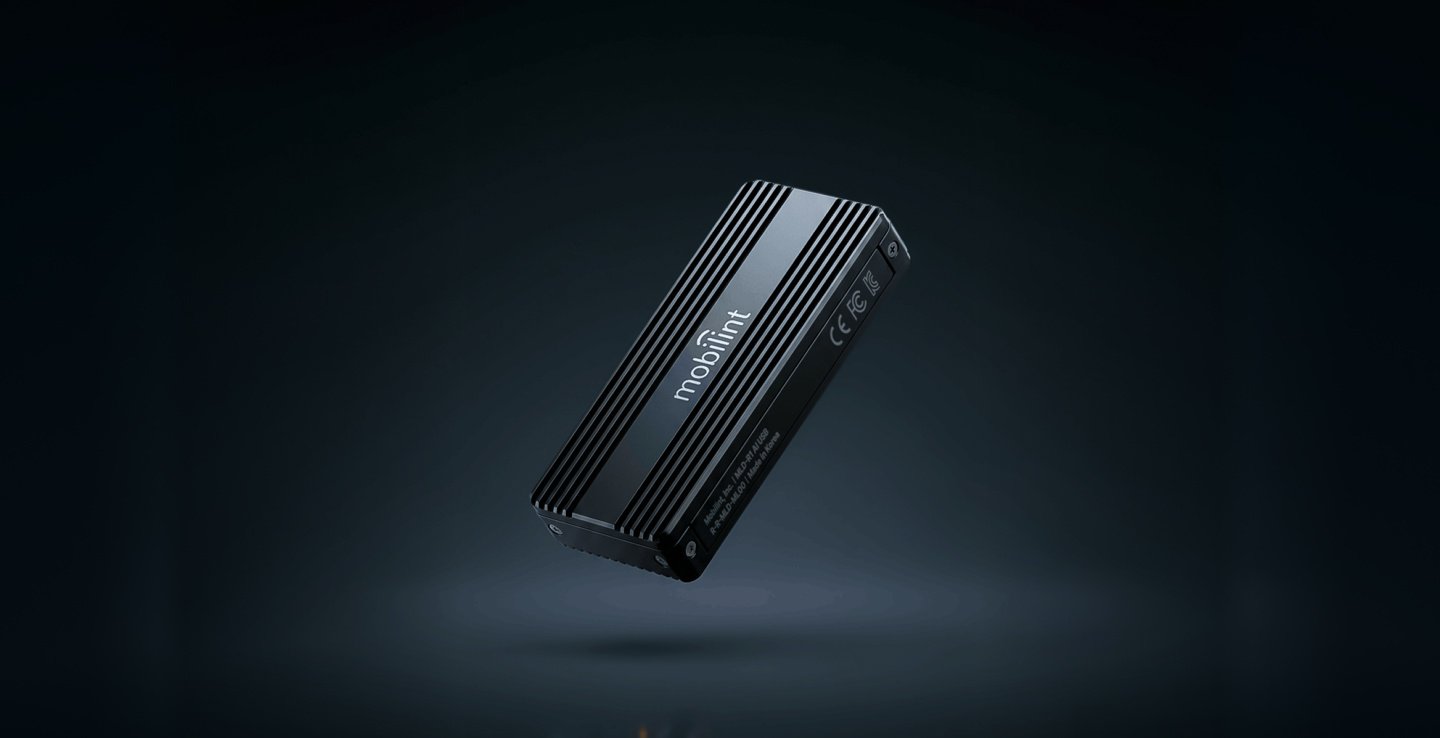
Mobilint launched the MLD-R1 USB edge AI accelerator on Aug. 7, offering up to 10 TOPS of INT8 inference performance in a roughly 3 W device. Digital Today reports that the REGULUS-based accelerator connects through USB Type-C and supports Windows and Linux hosts. The product targets local inference workloads including computer vision, video analysis, robotics, security, and small language models.
Mobilint launched the MLD-R1, a USB-connected edge AI accelerator built around its REGULUS AI system-on-chip, on Aug. 7. Digital Today reports that the commercial device delivers up to 10 TOPS of INT8 performance at roughly 3 W, enabling AI inference on laptops, industrial PCs, and embedded systems without an internal expansion card.
The MLD-R1 was previously shown as a reference design at COMPUTEX 2026 in June, according to Digital Today. The Aug. 7 announcement marks its release as a commercial product.
Hardware and host compatibility
According to Digital Today, the accelerator connects to USB 3.1 Gen1 Type-C hosts and supports Windows and Linux across x86 and Arm systems. XiaomiToday additionally reports support for RISC-V hosts, a USB link with up to 5 Gbps transfer speeds, and a 90 x 40 x 16 mm enclosure.
The reported hardware configuration includes:
- •Mobilint's REGULUS AI SoC
- •A quad-core Arm Cortex-A53 CPU running at 1.5 GHz, according to XiaomiToday
- •4 GB or 8 GB LPDDR4X-4267 memory
- •About 3 W thermal design power
- •An IP65 environmental protection rating, as reported by XiaomiToday
Digital Today characterizes REGULUS as Mobilint's standalone AI computing chip. The publication reports that the MLD-R1 can run computer-vision and video-analysis workloads as well as small language models with approximately 1 billion to 3 billion parameters.
Software support and deployment claims
Digital Today reports support for PyTorch, ONNX, TensorFlow, and Hugging Face tooling. XiaomiToday lists TensorFlow Lite and Keras among the supported frameworks as well. The sources do not provide model conversion procedures, supported operator coverage, runtime APIs, benchmark methodology, or latency and throughput results for specific models.
Mobilint's business development head, Kim Seong-mo, described the product in comments to Digital Today as having confirmed high market expectations. Digital Today reports that Mobilint presents the device for smart factories, machine vision, industrial automation, robotics, security, medical devices, and digital signage. XiaomiToday also reports a design intended for continuous 24/7 operation.
What the specification means for edge teams
A 10 TOPS INT8 rating and low power draw place the MLD-R1 in the class of compact inference accelerators intended for constrained edge hosts rather than workstation-scale generative AI. In comparable deployments, headline TOPS figures are only one input to hardware selection: usable performance depends on supported operators, quantization behavior, memory capacity, host-to-device transfer overhead, batching, and the vendor runtime.
The 4 GB and 8 GB memory configurations are particularly relevant for teams evaluating local vision pipelines and small language models. Memory capacity can constrain model weights, context buffers, preprocessing, and concurrent streams before peak compute becomes the bottleneck. Practitioners assessing the MLD-R1 would need model-specific measurements, including latency, sustained thermals, accuracy after quantization, and framework integration effort, to compare it with other USB and embedded NPUs.
Neither Digital Today nor XiaomiToday reported pricing, regional availability, or independent performance testing.
Key Points
- 1Mobilint's MLD-R1 packages 10 TOPS INT8 inference and roughly 3 W power use into a USB-connected edge accelerator.
- 2Reported Windows, Linux, x86, Arm, and framework compatibility could simplify evaluation across industrial PCs and embedded development environments.
- 3For comparable edge devices, model-specific latency, operator support, quantization accuracy, and memory behavior matter more than TOPS alone.
Scoring Rationale
The MLD-R1 is a practical edge inference hardware launch with broad claimed host and framework compatibility. It is relevant to embedded and industrial ML teams, but no independent benchmarks, pricing, or large-scale deployment evidence were reported.
Sources
Public references used for this report.
Practice interview problems based on real data
1,625 SQL & Python problems across 15 industry datasets — the exact type of data you work with.
Try 250 free problems