Edge AI coverage across on-device models, wearables, embedded systems, private AI, phones and PCs, and the hardware needed to run AI closer to users.
Stories
610
Latest source update
August 25, 2026
Coverage
Live
Topic brief
What to know about Edge AI
Brief updated Aug 4, 2026
Edge AI, also called on-device AI, refers to running machine learning inference directly on phones, laptops, wearables, robots, vehicles and embedded hardware rather than routing every request to a remote data center. For practitioners the tradeoff matters because local inference can cut latency, keep data on the device, work without a network connection and remove per-query cloud cost, but it has to fit inside fixed memory, bandwidth, power and thermal budgets that do not grow with model ambition.
The space spans three fairly different layers. There is silicon and systems: neural processing units and vision processors from companies such as Hailo, Ceva, Ambarella, Axelera, Syntiant and Acrab, NVIDIA's Jetson line, AMD and Qualcomm platforms, and compact developer boxes with large pools of unified memory. There is the model layer, where compression, distillation, quantization and small purpose-built models decide what actually fits. And there is the device layer, from smartphones and smartwatches to smart glasses, robots and home hubs, where the operating system, permissions and battery behavior govern what an on-device assistant is allowed to do. Counterpoint Research, one of the most cited trackers of this market, put edge-AI-capable smartwatches at 25 percent of global smartwatch shipments in Q1 2026 with Apple holding roughly 90 percent of that segment, which makes a handful of platforms the default optimization targets.
For data scientists and ML engineers, edge work is mostly disciplined measurement. Vendor TOPS figures and headline speedups rarely survive contact with a real workload, so the useful skills are benchmarking your own models on the actual device, tracking memory bandwidth rather than peak compute, validating quality loss after quantization or pruning, and deciding honestly which parts of a pipeline need to stay local at all. Edge AI is also increasingly a supply-chain topic: the same memory that on-device models need is being bid away by data center demand, which shows up as higher device prices and slower refresh cycles rather than as a model problem.
What changed recently
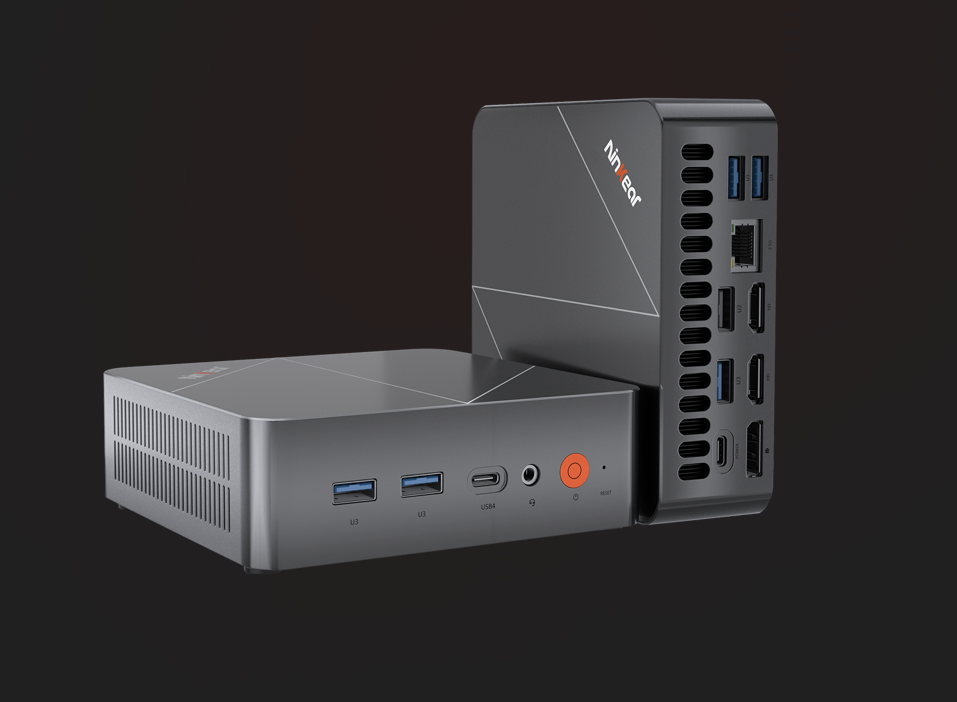
Since late June, the edge silicon layer has absorbed a run of ownership and financing changes while local-inference systems moved into smaller, cheaper form factors. Microchip signed a definitive agreement on July 24 to acquire Hailo, with completion expected near the end of the quarter ending September 30 and financial terms undisclosed. Syntiant filed a Form S-1 on July 6 for a proposed Nasdaq IPO under the ticker SYTN, disclosing $64.5 million in revenue and a $20.9 million net loss for the quarter ended March 31, and Ceva said on July 6 that a major U.S. software and AI platform company licensed its NeuPro-M NPU IP for a custom silicon program. New entrants arrived alongside that: Singapore's Acrab announced the 5 nm GELIX 1 system-on-chip and an Agent Box reference system on July 23, claiming 273 GB/s of unified-memory bandwidth for local inference in the 100-billion-parameter class. On the systems side, MSI's PRO MAX EDGE AI+ launched on July 24 with AMD Ryzen AI Max+ silicon, up to 126 TOPS and 128 GB of LPDDR5X-8000 unified memory in a 4-liter chassis, while AMD's Ryzen AI Halo Developer Platform is being reviewed at $3,999 with the same 128 GB unified-memory configuration. MSI's headline 670-billion-parameter figure requires multi-system clustering, and the company lists up to 120 billion parameters for a single system, a useful reminder that advertised parameter capacity is a ceiling rather than a working configuration.
Two routes to fitting capable models on constrained hardware advanced at the same time: compressing large models, and building small ones. Multiverse Computing said on July 27 that it is targeting up to $570 million for a Series C at a $1.7 billion pre-money valuation to expand its CompactifAI compression platform, and the round remains open. 9to5Mac reported on July 9, citing The Information, that Apple is interested in PrismML technology for running compressed LLMs on-device, including a reported Qwen 3.6 model with 27 billion parameters on an iPhone 17 Pro. From the small end, OpenBMB released MiniCPM5-1B as a 1B-parameter dense model aimed at local and resource-constrained inference, and NVIDIA introduced Cosmos 3 Edge, a 4-billion-parameter world model for local vision reasoning and robot-action workflows on hardware including Jetson Thor, whose T3000 and T2000 modules are scheduled for Q1 2027. Underneath all of it sits memory: Counterpoint Research estimates global smartphone shipments fell 11 percent year over year in Q2 2026, the weakest second quarter since 2013, as memory suppliers favored higher-value AI data-center demand, and expects the shortage to persist into 2027. Tim Cook told Apple's July earnings call that supply constraints and higher memory costs are affecting the hardware business. The practical consequence for anyone planning on-device features is that the installed base may refresh more slowly than model roadmaps assume, and that vendor speedup figures such as Acrab's 7.5x M4 Pro prefill result or NVIDIA's one-day adaptation claim are company benchmarks until reproduced on your own workload.
What to watch
Most of the open questions here have dates attached. Whether Microchip's acquisition of Hailo closes near the end of the quarter ending September 30, and what happens to Hailo's SDK, support and product roadmap given that terms were not disclosed; whether Syntiant's July 6 Form S-1 becomes a priced Nasdaq offering under SYTN, since the share count and price range are not set; and whether Multiverse Computing's still-open Series C reaches its $570 million target at a $1.7 billion pre-money valuation. On hardware, whether NVIDIA holds the Q1 2027 schedule for the Jetson Thor T3000 and T2000 and delivers T2000 emulation after the T3000 JetPack 7.2.1 path, and whether AMD's Versal Gen 2 memory-on-package parts sample in late 2026 and reach production in the second half of 2027. On economics, whether Counterpoint's roughly 14 percent full-year smartphone shipment decline and its expectation of a memory shortage persisting into 2027 hold up, since that governs the installed base for on-device features. On policy, whether Apple and the European Commission resolve the Digital Markets Act interoperability standoff that keeps Siri AI out of the EU, where Apple's Trusted System Agent proposal and 18-month transition have produced no announced resolution, and whether the model versions and data-routing boundaries for the China deployment are ever disclosed. And on claims, whether independent benchmarks appear for Acrab's 7.5x M4 Pro prefill result, Tranxform's simulated 8x memory-efficiency figure, and Multiverse's assertion that CompactifAI cuts LLM size by 80 to 95 percent with minimal accuracy loss.
Frequently asked questions
What can I buy right now to run models locally, and how much model actually fits?+
Two compact systems are current reference points. MSI launched the PRO MAX EDGE AI+ on July 24, a 4-liter desktop using AMD Ryzen AI Max+ 300 processors up to the Ryzen AI Max+ 395, rated up to 126 TOPS with 128 GB of LPDDR5X-8000 unified memory; its advertised 670-billion-parameter capacity requires multi-system clustering, while MSI lists up to 120 billion parameters for a single system. AMD's Ryzen AI Halo Developer Platform is being reviewed as a $3,999 workstation with 128 GB of unified memory and Ryzen AI Max+ 395 silicon; Tom's Hardware found lower setup friction but workload-dependent latency and compatibility limits versus Nvidia's DGX Spark and GB10 ecosystem. In both cases precision, context length, throughput and inter-node communication matter more than the parameter headline.
How large a language model can realistically run on a phone or a single-board computer today?+
The reported ceiling and the shipping floor are far apart. 9to5Mac reported on July 9, 2026, citing The Information, that Apple is interested in PrismML technology for compressed on-device LLMs, including a reported Qwen 3.6 model with 27 billion parameters on an iPhone 17 Pro; that is reported interest, not a confirmed Apple product plan. In shipping open work, OpenBMB's MiniCPM5-1B is a 1B-parameter dense model built for local and resource-constrained inference, NightRun boots quantized 1B to 4B models directly from UEFI on a Raspberry Pi 5 or x86_64 PC with memory bandwidth reported as the primary decoding constraint, and a July 4 Towards AI guide runs 1-4B models on a Raspberry Pi 5 for short Q&A, summarization, drafting and light code help. Note that these are inference setups, not training platforms.
What changed for robotics and physical AI at the edge?+
NVIDIA introduced the Jetson Thor T3000 and T2000 modules, with the T3000 targeting humanoid and industrial robots and the T2000 positioned for visual agents, mobile robots and other compact deployments; both are scheduled for Q1 2027, and developers can start with T3000 emulation on the existing Jetson AGX Thor developer kit using JetPack 7.2.1. NVIDIA also introduced Cosmos 3 Edge, a 4-billion-parameter world model for local vision reasoning and robot-action workflows, with more than 20 Japanese organizations intending to join its Cosmos Coalition. In the field, Auterion and Ukrainian manufacturer SkyFall began supplying 50,000 Shrike FPV drones fitted with AI-enabled Skynode S systems whose onboard computer vision is designed to continue terminal targeting when radio links are jammed.
Is the edge accelerator supplier landscape stable enough to design around?+
It is actively reshuffling. Microchip Technology signed a definitive agreement on July 24 to acquire Hailo, with completion expected near the end of the quarter ending September 30 subject to regulatory approvals; financial terms and post-closing SDK, support and roadmap details were not disclosed. Syntiant filed a Form S-1 on July 6 for a proposed Nasdaq IPO under the ticker SYTN, disclosing $64.5 million in revenue and a $20.9 million net loss for the quarter ended March 31. Ceva said on July 6 that a major U.S. software and AI platform company, which it did not name, licensed its NeuPro-M NPU IP for a custom AI silicon program. Newer entrants include Acrab, which announced the GELIX 1 SoC on July 23, and Tranxform, the Hsinchu-based startup founded in 2024 by former Apple and MediaTek engineer Stephen Huang, which expects its first chip next year.
Why are device economics working against on-device AI plans right now?+
Memory. Counterpoint Research estimates global smartphone shipments fell 11 percent year over year in Q2 2026, the weakest second quarter since 2013, as memory suppliers favored higher-value AI data-center demand, and expects a roughly 14 percent full-year decline with the shortage possibly persisting into 2027. Micron reported DRAM prices climbed more than 60 percent from the prior quarter. Apple raised prices on selected Mac, iPad and home devices, with Insider Monkey reporting increases of 17 percent to 25 percent on some base-model configurations tied to memory-cost pressure, and Tim Cook warned on the July earnings call that supply constraints and higher memory costs are affecting the hardware business. Slower refresh cycles mean fallback paths for older devices deserve real planning.
Can I ship the same on-device AI feature set in every region?+
No, and two markets show why. Chinese regulators approved Apple Intelligence for iPhones on July 15 according to the South China Morning Post, with Alibaba saying its Qwen model would support Apple Intelligence experiences for users in China and Baidu saying it was working on China-specific features; model versions, data-routing boundaries, rollout timing and final feature parity remain undisclosed. In the EU, Siri AI ships with iOS 27 and iPadOS 27 globally in September but not in the EU, because Apple and the European Commission disagree over Digital Markets Act interoperability requirements. Apple proposed a Trusted System Agent plus an 18-month transition; the Commission says Apple instead sought a blanket exemption. Tim Cook and EU tech chief Henna Virkkunen held a video call on June 30, 2026, and no resolution has been announced.