AI chips coverage across GPUs, accelerators, custom silicon, memory shortages, foundries, export controls, and the semiconductor supply chain behind AI compute.
Stories
1,093
Latest source update
August 28, 2026
Coverage
Live
Topic brief
What to know about AI Chips
Brief updated Aug 4, 2026
AI chips are the specialized processors and memory that make modern machine learning economically possible. The category spans training and inference accelerators from NVIDIA, AMD and Google, custom silicon programs at the largest cloud buyers, a field of inference-focused startups pursuing wafer-scale, chiplet and edge designs, the high-bandwidth memory and advanced DRAM that feed those accelerators, and the foundries, lithography suppliers and packaging houses that manufacture them. Because compute is the binding constraint on AI progress, the silicon layer sits underneath every model and product in the industry.
For practitioners, chips determine what is possible and what it costs. ML and infrastructure teams care about accelerator availability, memory bandwidth, interconnect topology and the price-performance of inference, which increasingly dominates real workloads. A related distinction now shows up directly in hardware choices: prefill, the compute-heavy stage that builds the KV cache, and decode, the memory-bandwidth-bound stage that emits tokens, have different ideal silicon, which is why heterogeneous racks are becoming a serious design pattern. Procurement teams track rack costs, lead times and the memory market, because an HBM shortage or a delayed rack system can reshape a plan. Software portability matters just as much as raw silicon, since a second source is only useful if the serving stack, kernels and numeric formats actually follow the workload across vendors.
The market has three defining features. NVIDIA remains dominant but is no longer unchallenged, facing rack-scale competition from AMD, custom accelerators at its largest customers, and inference specialists targeting the decode phase. Memory and packaging are the swing factors, with AI demand pulling DRAM away from consumer devices and advanced packaging capacity gating how many accelerators can actually be built. And chips are deeply geopolitical, with export controls, national industrial policy and sovereign compute programs shaping who can buy and build what.
What changed recently
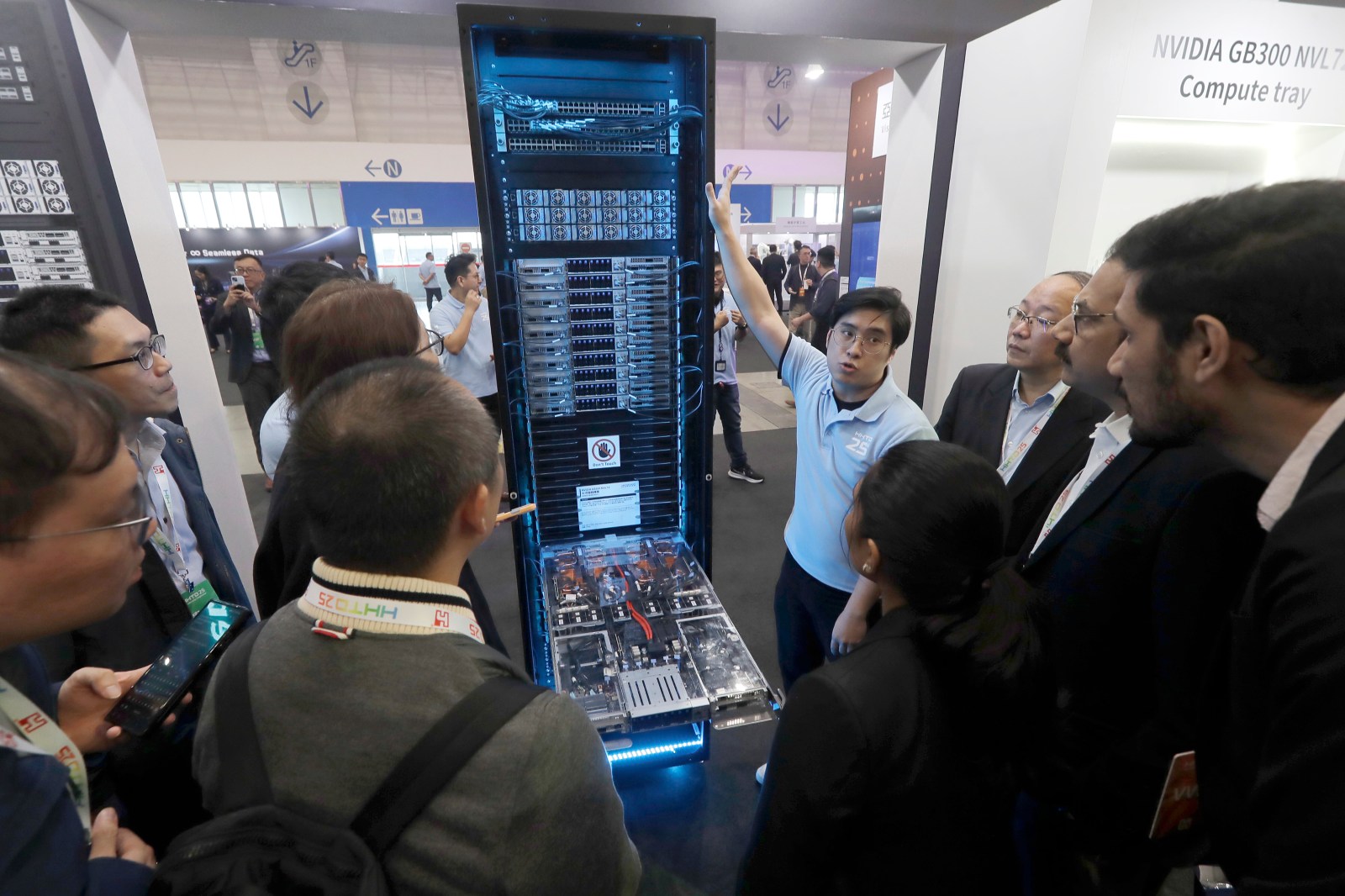
The most concrete development is that the alternative to a single-vendor accelerator plan now has dates attached to it. AMD launched Helios at its Advancing AI event on July 23, a rack-scale system combining 72 Instinct MI455X GPUs with 18 sixth-generation EPYC Venice CPUs, Pensando networking and ROCm; AMD says it is in production, Reuters reports shipments near the end of the third quarter, and OpenAI expects to bring systems online beginning in the fourth quarter. Anthropic said on July 22 it will deploy up to 2 gigawatts of Instinct MI450-series GPUs in Helios racks with the first gigawatt planned for the first half of 2027, against an AMD commitment to a future equity investment of up to $5 billion that Reuters reports is tied to deployment milestones. Microsoft and AMD announced on July 20 that Azure will add three AMD-powered VM families, with Helios shipments to Microsoft beginning in the second half of 2026, and AMD and Cerebras announced a joint platform on July 23 that runs prompts and large context windows on Helios while Wafer-Scale Engine systems handle latency-sensitive token generation, targeted for Cerebras Cloud in the second half of 2026. Custom silicon is moving in parallel: Fubon Research projects Google could deploy 12 million to 15 million ninth-generation TPUs in 2028, near its 12.4 million forecast for Nvidia data center GPUs, though Google has confirmed neither the target nor TPU v9 specifications, and The Information reports an experimental Google chip called Frozen v2 that would embed parts of Gemini's architecture in silicon with internally projected efficiency of six to ten times more tokens per unit of power than Google's newest TPUs. The practical reading for a buyer is that second-sourcing is now a scheduling exercise rather than a hypothetical, but AMD's performance comparisons are vendor estimates and none of these programs has published reproducible workload benchmarks or software-portability evidence.
The binding constraint, meanwhile, keeps moving further upstream into wafers, lithography, packaging and memory. TSMC committed an additional $100 billion to Arizona manufacturing and packaging, taking its reported U.S. investment pipeline to $265 billion, and CFO Wendell Huang described demand as a multi-year mega trend while the company converts 5-nanometer capacity toward 3-nanometer production. ASML reported second-quarter net sales of EUR 9.3 billion and raised full-year guidance to EUR 43 billion to EUR 45 billion, attributing the improved visibility to AI-related investment in advanced logic and memory. Micron raised planned U.S. investment above $250 billion through 2035 with a separate commitment of up to $3 billion for supply chains, SK Hynix raised $26.5 billion in its July 10 Nasdaq debut to fund fabrication and advanced packaging, and Doosan agreed on July 31 to buy SK Inc.'s 70.6% stake in silicon-wafer maker SK Siltron for 2.3 trillion won. That capacity race has a visible cost elsewhere: Counterpoint Research estimates global smartphone shipments fell 11% year over year in the second quarter of 2026, the weakest second quarter since 2013, as memory suppliers favored higher-value AI data-center demand, and expects a roughly 14% full-year decline with the shortage possibly persisting into 2027. Around the edges sit risks that do not appear on a chip roadmap: China imposed a temporary helium export ban on July 10 affecting a gas used in wafer cooling, plasma etching and lithography support; the Federal Reserve named AI-related demand for semiconductors and data-center infrastructure as a near-term price pressure with May total PCE inflation at 4.1% and core at 3.4%; and export policy keeps shifting, with the United States making approved Emirati buyers eligible for advanced computing items without individual licenses while Beijing weighs limited H200 approvals for Alibaba, ByteDance and DeepSeek.
What to watch
The nearest checkable milestones belong to AMD: whether Helios shipments land near the end of the third quarter, whether OpenAI brings systems online beginning in the fourth quarter, whether Microsoft's Helios shipments start in the second half of 2026 and turn into dated Azure availability and pricing, whether the AMD-Cerebras platform reaches Cerebras Cloud in the second half of 2026 with end-to-end latency, concurrency and energy measurements behind the cited up-to-5x tokens-per-watt figure, and whether Anthropic's first gigawatt of Instinct MI450-series capacity arrives in the first half of 2027 and triggers AMD's up-to-$5 billion equity commitment. On custom silicon, the open questions are whether Google ever confirms TPU v9 volumes or specifications against Fubon's 12 million to 15 million projection, whether the reported Frozen v2 project becomes an announced product or stays a trial, whether Tesla identifies the AI hardware company it acquired for $1.95 billion in the second quarter with $1.73 billion tied to service or deployment milestones, and whether Microchip's Hailo acquisition closes near the end of the quarter ending September 30. Upstream, watch whether Doosan's 2.3 trillion won SK Siltron purchase clears regulatory review and financing, whether TSMC's Arizona ramp and 5-nanometer-to-3-nanometer conversion hold, whether ASML's EUR 43 billion to EUR 45 billion guidance survives order timing and export controls, and whether Counterpoint's expected roughly 14% full-year smartphone decline and its warning that the memory shortage could persist into 2027 play out. On policy, the unresolved items are how long China's temporary helium export ban lasts, what H200 volume Beijing finally allows Alibaba, ByteDance and DeepSeek, whether license-free UAE access holds under its anti-diversion and matching-investment commitments, and whether South Korea's green-paper process on sharing AI chip gains produces any binding instrument.
Comparison
scope
open items
stated timing
customer or partner
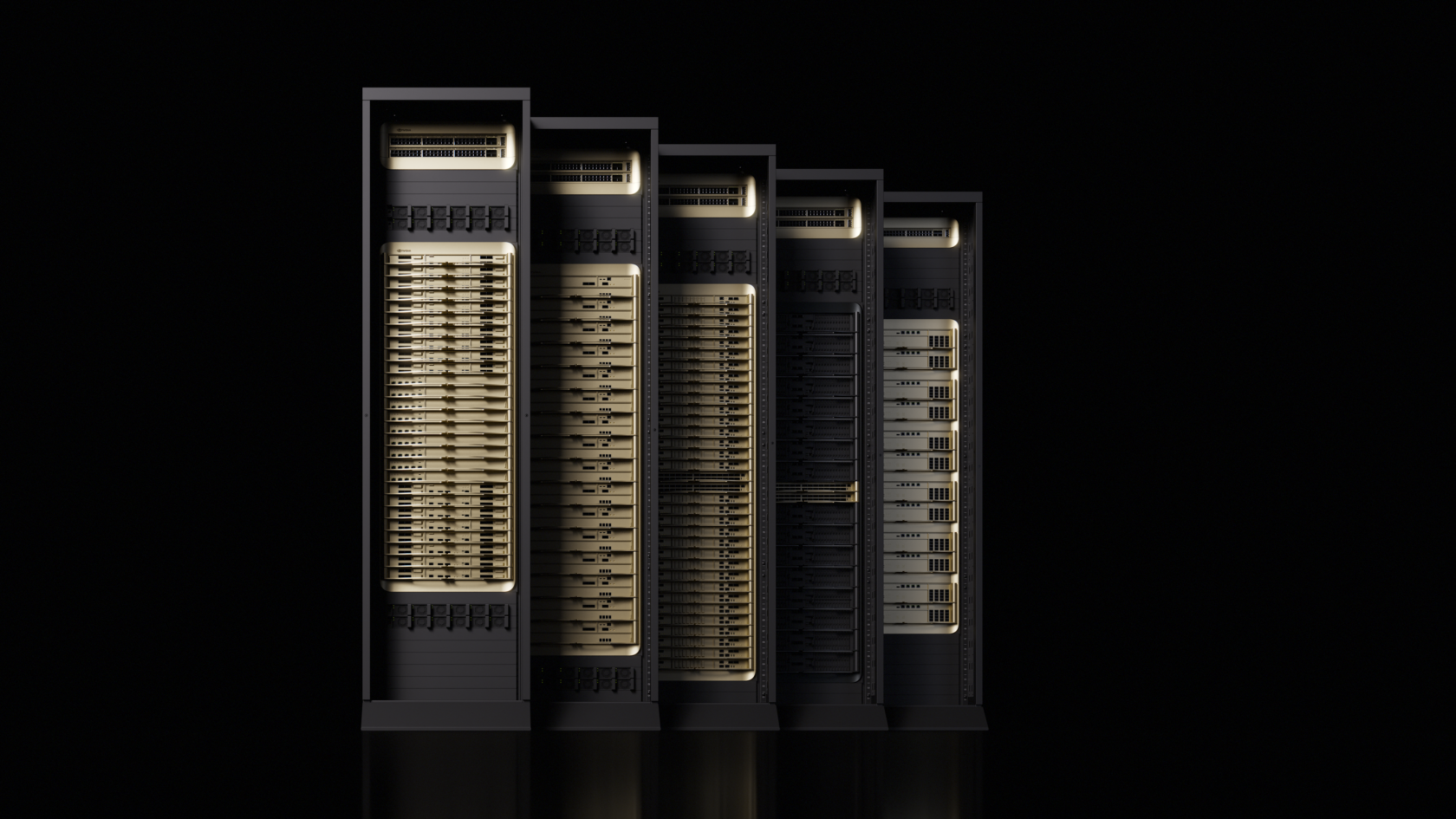
Helios rack-scale systems combining 72 Instinct MI455X GPUs with 18 sixth-generation EPYC CPUs, Pensando networking and ROCm
AMD's performance comparisons are vendor estimates, so reproducible workload benchmarks, software compatibility and deployment evidence are still outstanding
AMD says Helios is in production; Reuters reports shipments near the end of the third quarter, and OpenAI expects to bring systems online beginning in the fourth quarter
OpenAI
Up to 2 gigawatts of Instinct MI450-series GPUs in Helios systems, plus a multi-year engineering collaboration around Claude and ROCm
AMD committed to a future equity investment of up to $5 billion that Reuters reports is tied to deployment milestones
First gigawatt planned for the first half of 2027
Anthropic
Three VM families: ND MI455X v7 for large-scale AI inference, HDv2 for data pipelines and agent coordination, and HXv2 for chip design and technical computing, spanning accelerators, EPYC Venice CPUs, Pensando networking and Azure Boost
Deployment size, Azure availability dates and pricing were not disclosed
AMD says Helios shipments to Microsoft begin in the second half of 2026
Microsoft Azure
Joint inference platform pairing Helios racks for prompt and large-context processing with Wafer-Scale Engine systems for latency-sensitive token generation
The companies cite up to 5x higher tokens per second per watt, but published reporting lacks additional performance data and interconnection details
Targeted availability through Cerebras Cloud in the second half of 2026
Cerebras
Frequently asked questions
Is there a credible rack-scale alternative to a single-vendor accelerator plan yet?+
There is one with dates, though not yet with independent benchmarks. AMD launched Helios on July 23, a rack combining 72 Instinct MI455X GPUs, 18 sixth-generation EPYC Venice CPUs, Pensando networking and ROCm, and says the system is in production. Reuters reports shipments near the end of the third quarter. Named offtake includes OpenAI from the fourth quarter, Anthropic with up to 2 gigawatts of MI450-series capacity from the first half of 2027, and Microsoft Azure with Helios shipments starting in the second half of 2026. AMD's performance comparisons are vendor estimates, so reproducible workload benchmarks and software compatibility remain the critical next tests.
How much of AMD's data center position is CPU rather than accelerator?+
A substantial share. AMD reported a 46% share of data center CPU revenue on July 23, according to Wccftech, and estimates its total compute addressable market across server CPUs, AI accelerators and rack-scale systems could reach $2 trillion by 2030; earlier coverage cited a separate AMD forecast that the server CPU market alone could exceed $120 billion by 2030. AMD also extended the EPYC roadmap through 2030, confirming Zen 7-based Florence, Ferrara and Fidenza for 2028 and Zen 8-based Ravenna for 2030, with Florence reported to add ACE AI Compute Extensions and next-generation MRDIMM and LPDDR support. Core counts and performance targets are undisclosed.
What is happening with custom silicon at the large cloud buyers?+
Fubon Research projects Google could deploy 12 million to 15 million ninth-generation TPUs in 2028, close to its 12.4 million forecast for Nvidia data center GPUs, though Google has not confirmed the target or disclosed TPU v9 specifications and unit comparisons do not establish equivalent delivered compute. The Information separately reports Google is developing Frozen v2, an experimental server chip embedding parts of Gemini's architecture in silicon, with internal projections of six to ten times more tokens per unit of power than Google's newest TPUs; it is not an announced product. Broadcom's custom-ASIC business is tied to large cloud customers and it has announced a strategic collaboration with OpenAI for accelerator and networking systems. Tesla disclosed in a July 23 filing that it acquired an unnamed AI hardware company in the second quarter for $1.95 billion in stock and equity awards.
How severe is the memory squeeze, and who is absorbing it?+
Consumer devices are absorbing it first. Counterpoint Research estimates global smartphone shipments fell 11% year over year in the second quarter of 2026, the weakest second quarter since 2013, as memory suppliers favored higher-value AI data-center demand and handset component costs rose. Counterpoint expects a roughly 14% full-year shipment decline and says the shortage could persist into 2027. On the supply side, SK hynix reported preliminary second-quarter operating profit of 60.5 trillion won at a 76% margin, said HBM4 mass shipments began in the quarter, and raised $26.5 billion in a July 10 Nasdaq debut to fund fabrication and advanced packaging.
What upstream capacity is actually being added?+
TSMC committed an additional $100 billion to Arizona manufacturing and packaging, bringing its reported U.S. investment pipeline to $265 billion across a buildout intended to total 12 facilities, and is converting 5-nanometer capacity toward 3-nanometer production. Micron raised planned U.S. investment above $250 billion through 2035, with a separate commitment of up to $3 billion for supply chains including support for GlobalWafers in Texas, and a long-term goal of producing 40% of its DRAM in the United States. ASML raised full-year sales guidance to EUR 43 billion to EUR 45 billion with a 54% to 56% gross-margin range, citing AI-related investment. Flex and Cerebras added Milpitas lines expected to support roughly a sevenfold increase in CS-3 production through 2026.
Which export-control changes affect where I can buy or deploy?+
The United States eased controls for the United Arab Emirates, making the UAE government and approved companies eligible to receive advanced computing items including AI chips and servers without individual licenses; Commerce tied the change to the bilateral AI cooperation framework and said sensitive technology remains subject to anti-diversion commitments, so this is broader access for approved entities rather than unrestricted access. In the other direction, Reuters-syndicated reporting on July 8 said China is planning limited H200 access for top AI firms including Alibaba, ByteDance and DeepSeek, with the total possibly fewer than 200,000 chips. Separately, China imposed a temporary export ban on helium on July 10, a materials risk for fabs rather than a chip-access issue.