Nvidia and Microsoft tease Windows-on-Arm N1X PCs
The detail that matters for ML practitioners is architectural, not marketing: a laptop built on Nvidia's rumored N1X would put a high-bandwidth unified-memory GPU under Windows for the first time, changing the ceiling on local model size and inference latency for consumer devices. Tom's Hardware reports that Nvidia and Microsoft's Windows account ran coordinated 'A new era of PC' teasers, with Taipei Music Center coordinates, ahead of Computex 2026 and Jensen Huang's GTC Taipei keynote. The posts point to the long-rumored N1X, described as the mobile variant of the GB10 Superchip pairing an RTX 5070-class GPU with 128GB of LPDDR5X and a MediaTek 20-core Arm CPU. This remains rumor sourced to teasers and leaks, but if Microsoft backs a unified-memory Arm platform of that class, on-device AI tooling assumptions shift well beyond today's Copilot+ PCs.
Why practitioners should care
Strip away the teaser theatrics and the interesting claim is about memory architecture. A consumer laptop carrying a high-bandwidth unified-memory GPU would change the practical ceiling on local inference: bigger models resident in memory, lower round-trip latency, and a different cost split between cloud and edge. If Microsoft puts Windows behind that class of silicon, the software-reach problem that has limited Windows-on-Arm largely goes away, and on-device AI tooling becomes a higher priority for teams targeting consumer hardware.
What happened
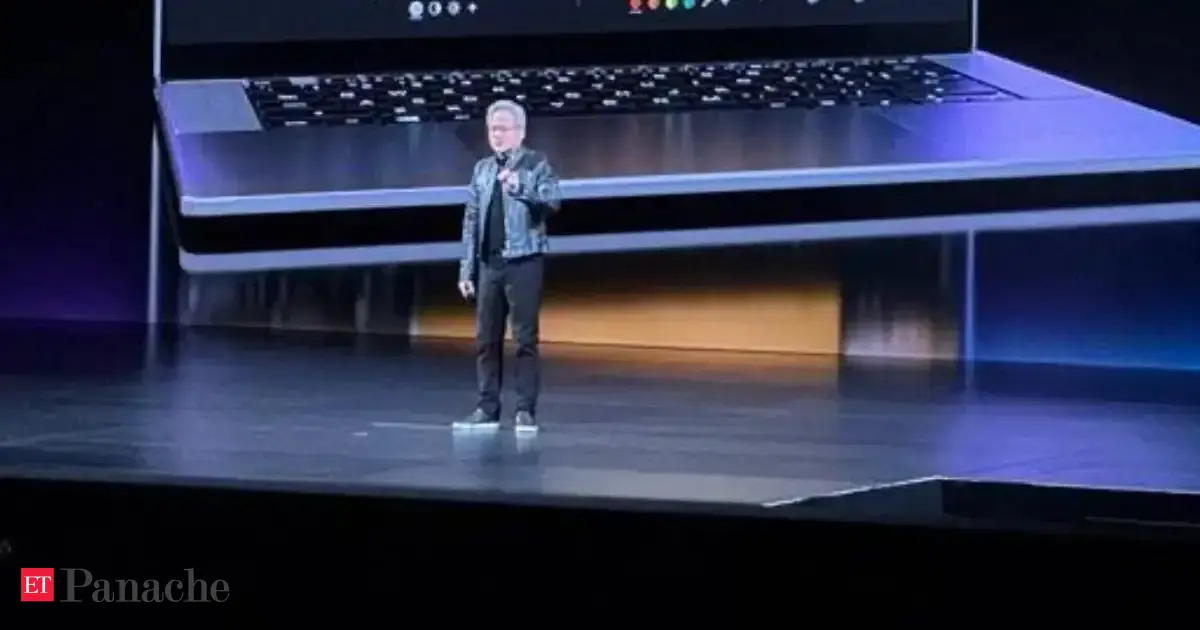
Tom's Hardware reports that Nvidia and Microsoft's Windows account posted coordinated teasers reading 'A new era of PC,' alongside the coordinates of the Taipei Music Center, where Nvidia CEO Jensen Huang is set to keynote as part of GTC Taipei 2026 ahead of Computex. Tom's Hardware ties the matching language across both accounts to the long-rumored N1X laptop platform and a Windows-on-Arm angle. Independent coverage from Windows Central and VideoCardz reaches the same read.
The technical substance
N1X is reported as the mobile variant of the GB10 Superchip at the heart of Nvidia's DGX Spark, said to pair an RTX 5070-class GPU with 128GB of LPDDR5X memory and a MediaTek-designed 20-core Arm CPU complex. A separate Tom's Hardware report on leaked N1/N1X specs indicates the N1 family scales up to 20 Arm cores, with standard N1 parts in 12- and 10-core configurations. The contrast with DGX Spark is the point: Spark runs Ubuntu Linux as a developer sandbox, whereas an N1X laptop would bring that unified-memory design into a mainstream consumer OS.
What this would change for ML teams
A high-bandwidth unified-memory Arm laptop alters working assumptions about on-device model size, memory management, and profiling for local inference. Quantized-model tooling, kernel-level driver support for unified memory, and cross-compilation pipelines for Arm plus CUDA-class acceleration move up the priority list for anyone shipping local AI features to consumer devices.
Treat as unconfirmed - what to watch
This is rumor sourced to teaser posts and leaks, not an official spec sheet, so hold the specifics loosely. Concrete confirmation would come from the Computex and GTC Taipei keynotes naming N1X or GB10, product announcements with shipping configurations, and technical documentation pinning down memory architecture, GPU class, and Windows-on-Arm support. Absent those, the teasers may simply precede a later reveal.
Key Points
- 1WHAT: Tom's Hardware reports coordinated Nvidia and Microsoft teasers ('A new era of PC') ahead of Computex 2026, pointing to the rumored N1X Windows-on-Arm laptop.
- 2WHY: N1X is reported as a mobile GB10 Superchip - RTX 5070-class GPU, 128GB LPDDR5X unified memory, MediaTek 20-core Arm CPU - far beyond prior Windows-on-Arm silicon.
- 3SO-WHAT: A unified-memory Arm laptop under Windows would raise local model-size limits and reshape quantization, driver, and cross-compile priorities for on-device AI.
Scoring Rationale
This is a notable hardware-ecosystem story: a Windows-on-Arm laptop with a unified-memory GPU would affect where and how on-device AI runs. The report is rumor-driven and sourced to teaser posts, which limits certainty, so importance is moderate rather than industry-shaking.
Sources
Public references used for this report.
Practice interview problems based on real data
1,625 SQL & Python problems across 15 industry datasets — the exact type of data you work with.
Try 250 free problems