Bayreuth's AI-Assisted Wagner Ring Staging Draws Boos
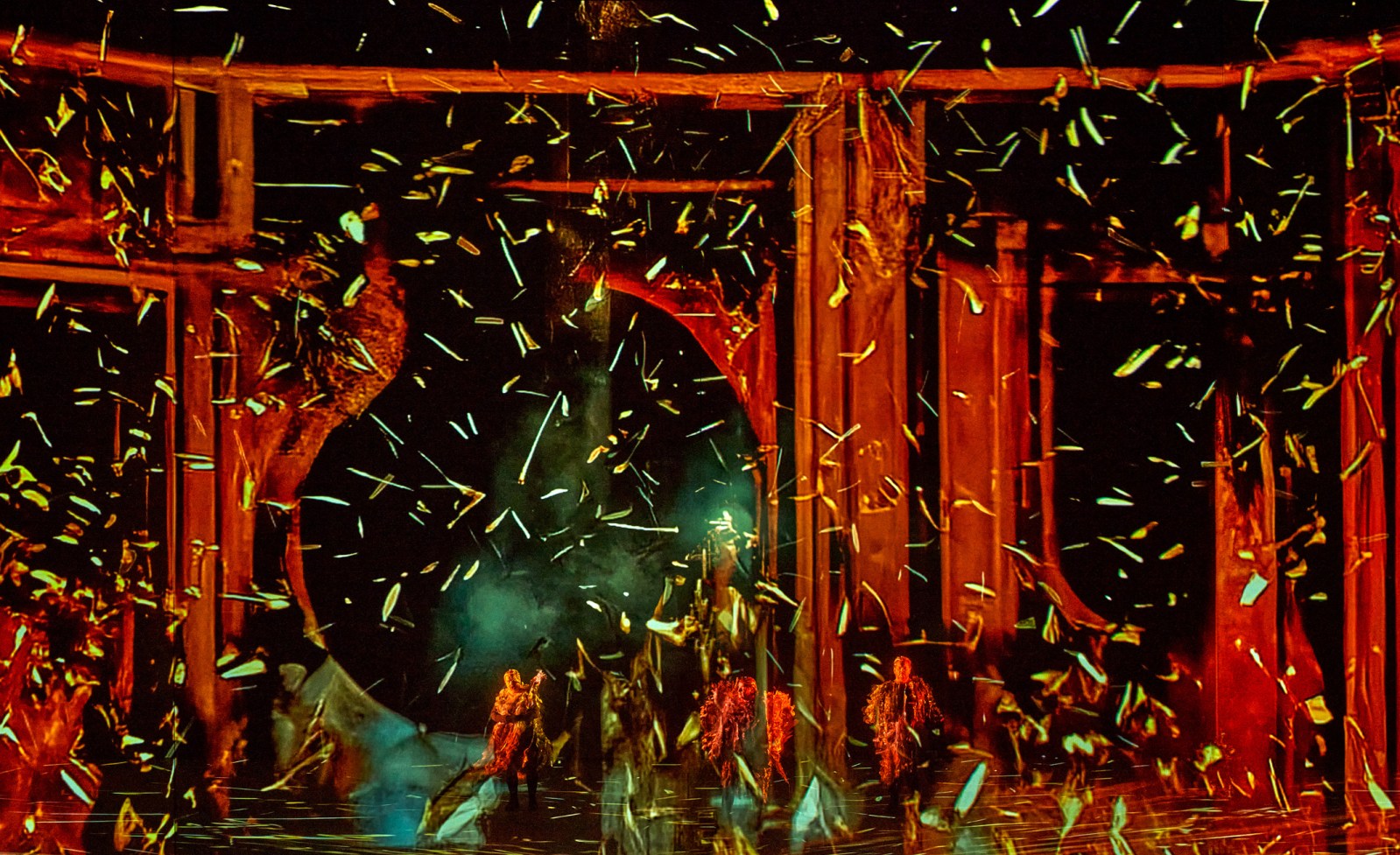
An AI-assisted staging of Wagner's Ring cycle at the Bayreuth Festival drew boos and whistles after the August 1 performance of Götterdämmerung, according to the Associated Press. The festival says the 150th-anniversary production uses continuously changing projections generated from material tied to past Ring productions, while singers and musicians remain the fixed focus onstage.
The Bayreuth Festival's AI-assisted Ring staging met a divided response on August 1. The Associated Press reported that curator Marcus Lobbes and his team were greeted with boos and whistles after the evening performance of Götterdämmerung. The singers, musicians, and conductor Christian Thielemann received warm applause, making the reaction more specific than a general rejection of the performance.
How the system shapes the staging
Bayreuth's official production page describes Ring 10010110 as the first festival staging to use artificial intelligence as an image-generating force. The singers remain the fixed point onstage while projections shift around them, drawing on the Ring's production and reception history.
AP reported that the projected collage included scenes from earlier Ring performances and historical themes. The report said Lobbes and his team preselected images used by the system, while the festival says the visual combinations keep changing so that each performance is unique.
In a July 27 interview with BR Klassik, Lobbes gave more detail about the workflow. He said the imagery is generated in real time rather than played from a fixed video, and that the system follows the live orchestra and singers to identify the point in the work, its dynamics, and the characters in focus. Lobbes also said a person monitors the process while the system generates images within boundaries set by the production team.
The official credits separate the human roles behind the experiment: Lobbes and Nils Corte led the artistic and technical concept, Roman Senkl handled digital and AI storytelling, and Corte and Phil Hagen Jungschlaeger were responsible for creative code and visual art. The retrieved evidence therefore presents AI as one component of a human-directed visual system, not as a replacement for the score, singers, orchestra, or conductor.
What remains undisclosed
The retrieved sources do not identify the model provider, document the system architecture or review safeguards, or detail the rights and licensing arrangements for the material used to develop the projections. Those gaps still limit an independent technical and provenance assessment, even though the live-generation workflow is clearer than the festival page alone suggests.
The festival lists two more Götterdämmerung performances for August 9 and August 16. The reported response concerns the August 1 performance, so it should not be treated as a verdict on the remaining shows or on the entire Ring cycle. For practitioners, the narrower lesson is that audience comprehension and artistic reception are part of evaluating a generative-media system in live production, alongside reliability and visual quality.
Key Points
- 1The AI-assisted visual team drew boos and whistles after the August 1 Götterdämmerung, while the singers, musicians, and conductor received warm applause.
- 2Curator Marcus Lobbes told BR Klassik that the imagery is generated in real time from live performance signals within human-set boundaries and with a person monitoring the process.
- 3The retrieved public materials do not identify the model provider, document the system architecture or safeguards, or detail source-material licensing.
Scoring Rationale
The event is a visible but specialized generative-media deployment at a major performing-arts institution. It provides concrete evidence about audience reception and a curator-described real-time workflow, while leaving the model architecture, safeguards, and provenance controls undisclosed.
Sources
Primary source and supporting public references used for this report.
Practice interview problems based on real data
1,625 SQL & Python problems across 15 industry datasets — the exact type of data you work with.
Try 250 free problems