
AI Audio Analysis Improves Possum Detection
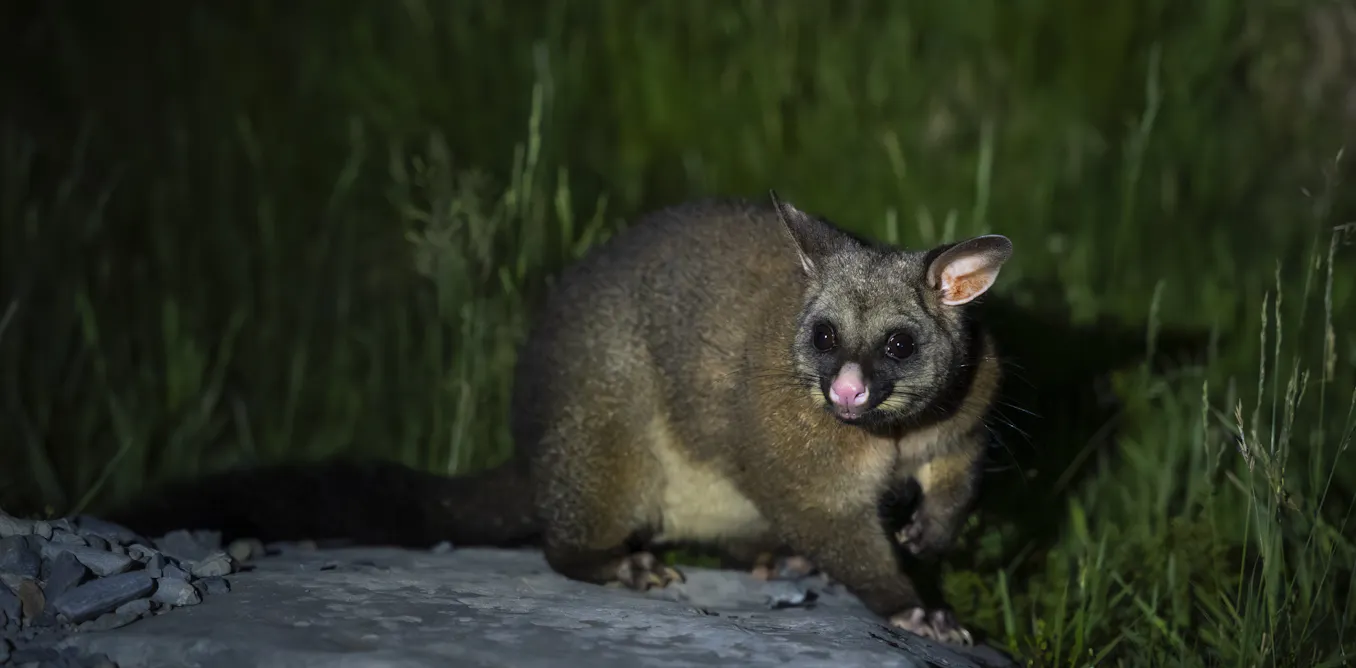
On August 23, 2026, The Conversation reported that AI-assisted acoustic monitoring can help locate New Zealand's remaining brushtail possums after predator-control campaigns, while false positives from other animal calls remain a key limitation. The article says models can scan thousands of hours of overnight recordings and sometimes run on small battery-powered devices in remote forests. Predator Free NZ describes HARK, an edge-AI monitor that analyzes forest audio on-device in real time.
Research discussed by The Conversation on August 23 examines how AI-assisted acoustic monitoring could help conservation teams locate the last remaining brushtail possums in New Zealand forests. The article identifies a central limitation: models trained to recognize possum calls can generate false alarms when they confuse calls from other animals with pest detections.
Possums damage native forests and prey on wildlife, The Conversation reports. After predator-control programs reduce local populations, locating a small number of survivors becomes substantially harder. The article notes that even a few remaining animals can rebuild a population, making reliable detection particularly important during the final mop-up phase.
Audio at scale, with a false-positive problem
The Conversation reports that AI can scan thousands of hours of overnight audio, avoiding the need for volunteers or researchers to listen manually to every recording. It also notes that some models can run on small, battery-powered devices in remote locations, reducing the need to transfer large audio files for cloud processing.
The reported research found the approach can work well when models learn not to mistake other animals for possums. In low-prevalence settings, where a target animal is rare, false-positive control is often as operationally important as raw classifier sensitivity.
Edge monitoring in the field
Predator Free NZ describes HARK as an acoustic wildlife monitor that records and analyzes forest sound continuously. According to Predator Free NZ, the device runs AI inference on-device rather than storing audio for later analysis or sending it all to a cloud service. It uses three microphones operating at up to 192 kHz and sends detections and metrics through 4G or, where required, a mesh network.
Predator Free NZ reports that HARK runs Google's Perch v2 model on the device and can execute more than 100 AI models in real time. Its stated monitoring scope includes birds, possums and bats.
For ML practitioners, this is a concrete example of a recurring bioacoustics deployment challenge: evaluation must account for the local soundscape, not merely performance on curated clips. Comparable conservation systems generally need representative negative classes, site-specific validation and alert thresholds designed around the cost of field follow-up.
Key Points
- 1The Conversation reports AI can process overnight forest recordings for possum calls, supporting detection when remaining animals are rare and difficult to find.
- 2False alarms from non-possum animal calls can undermine acoustic eradication monitoring, making local negative-class evaluation operationally important.
- 3Predator Free NZ reports HARK performs on-device inference with Google's Perch v2, illustrating edge AI for remote wildlife monitoring.
Scoring Rationale
The story offers a practical AI deployment case in conservation, especially around false-positive management in rare-event audio detection. It is relevant to practitioners building edge inference and bioacoustic classifiers, but its immediate impact is specialized rather than ecosystem-wide.
Sources
Primary source and supporting public references used for this report.
Practice interview problems based on real data
1,625 SQL & Python problems across 15 industry datasets — the exact type of data you work with.
Try 250 free problems

