Eaton Wins Air Force Grid Resilience Contract
On August 6, Eaton announced a $7 million, 24-month U.S. Air Force Research Laboratory contract to develop quantum-enabled analytics, machine learning, and visualization tools for electric-grid resilience. Reporting by Interesting Engineering and The Quantum Insider says Eaton will work with Infleqtion and Pennsylvania State University on hybrid quantum-classical methods for concurrent cyber and physical threats.
Eaton announced on August 6 that it received a $7 million, 24-month contract from the U.S. Air Force Research Laboratory to explore quantum computing, machine learning, and advanced visualization for electric-grid resilience. Interesting Engineering and The Quantum Insider both report that the project targets compound physical and cyber threats to critical energy infrastructure.
Eaton will work with quantum-computing company Infleqtion and Pennsylvania State University. The retrieved reports describe a hybrid quantum-classical program rather than a production quantum system: the team plans to develop and test quantum algorithms alongside classical computing and grid-analysis workflows.
From sequential failures to compound threats
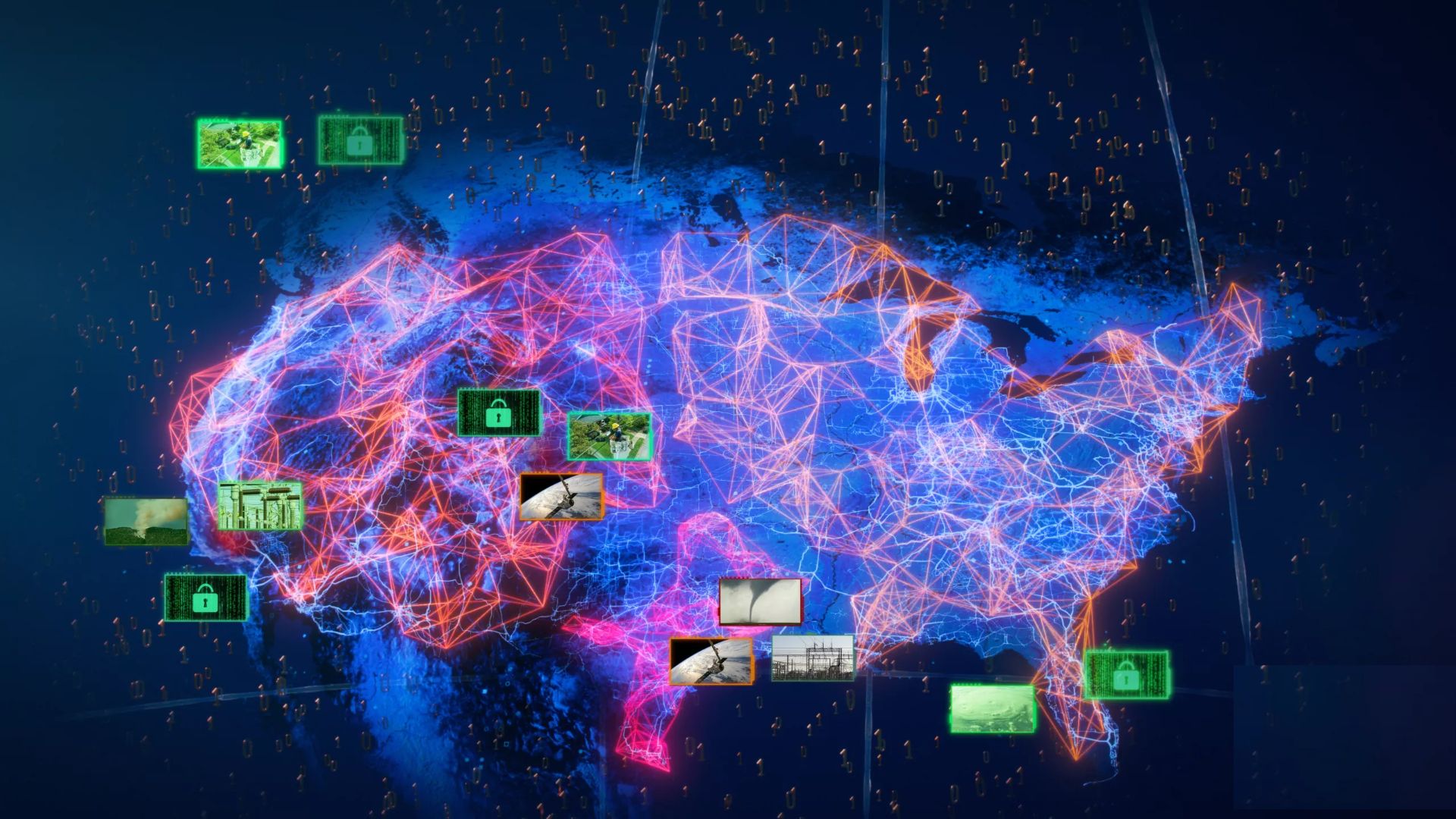
Interesting Engineering explains the project against the grid-contingency problem, in which operators evaluate how a system responds when components fail. It reports that the program is intended to examine concurrent disruptions, including combinations of severe weather, wildfires, cyberattacks, and physical damage.
The Quantum Insider reports that the work includes algorithm development, circuit optimization for hybrid execution, tests across multiple quantum hardware platforms, and integration with machine-learning and visualization tools. The goal is to improve situational awareness and response planning for defense and commercial grids.
The public descriptions do not identify the quantum processors, publish benchmark targets, or establish a production-deployment date. The two-year effort is framed as research leading to a proof-of-concept, so claims of operational advantage remain premature until the team reports comparative results under realistic grid constraints.
What practitioners should watch
For power-systems and ML teams, the consequential questions extend beyond whether a quantum routine runs successfully. Useful evidence would include how scenarios are generated, how grid-state data reaches the analysis pipeline, how uncertainty is represented, and whether any hybrid method improves speed or decision quality against established classical baselines.
The contract is therefore a concrete applied-research program, not proof that quantum computing is ready to operate the grid. Its value will depend on reproducible benchmarks and whether the resulting tools improve decisions during simultaneous, high-consequence failures.
Key Points
- 1Eaton's $7 million AFRL contract combines quantum computing, machine learning, and visualization to study compound threats to electric-grid resilience.
- 2Infleqtion and Pennsylvania State University will support a 24-month hybrid quantum-classical research effort across algorithms, hardware tests, and grid-analysis workflows.
- 3The program is expected to produce a proof-of-concept; no processor choice, benchmark target, or production-deployment date has been disclosed.
Scoring Rationale
The contract is a notable applied quantum and ML research effort in critical energy infrastructure, with relevance to optimization and resilience practitioners. Its $7 million scale and proof-of-concept framing limit immediate ecosystem-wide impact, but the defense and grid-security use case is consequential.
Sources
Public references used for this report.
Practice interview problems based on real data
1,625 SQL & Python problems across 15 industry datasets — the exact type of data you work with.
Try 250 free problems