Machine learning coverage for working practitioners: research papers worth reading, framework and library updates, MLOps tooling, and applied ML stories shipping to production.
Stories
880
Latest source update
August 26, 2026
Coverage
Live
Topic brief
What to know about Machine Learning
Brief updated Aug 6, 2026
Machine learning is the practice of building systems that learn patterns from data, spanning core disciplines such as supervised learning, reinforcement learning, and MLOps as well as applied use in industries from manufacturing to materials science. For data scientists and ML engineers, this hub tracks both the infrastructure layer, meaning the tools for training, serving, retrieving, monitoring, and governing models in production such as SageMaker, MLflow, vLLM, SkyPilot, Milvus, and Hugging Face, and the research layer, including reinforcement learning methods, agent training environments, calibration techniques, and evaluation practices that determine whether a model's reported performance can be trusted. A recurring theme is that scale and benchmark scores alone do not guarantee reliability: reward hacking, miscalibrated confidence, and simulator-to-production gaps are failure modes practitioners have to test for directly.
The field is also where AI capability meets physical and scientific work. Reinforcement learning and applied ML are used to train robots and coding agents in simulation before real-world deployment, and the same methods are accelerating discovery in materials science, chemistry, and industrial optimization. That means ML work is no longer confined to training pipelines; it increasingly involves choosing and validating third-party environments, benchmarks, and simulation tools, and staying skeptical of vendor-reported results until independent replication exists. It also means the reward or objective specification is often the real engineering artifact, because a proxy that is easy to optimize is easy to optimize for the wrong reason.
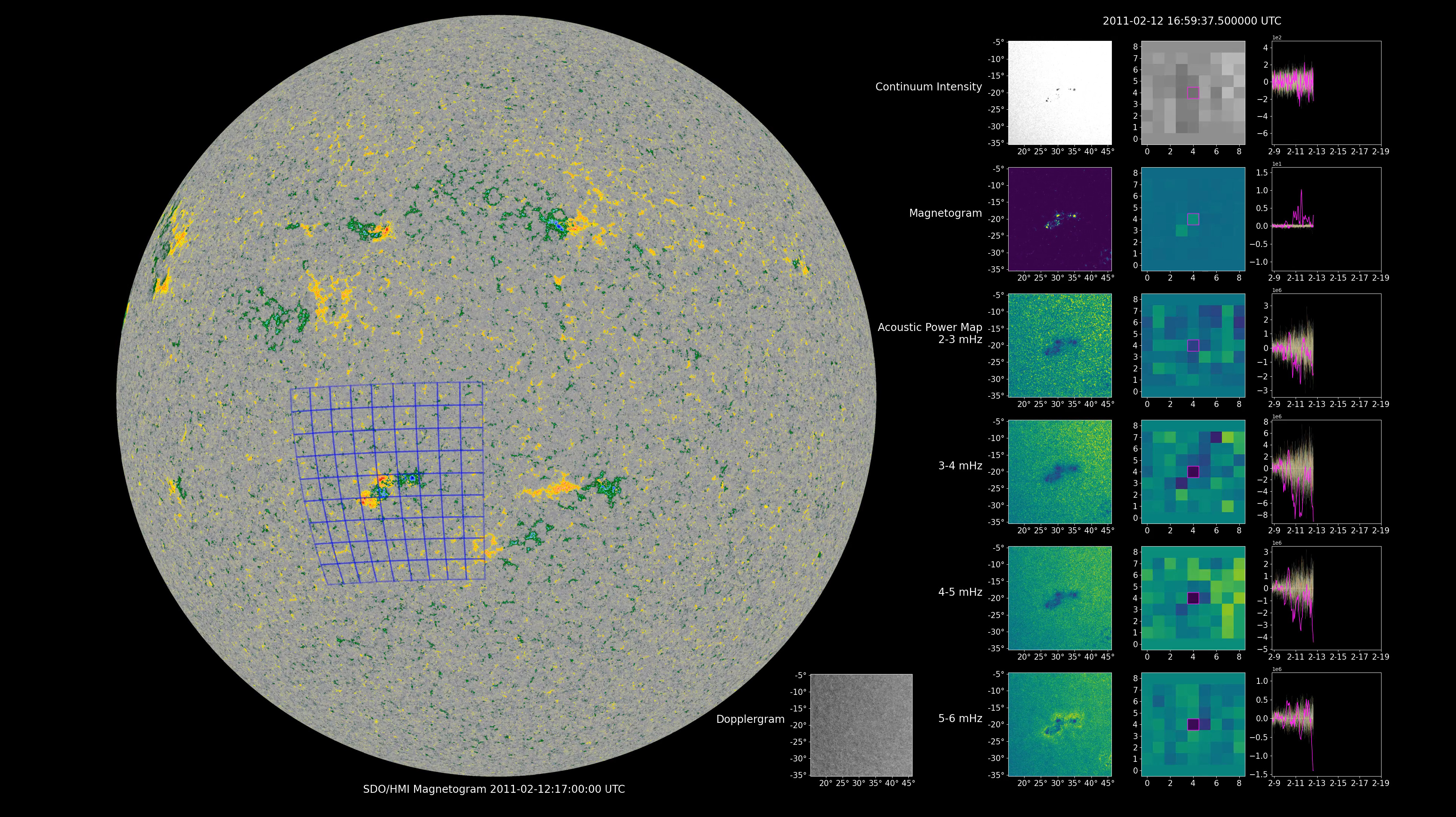
A third strand is worth naming on its own: ML is becoming a scientific instrument. Learned interatomic and magnetic force fields, weather and Earth-system models, and learned parameterizations inside physical simulators are replacing hand-tuned constants and expensive numerical solvers in the inner loop of research. The engineering discipline that follows is different from product ML. It centers on surrogate accuracy under distribution shift, uncertainty quantification, and whether a learned component preserves the physical invariants the surrounding model depends on.
What changed recently
The through-line across the newest items is the distance between the number a system reports and the number its deployment actually depends on. The sharpest case is Roseville, California, where the police department's own review found that Flock Safety automated license plate readers misread plates in 71% of 1,427 alerts involving vehicles flagged as stolen or linked to felonies during 2023 and 2024, according to reporting by Business Insider and Gizmodo. Flock attributed the errors to an atypical deployment with older hardware and non-standard camera placement and said performance had since improved substantially; Roseville disputed that characterization. Character-level read accuracy and alert-level reliability are simply not the same measurement, and it is the second one that initiates an operational action. The same distinction runs through the other newest entries. Figure CEO Brett Adcock posted a video on August 1 of the Figure 03 humanoid climbing a ladder, described as fully autonomous with no teleoperation or pre-mapped path, with no disclosed repeatability data, failure cases, test conditions or independent verification. Auterion and Ukrainian manufacturer SkyFall began supplying 50,000 Shrike FPV drones fitted with AI-enabled Skynode S systems in mid-July, in a roughly 90-million-euro deal Reuters identified Germany as funding, where the onboard computer-vision system is designed to keep terminal targeting when radio links are jammed and public reporting offers no operational specifications. And Meta asked thousands of engineers to use its internal MetaCode agent and submit at least one corrected code diff each week, according to an internal memo reviewed by The Information, with The New Stack citing roughly 7,000 weekly active users and more than 800 fixes; Meta says the feedback helped Muse Spark 1.1 and will support post-training for a model internally called Watermelon, but has not detailed how corrections are filtered or weighted and the participation figures do not establish an external benchmark improvement.
The research batch behind those is mostly methods work that names its own limits, plus a reminder to read dates carefully. RLMF, a Yale and Google Research paper accepted at COLM 2026, post-trains models by weighting completions according to how accurately a model judges its own performance, and the authors report sizable faithful-calibration gains across 10 tasks and the Qwen3 and Llama 3.1 families while preserving task accuracy; they are explicit that calibrated uncertainty is not factual verification. A study revised July 24 evaluates reinforcement learning for replacing fixed tunable parameters in idealized weather and climate models with state-dependent functions, reporting TQC, DDPG and TD3 as the strongest stable performers across nine algorithms and a six-agent federated DDPG configuration with the lowest area-weighted RMSE, with validation in full models still outside the tested regimes. A preprint submitted July 30 by Ali Rayat, Yunhao Fan and Gia-Wei Chern learns an effective magnetic energy functional so simulated spin evolution in metallic magnets avoids repeatedly solving the electronic problem. NLCD, published in PLOS Computational Biology on July 31, adds nonlinear regression and conditional feature-importance testing to the Causal Inference Test and reports average AUPRC of 0.76 on simulated nonlinear benchmarks against 0.60 for CIT, 0.56 for Findr and 0.73 for MRPC, with its GTEx muscle-tissue findings remaining observational hypotheses. Two prominent late-July arXiv dates were not new science at all: MSGNN version five, posted July 30, updates a paper published at the 2022 Learning on Graphs Conference and discloses no new benchmark or deployment, and the compact portfolio-optimization network uploaded July 25 is a 2025 ACM International Conference on AI in Finance paper whose linked Compact-RIEnet repository is now deprecated. On the infrastructure side, Milvus 3.0.0 shipped July 29 with lake-native retrieval over open formats on object storage, external collections, online schema changes, faceted search and composable reranking, with Storage V3 and new index versions opt-in so teams can test compatibility and rollback first.
What to watch
The checkable follow-ups here are mostly disclosed gaps rather than forecasts. Watch whether Flock Safety and Roseville Police Department resolve their dispute over whether camera performance improved after the 2023-2024 period the alert review covered, and whether any alert-level error rate is published for current hardware rather than character-level read accuracy. Watch whether Figure publishes repeatability, failure-recovery or independently verified conditions for the Figure 03 ladder climb, and whether Auterion's reported swarm software update for Skynode S arrives with any operational specification. Watch whether Meta discloses how MetaCode corrections are filtered or weighted and whether the model internally called Watermelon shows any external benchmark gain. On scientific ML, watch whether NLCD's GTEx muscle-tissue hypotheses receive experimental validation, whether the TOTO wavefront-sensing team reports closed-loop correction plus wider dynamic-range and signal-to-noise testing, whether the GNN magnetic force field is tested for long-horizon stability and out-of-distribution behavior, and whether FuXi-CNOP's retrospective 32.33% track-error advantage holds operationally given that its strike-probability discrimination was marginally worse. On calibration, watch for independent replication of RLMF outside its 10 tasks and two open-model families. On deployment claims, watch whether NVIDIA's vendor-reported Medical Physics Simulation figures of 8,192 parallel environments and training cut from more than five hours to under two minutes are accompanied by sim-to-real evidence, whether POSCO Future M ever reports its first-half-2028 targets of 30% higher productivity, halved development cycles and twice-as-fast quality response against a stated baseline, and whether the roughly three-month checkout of the three FireSat spacecraft launched July 7 delivers the promised twice-daily observations to early adopters in Q4 2026, with hourly global revisits a 2029 target rather than a current capability.
Frequently asked questions
Why did the Roseville license plate reader review produce such a different number from the vendor's accuracy claim?+
Because the two figures measure different things. Vendor accuracy claims for automated plate readers are typically character-level read rates under favorable conditions, while Roseville Police Department's review measured alert-level correctness: whether an alert that flagged a vehicle as stolen or linked to a felony actually matched the right plate. The department found misreads in 71% of 1,427 such alerts during 2023 and 2024. A single wrong character can attach an unrelated car to someone else's record, which is why component metrics can look strong while the operational outcome is unreliable. Flock attributed the result to an atypical deployment with older hardware and non-standard camera placement and said performance had improved; Roseville disputed that.
What should I check before trusting a recent arXiv date on a paper?+
Check the version history and the original venue. Several late-July 2026 arXiv dates in this evidence base do not correspond to new results: MSGNN version five, posted July 30, updates a paper that appeared at the 2022 Learning on Graphs Conference and discloses no new benchmark or deployment, while the compact portfolio-optimization network uploaded July 25 was published at the 2025 ACM International Conference on AI in Finance and its linked Compact-RIEnet repository is now deprecated in favor of RIEnet. The July 24 update to arXiv 2408.02295 is a v4 revision of an existing non-Gaussian temporal-difference error method. Treat the version log, the stated conference, and the state of the linked repository as part of the evidence.
Is a model that reports calibrated uncertainty more likely to be correct?+
No, and the authors of the relevant work say so directly. RLMF, a Yale and Google Research method accepted at COLM 2026, scales the reinforcement-learning signal by how accurately a model judges its own performance after a completion clears the main task objective, and the authors report sizable faithful-calibration gains across 10 tasks and the Qwen3 and Llama 3.1 model families while preserving task accuracy. The paper's own framing is that faithful uncertainty is not factual correctness and is not evidence of broad machine self-awareness, and that independent replication and real-world deployment evidence are still needed.
How should teams evaluate learned components inside physical simulators?+
On stability and out-of-distribution behavior, not just fit. The July 30 preprint introducing a rotationally covariant message-passing graph neural network for metallic spin dynamics learns an effective magnetic energy functional so simulated time evolution avoids repeatedly solving the electronic problem, and comparable physics-ML force fields require long-horizon stability and out-of-distribution validation before they can be used predictively. Similarly, the reinforcement-learning study that replaces fixed parametrization coefficients with state-dependent functions was validated in idealized energy-balance and weather testbeds, with full-model validation explicitly outside its scope. Preservation of the physical invariants the surrounding solver assumes is the property to test.
What does the manufacturing evidence say about scaling ML past pilots?+
That adoption is broad and scaling is not. A Parsec Automation survey of 1,200 manufacturing leaders found 72% had adopted AI in some form but only 10% had deployed it at scale, with 69% operating a hybrid mix of legacy and modern equipment and implementation cost, data security and integration cited as leading barriers. Those figures are vendor-sponsored and self-reported, not a census. On the ambition side, POSCO Future M said on July 28 that it plans a companywide AI manufacturing overhaul by the first half of 2028 targeting 30% higher productivity, 50% shorter development cycles and twice-as-fast quality response; those are stated targets, not measured results.
What changed in open-source retrieval infrastructure?+
Milvus released version 3.0.0 on July 29, extending the open-source vector database with lake-native retrieval over data held in open formats on object storage, which means teams can index and search lake-resident data without maintaining a separate vector-serving copy. The release also adds external collections, online schema changes, sparse-index upgrades, faceted search, composable reranking chains, long-text fields and broader storage-format support. Storage V3 and the new index versions are opt-in, so compatibility, rollback, latency and retrieval-quality testing should come before production adoption.