Zalando Develops Content Creation Copilot for Onboarding
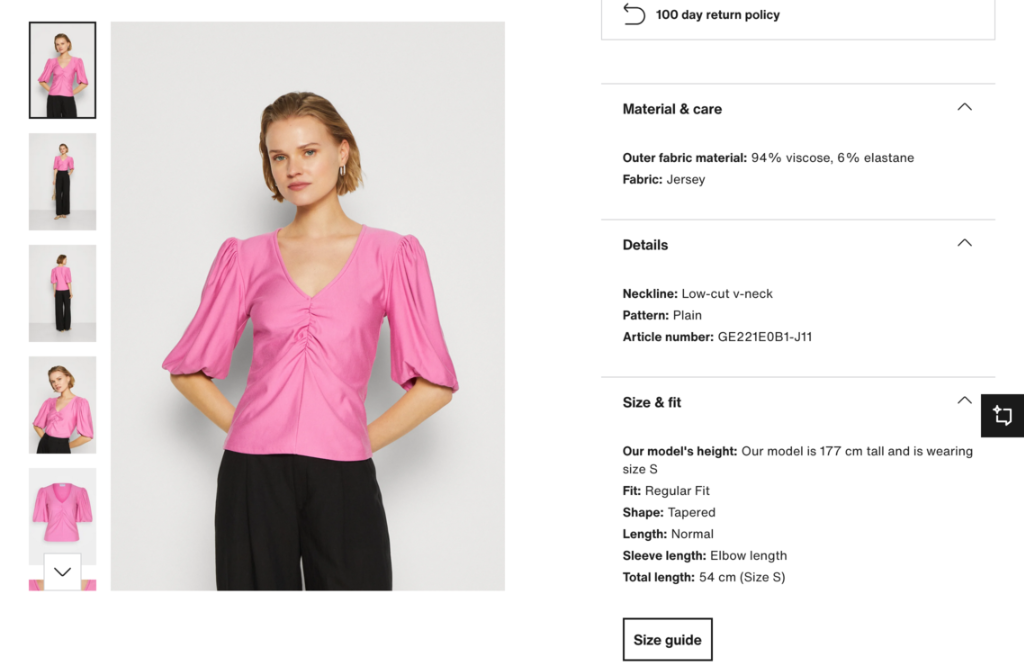
Per a Zalando engineering blog post published on Sep 18, 2024, the company describes an AI-assisted "Content Creation Copilot" designed to speed product onboarding by extracting product attributes and supporting quality assurance. The post says the manual content-creation stage contributed approximately 25% of the overall content production timeline and that copywriters currently perform attribute enrichment and QA using a Content Creation Tool under a four-eyes principle. According to the post, the Copilot provides assistive functions to detect and correct defects earlier in the workflow and to increase attribute coverage in the product catalog. Companies applying similar assistive ML for attribute extraction often reduce manual review time and improve catalogue completeness, which can improve discoverability and time-to-market for new products.
What happened
Per a Zalando engineering blog post published on Sep 18, 2024, the engineering team describes a project called the Content Creation Copilot that applies AI-based product attribute extraction to the product onboarding and content-enrichment workflow. The post says copywriters currently enrich attributes and perform quality assurance using a Content Creation Tool and a four-eyes QA principle, and that the manual content-creation stage made up approximately 25% of the overall content production timeline. The post reports the team developed assistive functions aimed at detecting and correcting defects earlier in the content production pipeline and increasing attribute coverage across the product data catalog.
Technical details
The engineering post notes Zalando already uses Machine Learning for feature extraction and similarity searches on onboarded products, and extends those ML approaches into content creation to automate attribute extraction and QA assistance. The post describes the Copilot as a set of assistive functions embedded in the Content Creation Tool to streamline detection and correction of defects in accordance with Zalando content guidelines.
Industry context
Editorial analysis
Companies that apply ML-based attribute extraction and assistive QA in product onboarding frequently report improvements in attribute completeness and reductions in manual review time. This pattern commonly yields better product discoverability in search and recommendation systems, because richer metadata improves retrieval and relevance signals for downstream ranking models.
What to watch
For practitioners evaluating similar projects, observable indicators include automation rate (percent of attributes auto-populated), change in QA defect rate, time-to-publish for new articles, and how automated outputs are surfaced to human reviewers. Also monitor model performance on long-tail categories and label distribution shifts, since those drive maintenance costs for attribute extraction systems.
Key Points
- 1Zalando documents an AI "Content Creation Copilot" to assist attribute extraction and QA, addressing manual bottlenecks in onboarding.
- 2The engineering post cites the manual stage as about 25% of content production time, highlighting potential efficiency gains from assistive ML.
- 3Industry pattern: automating attribute extraction typically improves catalog completeness, aiding search, recommendations, and time-to-market for new products.
Scoring Rationale
This is a practical applied-ML case study focused on product metadata and onboarding; it is useful to data practitioners building similar pipelines but not a frontier research or infrastructure milestone. The original post is dated Sep 18, 2024, which reduces immediacy.
Practice with real Telecom & ISP data
90 SQL & Python problems · 15 industry datasets
250 free problems · No credit card
See all Telecom & ISP problems