Texas A&M develops closed-loop AI alloy discovery workflow
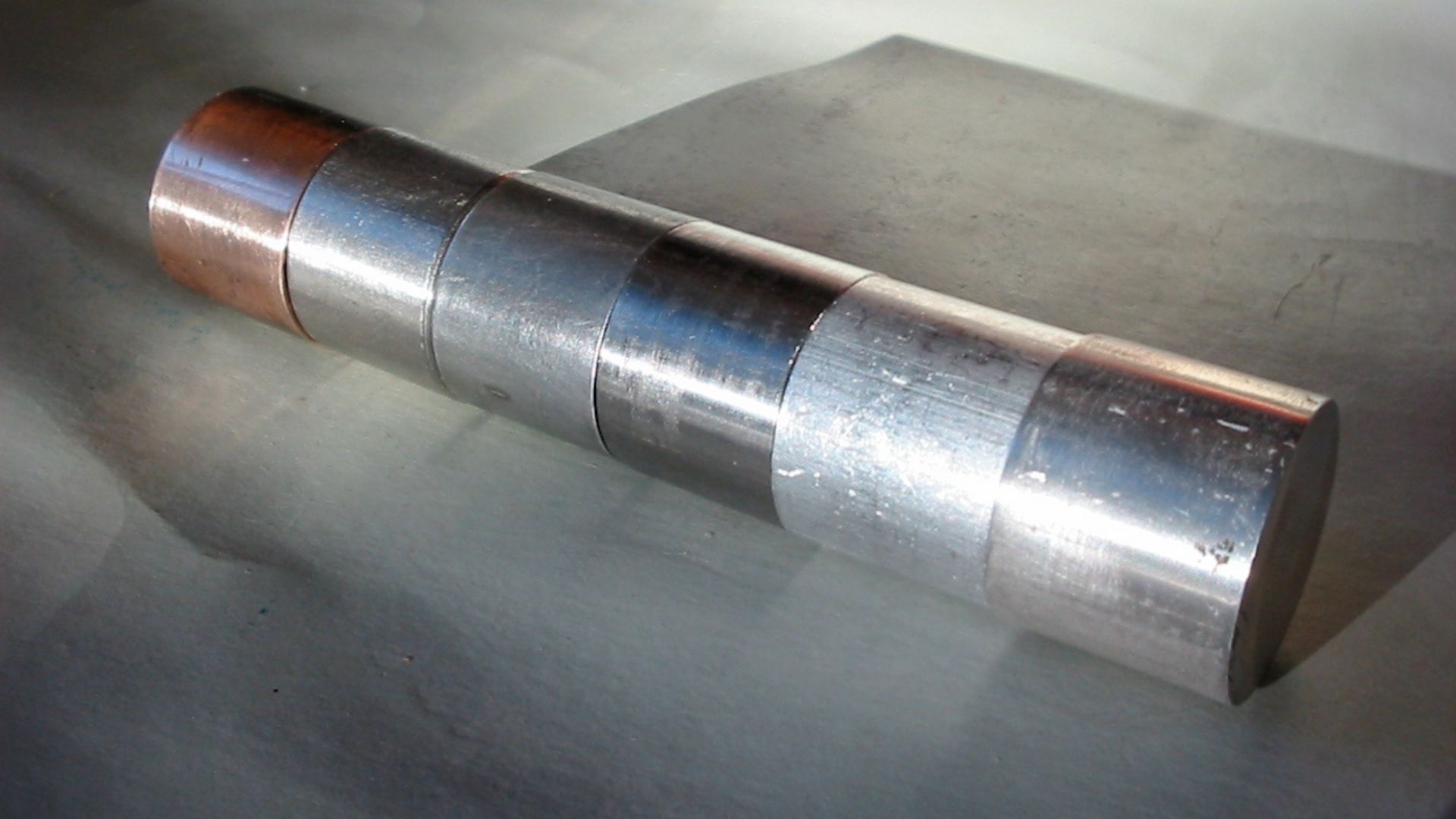
Researchers at Texas A&M University developed an AI-guided closed-loop workflow that combines computation, high-throughput thermodynamic modeling, experiments, and machine learning to accelerate discovery of high-temperature, heat-resistant alloys, the article reports. The workflow uses computational screening to winnow thousands of candidate compositions before selecting promising alloys for real-world experiments, which researchers said reduced the need for costly experimental testing, according to Interesting Engineering. The article includes a quote from doctoral student Cafer Acemi, who received the Acta Student Award for the campaign, and notes the experiment aimed to ensure candidate alloys could be manufactured at scale, the article reports.
What happened
Researchers at Texas A&M University developed an AI-guided closed-loop workflow that combines computation, experiments, and machine learning to speed discovery of alloys for extreme temperatures, the article reports. The workflow first applied high-throughput thermodynamic modeling to screen thousands of candidate compositions and then selected the most promising candidates for experimental validation, the article reports. The article reports researchers said the computational screening significantly reduced the need for expensive experimental testing by discarding weaker candidates early. The piece quotes doctoral student Cafer Acemi saying, "Being selected for this award is meaningful because it recognizes a state-of-the-art alloy discovery campaign that combines computation with real experiments," and notes Acemi received the Acta Student Award, the article reports.
Editorial analysis - technical context
Closed-loop discovery campaigns typically layer rapid simulation-based screening, surrogate machine-learning models, and targeted high-throughput experiments to iteratively improve candidate selection. Industry-pattern observations: such pipelines tend to cut the experimental search space and accelerate optimization by replacing large-scale trial-and-error with model-guided choices. For practitioners, the most valuable elements are repeatable simulation protocols and experiment-ready candidate lists that reduce per-sample cost.
Context and significance
Industry context: AI-assisted materials discovery has been an active frontier for reducing time-to-discovery in alloys, catalysts, and battery materials. Public reporting frames this Texas A&M effort as another example of combining computational thermodynamics with ML and automated experiments to address materials that must be manufacturable at scale, the article reports. The approach aligns with broader open problems in materials informatics: uncertainty calibration from models, transferability from simulated to real samples, and linking composition-level hits to scalable processing routes.
What to watch
For practitioners: look for a peer-reviewed publication or supplemental data that quantifies hit rates, false positives, and how many compositions were screened versus tested. Also monitor whether the team releases code, simulation inputs, or experimental protocols, and for follow-on studies that demonstrate manufacturability or industrial partner validation. These indicators will clarify reproducibility and real-world applicability beyond the initial campaign, which the article summarizes.
Key Points
- 1Closed-loop workflows that combine simulation, ML, and experiments can reduce experimental burden by screening large composition spaces computationally.
- 2High-throughput thermodynamic modeling is an effective front-end to eliminate unlikely alloy candidates before experimental validation.
- 3Demonstrations that include manufacturability aims raise the bar toward industry-relevant materials discovery, but reproducible metrics and data releases remain critical.
Scoring Rationale
Notable research that demonstrates a practical closed-loop workflow combining modeling and experiments, relevant to practitioners building materials informatics pipelines. Lacks published reproducibility metrics and broad adoption evidence, so impact is meaningful but not transformational.
Practice interview problems based on real data
1,625 SQL & Python problems across 15 industry datasets — the exact type of data you work with.
Try 250 free problems