CuspAI Raises $450 Million and Launches AI Materials Foundry

CuspAI raised a $450 million Series B at a $2.6 billion valuation and launched an AI Materials Foundry linking more than 45 industrial, laboratory, compute, and data partners. Kleiner Perkins and NEA led the round, with participation from Bezos Expeditions and other investors. The company says the capital will support expansion across the United States, Europe, and Asia-Pacific. For data and AI teams, the practical signal is the scale of investment moving into AI-for-science infrastructure, although CuspAI's performance claims still require project-level validation beyond company case studies.
CuspAI announced a $450 million Series B at a $2.6 billion valuation while launching an AI Materials Foundry intended to connect model development with data, simulation, synthesis planning, and laboratory validation. Kleiner Perkins and NEA led the financing, with participation from Bezos Expeditions and a group of new and returning investors. CuspAI said the funding will support faster expansion across the United States, Europe, and Asia-Pacific.
Funding and the foundry launch
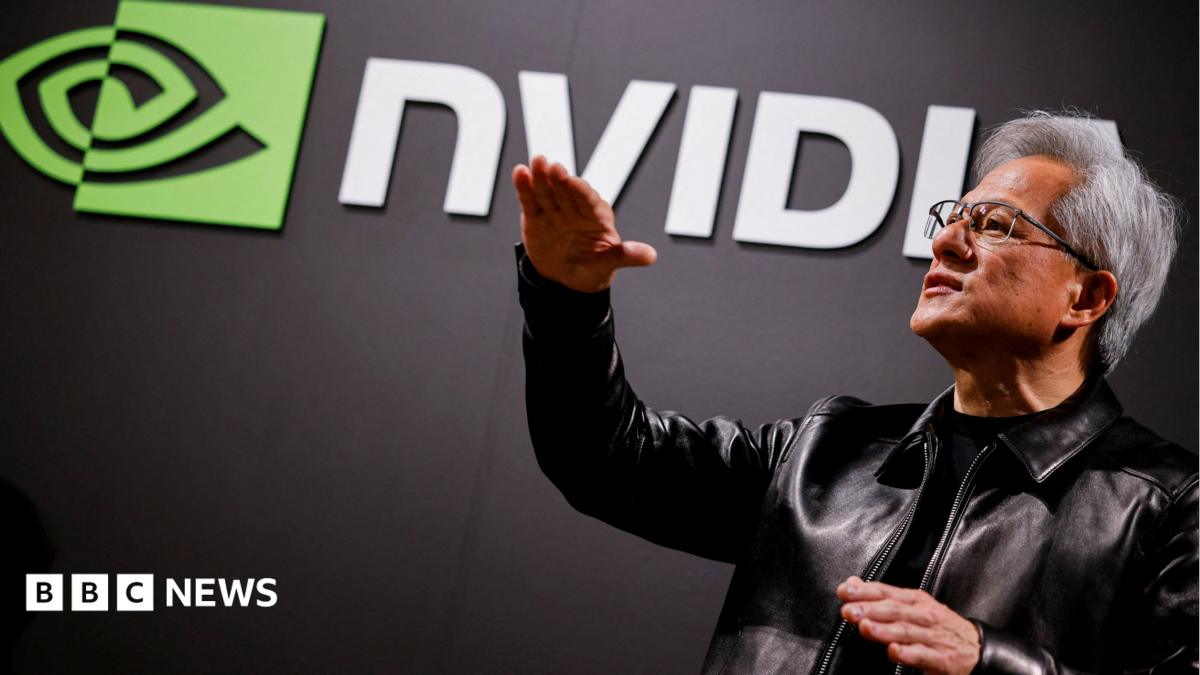
The financing and foundry are related parts of the same expansion. CuspAI describes the foundry as a network of more than 45 industrial companies, research laboratories, and data and compute providers. Named participants include NVIDIA, Meta, Samsung, Hyundai Motor Group, Applied Materials, Tokyo Electron, Lam Research, universities, and public research organizations.
CuspAI's platform, MIRA, is designed to help partners specify desired material properties, generate candidate structures, run simulations, plan synthesis routes, and route candidates toward experimental validation. The company says NVIDIA will contribute accelerated-computing infrastructure and Meta's research team will contribute atomistic modeling technology. These are announced roles and partnerships, not evidence that every proposed material will translate into a manufacturable product.
What the evidence establishes
CuspAI's own announcement confirms the round size, valuation, lead investors, and geographic expansion plans. The Guardian independently reported the financing and the participation of Jeff Bezos and the UK government's Sovereign AI Fund. Tech Funding News also reported the $450 million round, the $2.6 billion valuation, and the foundry launch.
The public material also includes a company case study with Finnish chemicals group Kemira. CuspAI says it screened a very large molecular search space and delivered 20 candidates for further testing in six months. That example is useful context, but it remains a company-reported result rather than an independently reproduced benchmark.
Why it matters for AI practitioners
The round shows investors backing AI systems that connect foundation models and scientific data to physical experimentation, not only text or code generation. For teams evaluating similar platforms, the hard questions sit after candidate generation: data provenance, simulation accuracy, synthesis feasibility, laboratory throughput, protection of partner data, and the rate at which model suggestions survive experimental validation.
CuspAI now has substantial capital and a broad partner network, but the important operational measure will be repeatable delivery of validated materials across multiple industries. Procurement and research teams should separate the scale of the funding and coalition, which are documented, from claimed reductions in discovery time, which should be checked against project-specific baselines and independent results.
Key Points
- 1CuspAI raised a $450 million Series B led by Kleiner Perkins and NEA at a reported $2.6 billion valuation, with Bezos Expeditions and other investors participating.
- 2The company also launched an AI Materials Foundry with more than 45 industrial, laboratory, data, and compute partners spanning semiconductors, energy, and advanced manufacturing.
- 3The investment is a strong AI-for-science signal, but teams should validate data quality, synthesis feasibility, laboratory throughput, and independently reproduced outcomes before treating vendor case studies as general proof.
Scoring Rationale
The $450 million round and a 45-plus-partner materials-discovery network are material signals for AI-for-science infrastructure and industrial adoption. Impact is high but below a frontier breakthrough because technical performance remains primarily supported by company announcements and case studies.
Sources
Primary source and supporting public references used for this report.
Practice interview problems based on real data
1,625 SQL & Python problems across 15 industry datasets — the exact type of data you work with.
Try 250 free problems