Allegro announces partnership with OpenAI for AI tools
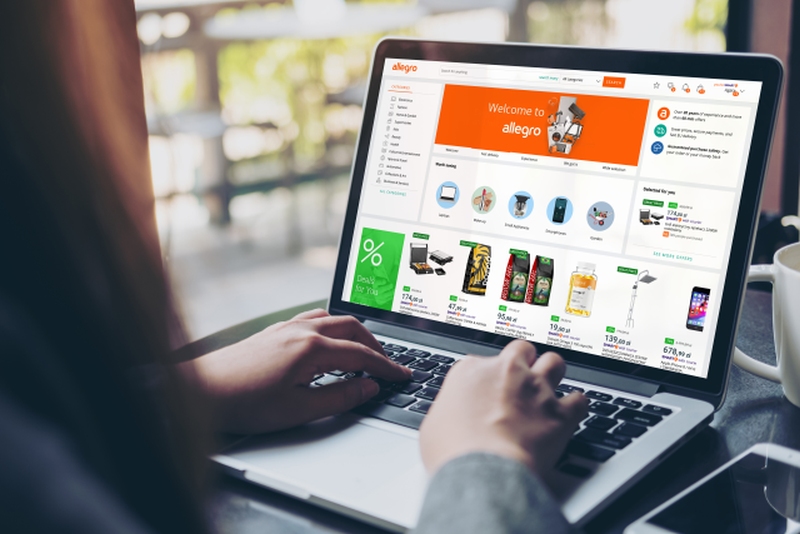
Polish e-commerce platform Allegro has begun a collaboration with OpenAI to integrate advanced artificial intelligence into its marketplace, according to an Allegro media release and reporting by brandsit.pl (May 11, 2026). Media coverage says the agreement gives Allegro priority access to OpenAI technologies and access to engineering support for designing, testing, and deploying e-commerce-focused applications, per brandsit.pl and Allegro's announcement. Local coverage in xyz.pl and Allegro's press materials note that Allegro already runs an in-app AI Assistant and has piloted a browser assistant, which the company says the partnership will expand. Reporting cited by brandsit.pl also quotes an OpenAI representative framing Poland as a dynamic e-commerce market for practical AI use cases.
What happened
Allegro announced a collaboration with OpenAI to bring advanced AI capabilities into its marketplace, according to an Allegro media release and coverage by brandsit.pl and xyz.pl (May 11, 2026). Brandsit.pl and Allegro's announcement state the agreement includes priority access to OpenAI technologies and direct engineering support to design, test, and deploy applications tailored to e-commerce. Local reporting in xyz.pl and Allegro's materials note that Allegro already operates an in-app AI Assistant and has piloted a browser assistant, which the company says the partnership will accelerate and expand.
Editorial analysis - technical context
Public coverage frames the deal as focused on productized AI features for shoppers and sellers rather than raw research collaboration. Companies integrating large language models with marketplace platforms commonly use these models for search relevance, conversational shopping assistants, automated listing copy, and seller tools. Per Allegro's media snippet, the partnership includes collaboration with OpenAI experts on design and deployment, which typically covers fine-tuning, prompt engineering, systems integration, and operational testing.
Industry context
Industry observers note that strategic commercial partnerships with major model providers often shorten integration time and provide operational support for scaling, but they also raise typical trade-offs around latency, cost, and data residency. European and regional marketplaces integrating U.S. model providers frequently confront localization work for non-English languages and additional compliance checks for user data and content moderation.
For practitioners
Implementation will likely require work on model selection, prompt and instruction tuning for e-commerce intents, retrieval-augmented generation to surface catalog facts, and instrumentation for safety, hallucination detection, and performance monitoring. Companies in comparable integrations often deploy hybrid architectures that combine private search indices with externally hosted LLM inference to balance privacy and capability.
What to watch
Observers should track Allegro product announcements and beta rollouts for concrete feature changes to search, recommendations, conversational assistants, and seller tooling. Also monitor Allegro disclosures on model choice, data flows, hosting, latency SLAs, and any pilot results on relevance or conversion uplift. Finally, watch regional regulatory guidance and industry discussion around user data handling when U.S. model providers are involved, since that shapes integration patterns across Europe.
Key Points
- 1Allegro has announced a collaboration with OpenAI, aiming to integrate advanced AI into shopping and seller tools, per Allegro and media reports.
- 2Industry-pattern observation: partnerships with major model providers often speed integration but require attention to localization, latency, and data-residency trade-offs.
- 3For practitioners: expect emphasis on retrieval-augmented workflows, prompt tuning, and production monitoring when deploying LLM-driven e-commerce features.
Scoring Rationale
The deal is a notable commercial partnership that matters to engineers building e-commerce AI, because it signals faster access to model capabilities and operational support. It is not a frontier-model release or major funding event, so its impact is significant but not industry-shaking.
Sources
Public references used for this report.
Practice with real Retail & eCommerce data
90 SQL & Python problems · 15 industry datasets
250 free problems · No credit card
See all Retail & eCommerce problems