Wistron Opens Texas Plant for Nvidia GB300 Systems
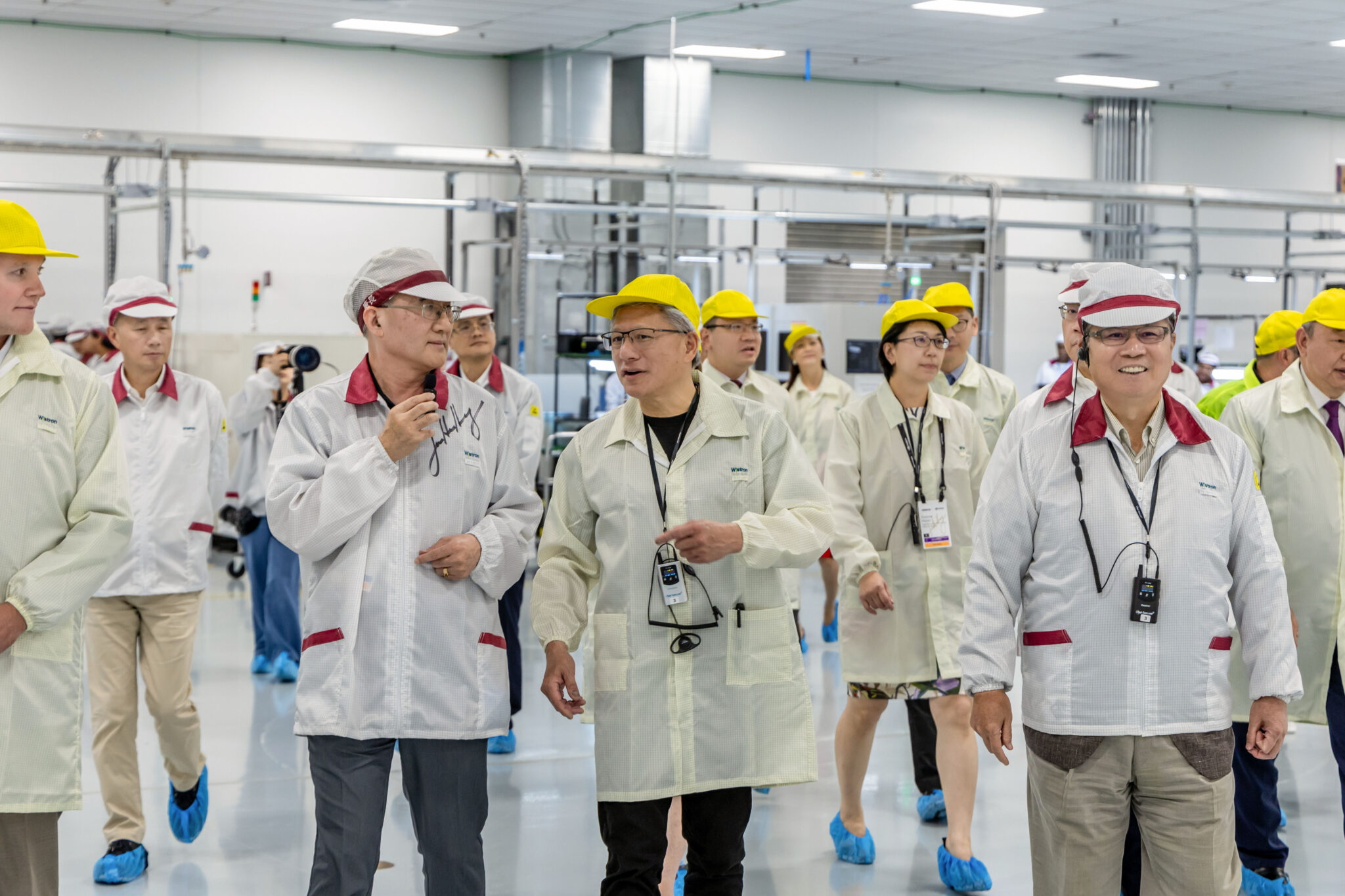
Wistron opened its D1 AI smart manufacturing facility in Fort Worth, Texas, on July 21, making it the first U.S. site assembling Nvidia GB300 Grace Blackwell Ultra Superchips, according to StorageReview. Nvidia reports that the 324,000-square-foot plant is part of a combined $700 million U.S. advanced-manufacturing investment and is producing GB300 systems, with Vera Rubin Superchip production slated to follow.
Wistron opened its first U.S. manufacturing facility, the D1 AI smart plant in Fort Worth, Texas, on July 21. The site is assembling Nvidia's GB300 Grace Blackwell Ultra Superchip, and StorageReview describes it as the first U.S. production and assembly location for that platform.
The 324,000-square-foot greenfield facility is part of a $700 million commitment to advanced manufacturing in the U.S., according to Nvidia. Nvidia also reports that D1 currently operates two manufacturing cells, one for Grace Blackwell Ultra and another intended for the Vera Rubin Superchip, and is scaling production this year toward tens of thousands of boards per month.
Assembly capacity, not semiconductor fabrication
The Fort Worth operation assembles and tests Nvidia AI systems rather than fabricating the underlying GPUs or CPUs. The Dallas Morning News reported that Nvidia CEO Jensen Huang characterized the site as part of a wider effort to onshore high-tech manufacturing, alongside U.S. chip, packaging, and testing facilities.
CNBC reported that Wistron's Texas site is intended to expand domestic capacity for assembling and testing Nvidia AI servers. Wistron Chairman Simon Lin said in a press release cited by CNBC that the location would become important to U.S. AI infrastructure construction in the coming years. Huang, quoted by CNBC, described demand for AI factories as "incredible."
The facility has created more than 500 jobs, and Nvidia reports that Wistron intends to expand that figure to 1,000 by the end of the year. Wistron and Nvidia held the opening event with local Fort Worth leaders and Taiwanese government officials, according to Nvidia's account.
Factory software and the next platform
StorageReview reports that Wistron is using Nvidia accelerated computing and software, including the Nemotron and Cosmos models as well as the Omniverse and Metropolis libraries, for digital-twin factory design, workflow simulation, and operational optimization. That report describes the software stack as supporting plant-layout and process-flow decisions as production ramps.
Nvidia's public materials identify Vera Rubin as the next superchip platform scheduled for the facility. Neither the Nvidia blog post nor the retrieved reporting provides a production start date or volume target for Vera Rubin at D1.
For AI infrastructure buyers, domestic system assembly is distinct from domestic chip supply. Comparable regional assembly expansions can shorten the physical path between system integration and U.S. data center deployment, but accelerator availability still depends on upstream silicon, memory, networking, rack integration, and power-delivery supply chains. The Fort Worth facility therefore adds a manufacturing node to Nvidia's U.S. server ecosystem rather than resolving every infrastructure constraint involved in deploying large-scale AI clusters.
Wistron's shares rose 9.7% in Taipei following the opening, CNBC reported on July 22. The market reaction followed a broader pattern of Taiwanese electronics manufacturers expanding U.S. operations for AI infrastructure, a trend CNBC also linked to TSMC's recently announced Arizona investment expansion.
Key Points
- 1Wistron's Fort Worth D1 plant adds U.S. assembly and test capacity for Nvidia GB300 systems, with production already underway.
- 2Nvidia reports a $700 million commitment and a target of tens of thousands of boards monthly, making scale-up operationally consequential.
- 3Comparable domestic assembly expansions can improve deployment logistics, but do not by themselves eliminate upstream accelerator, memory, networking, or power constraints.
Scoring Rationale
This is a notable expansion of U.S. manufacturing and test capacity for Nvidia's current-generation AI systems. It matters to infrastructure practitioners because GB300 availability depends on the end-to-end server supply chain, although the facility is an assembly operation rather than a new semiconductor fabrication source.
Sources
Primary source and supporting public references used for this report.
Practice interview problems based on real data
1,625 SQL & Python problems across 15 industry datasets — the exact type of data you work with.
Try 250 free problems