Apple Intelligence coverage focused on Siri, on-device models, private cloud compute, AI features across Apple devices, and the privacy tradeoffs shaping consumer AI.
Stories
427
Latest source update
August 27, 2026
Coverage
Live
Topic brief
What to know about Apple Intelligence
Brief updated Aug 2, 2026
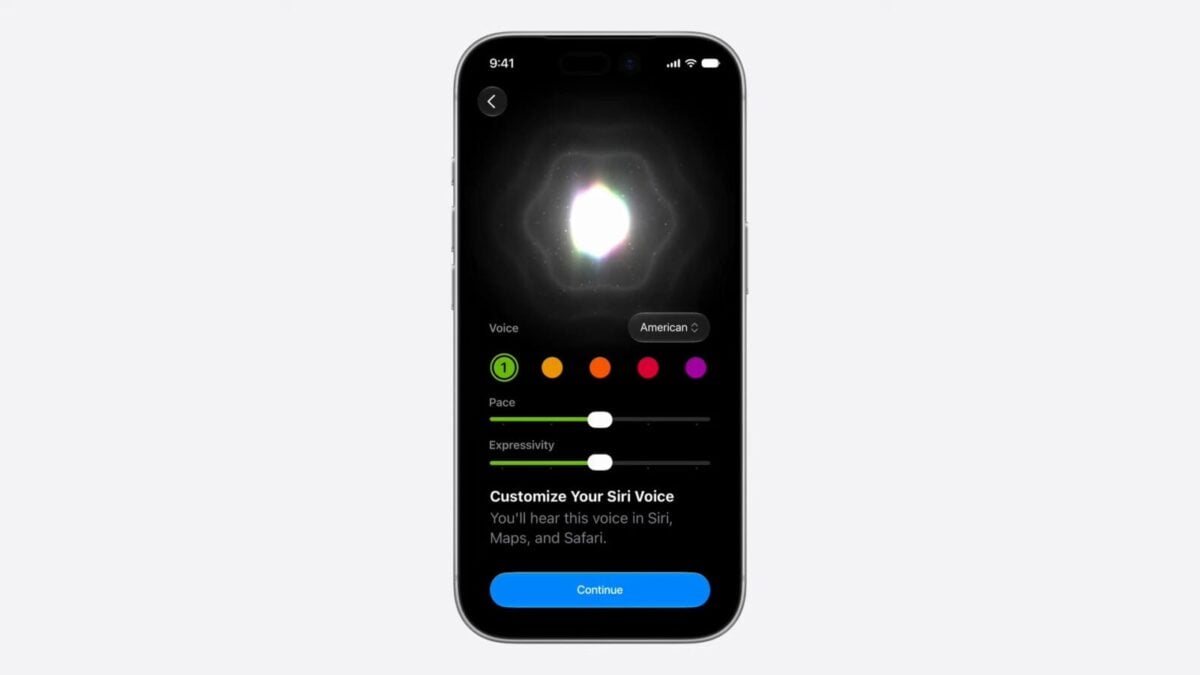
Apple Intelligence is Apple's platform-wide AI initiative, spanning the on-device and cloud Apple Foundation Models (AFM) family, the rebuilt Siri AI assistant introduced in iOS 27, and generative features inside Photos, Spotlight, and other system apps. For practitioners, Apple's approach is notable for its hybrid architecture: small on-device models handle routine tasks locally, while heavier requests route to Apple's Private Cloud Compute infrastructure, including a top-tier server model that Apple's own ML research says runs on NVIDIA GPUs within Google Cloud. Multiple outlets report that Siri AI draws on Google Gemini models for parts of its backend, while coverage citing Craig Federighi says Apple's models are trained by Apple and refined using outputs from Gemini frontier models rather than running on Gemini infrastructure for inference. Alongside the assistant, Apple has shipped developer surfaces that matter more than the consumer headlines: Core AI as the successor to Core ML, a Foundation Models Swift API with image input and server model support in Xcode 27, and a rebuilt on-device semantic search index behind Spotlight, Photos, and Mail.
The story around Apple Intelligence has become as much about hardware economics, distribution and legal conflict as about the assistant itself. A global memory and storage chip shortage, driven largely by AI data center demand, led Apple to raise prices on selected Mac and iPad models, illustrating how AI infrastructure buildout elsewhere in the industry is reshaping consumer device costs. Apple has filed a trade-secret lawsuit against OpenAI over its hardware ambitions, and the two companies' overlapping talent and product plans have become a genuine point of legal conflict rather than just competitive rivalry. Where Siri AI is allowed to ship has itself become a per-region question, still blocked in the European Union and, per Reuters, not available in China at launch, while Apple Intelligence itself has Chinese regulatory approval with local model partners and has begun a staged release there.
For ML and mobile engineers, the practical throughlines to track are Apple's device-tier gating, meaning which features require which chip and RAM configuration, the unresolved question of whether and how third-party models such as ChatGPT, Claude, and Gemini will be exposed inside Siri AI through a dormant Extensions framework, and the regulatory standoff that has delayed Siri AI's EU launch under the Digital Markets Act. Apple also ships edge AI silicon into consumer hands in very large volumes, which makes its model sizes, quantization choices and framework APIs a de facto baseline for anyone targeting on-device inference.
What changed recently
Apple Intelligence has started shipping in mainland China. According to the South China Morning Post, the first China release includes Clean Up, Apple's photo-editing feature for removing unwanted objects from images, and Apple is working with Alibaba Group Holding and Baidu to support the deployment; Digital Today similarly reported that Chinese regulators approved Apple Intelligence earlier in July and that the service is reaching China roughly two years after its initial introduction in other markets. On Apple's July 30 earnings call, Tim Cook said of the rollout: "We are working now through the roll-out of those, and there will be more work required down the road for Siri AI, but we are at the front end of that." The practical lesson is that a regulated market can receive a subset of Apple Intelligence features under local partner arrangements well before the rebuilt assistant arrives, so availability is now a per-market, per-feature matrix rather than one release date. The commercial backdrop, per the same reporting: Apple posted $109.4 billion in quarterly revenue, up 16% year over year, with net income of $29.8 billion, while revenue across mainland China, Hong Kong, Taiwan and Macau was $18.8 billion for the quarter ended June 27, a 22% year-over-year increase that SCMP said fell below the $19.6 billion Wall Street estimate the publication cited.
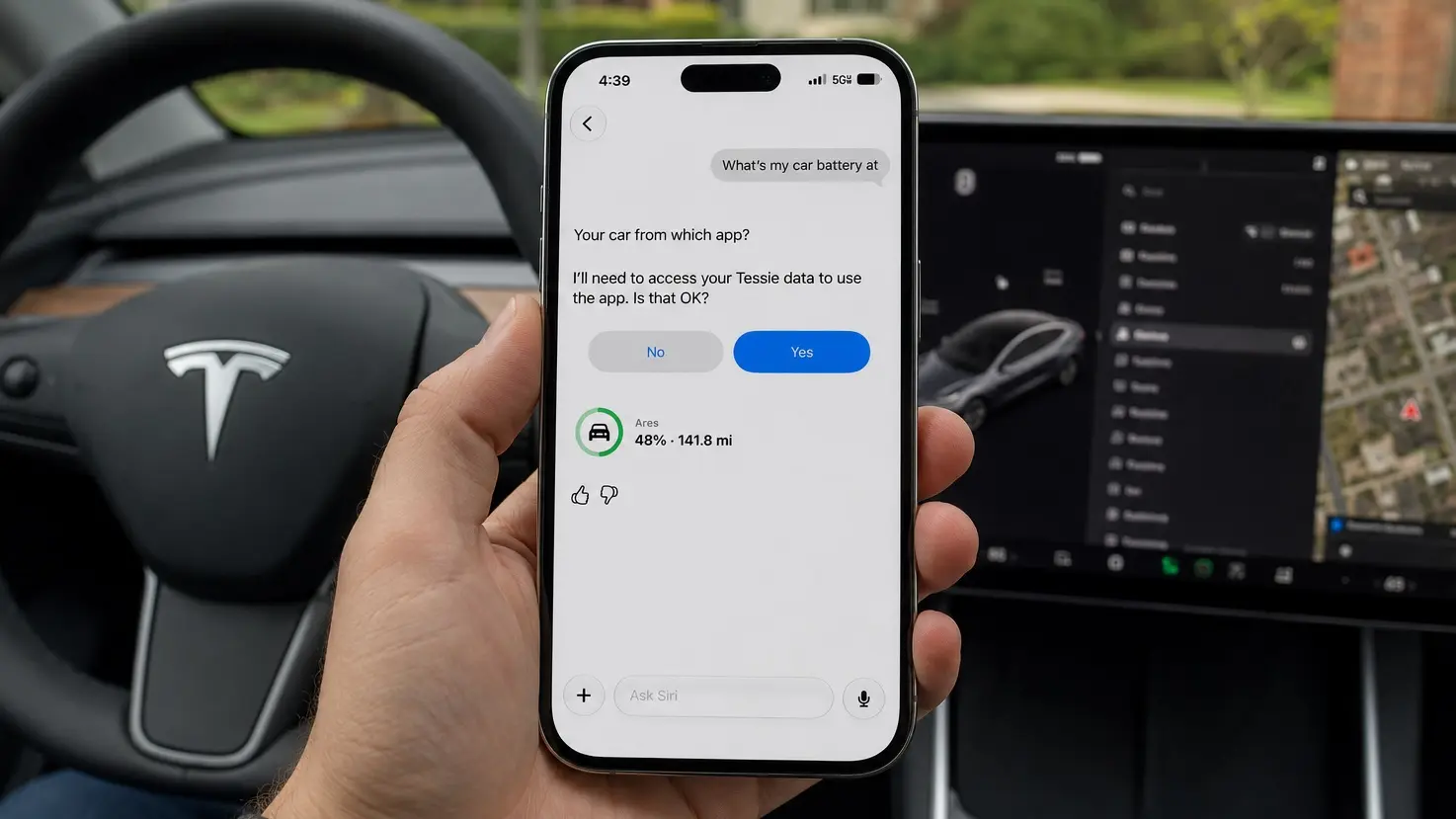
The other live thread is who pays and on what terms. Apple's macOS 27 Beta 3 release notes say Apple Intelligence for Home requires an iCloud+ subscription starting at 2TB, a tier Apple's US iCloud page lists at $9.99 per month, and Apple has said some features that rely on powerful server models carry daily usage limits with increased access available across most iCloud+ plans. On the July 30 call Cook went further, saying Apple expects some people to use the features "a lot" and would have upgrade possibilities where customers could "buy up the stack" through iCloud Plus, per The Verge and Axios; no price, quota schedule or final tier has been announced, so this is a packaging direction rather than a confirmed plan. Capability, meanwhile, keeps arriving through beta plumbing rather than a published contract: 9to5Mac reported that iOS 27 beta 3 testers found Siri AI pulling information from select third-party apps, with early examples focused on electric-vehicle data through Tessie and Ford workflows, and Apple's iOS and iPadOS 27 beta 3 release notes include an entry for "Siri results for third-party apps," though the behavior does not yet appear consistent across every vehicle app. The unresolved parts remain legal and regional: Apple's July 10 complaint against OpenAI, io Products, Tang Yew Tan and Chang Liu, case 5:26-cv-07078 in the Northern District of California, is at the complaint stage with no liability findings, the Financial Times reported Apple sent preservation letters to about 40 former employees now working at OpenAI, OpenAI says it is unaware of evidence giving the complaint merit, and Siri AI's EU exclusion under the Digital Markets Act is unresolved. On hardware, keep disclosure and reporting separate: Broadcom's July 6 SEC filing extends its Apple custom ASIC relationship through 2031, whereas Bloomberg's July 22 account of a staged Mac refresh through 2027 and the Financial Times-sourced report that Apple is testing CXMT DRAM for China-market devices are reporting that Apple has not confirmed.
What to watch
Watch whether Apple publishes pricing, quotas or a tier structure behind Cook's iCloud Plus comment and whether the daily limits on server-model features are documented for developers; whether the China release moves past its initial feature set toward AI-enhanced Siri, and whether model versions, request routing and data-retention boundaries are disclosed rather than only regulatory approval, which SCMP noted addressed iPhones without clarifying iPads or Macs sold in China; whether Siri AI's stated user beta and the fall iOS 27 launch arrive as described and whether the EU exclusion is resolved after the June 30 Cook-Virkkunen call that an EU spokesperson called constructive; whether the dormant Extensions framework in the iOS 27 developer beta is ever enabled, and on what entitlement terms, for ChatGPT, Claude or Gemini inside Siri; whether the third-party app data access seen in iOS 27 beta 3 becomes a documented public API, intent framework or supported-app list rather than a handful of partner integrations; whether independent benchmarks appear alongside Apple's own 64.7% AFM 3 Cloud preference figure; whether the Bloomberg-reported hardware timelines hold, including an entry-level 14-inch MacBook Pro and new iMacs on M6 this fall and an M7 debut in the first half of 2027; whether CXMT DRAM moves from China-market testing into confirmed production use; and whether the trade-secret case against OpenAI produces any adjudicated finding rather than further preservation notices.
Frequently asked questions
What models actually run Apple Intelligence?+
Apple's AFM 3 family, disclosed at WWDC 2026: on-device AFM 3 Core at 3 billion dense parameters and AFM 3 Core Advanced at 20 billion sparse parameters activating only 1 to 4 billion per request through Instruction-Following Pruning, with the remainder held in NAND flash rather than DRAM, plus three Private Cloud Compute models, AFM 3 Cloud, ADM 3 Cloud for image generation and AFM 3 Cloud Pro, which runs on NVIDIA GPUs within Google Cloud. Coverage citing Craig Federighi says Apple's models are trained by Apple and refined using outputs from Gemini frontier models, but do not use Gemini's infrastructure for inference. Separately, multiple outlets report Siri AI draws on Google Gemini for parts of its backend; one account attributed to Cringely and Wired reporting describes a custom 1.2-trillion-parameter model and roughly $1 billion a year in access cost, which Apple has not confirmed. Treat the model-provenance claims as reporting rather than Apple disclosure.
Which devices get which features?+
iOS 27 supports the iPhone 11 series and newer, but Apple Intelligence requires at minimum an iPhone 15 Pro with the A17 Pro and 8 GB of RAM, and the most advanced Siri AI capabilities are gated to iPhone Air, iPhone 17 Pro, iPad with M4 and later and Mac with M3 and later, each needing 12 GB of RAM or more, which excludes the base iPhone 17. The same tier covers the second-generation M5 Vision Pro for the Advanced Dictation Preview, which runs on AFM 3 Core Advanced and ships off by default in the iOS 27 developer beta even on capable hardware. Geeky-Gadgets notes that regional availability and localization work impose additional gating independent of hardware. Runtime capability checks and fallback behavior are not optional for third-party apps.
Where is Siri AI allowed to ship?+
Not in the EU at launch: Apple says its Trusted System Agent proposal plus an 18-month transition was rejected, while the European Commission says Apple instead sought a blanket exemption from Digital Markets Act interoperability obligations that is not available, and no resolution has been announced. Reuters reported Siri AI would not be available in China at launch either. China has since moved on the Apple Intelligence side rather than the Siri side: the Cyberspace Administration of China approved Apple Intelligence for iPhones on July 15 per the South China Morning Post, Alibaba said its Qwen model would be integrated for users in China and Baidu said it is working on China-specific features, and SCMP reports an initial China release that includes Clean Up. Cook said on July 30 that a fuller rollout of AI-enhanced Siri will require more work. SCMP also noted the approval notice addressed iPhones and did not clarify availability for iPads or Macs sold in China.
Will third-party models be selectable inside Siri?+
Unannounced. The iOS 27 developer beta contains a dormant Extensions framework, complete with a settings panel and a dedicated App Store section, that would let users select a third-party provider such as Claude, ChatGPT or Google Gemini inside Siri. It appears disabled on Apple's backend and was not mentioned in the WWDC 2026 keynote. Reporting citing Bloomberg says Apple has held entitlement discussions with OpenAI, Anthropic and Google without publicly committing to a multi-provider launch, and points to the Digital Markets Act negotiations and a reported OpenAI dispute as reasons for the delay. How entitlement gates, sandboxing and per-provider privacy controls would work when multiple remote models can reach personal context has not been publicly defined by Apple.
Does Apple Intelligence cost anything beyond the device?+
Some of it does. Apple's macOS 27 Beta 3 release notes say Apple Intelligence for Home requires an iCloud+ subscription starting at 2TB, a tier Apple's US iCloud page lists at $9.99 per month, and Apple has said some features that rely on powerful server models carry daily usage limits with increased access available across most iCloud+ plans. Tim Cook has said heavy Apple Intelligence and Siri AI users could get paid upgrade options through iCloud Plus, but Apple has announced no pricing, quotas or final tier structure. Treat plan-gated behavior as beta-dependent until Apple publishes final release notes and API behavior, and branch product requirements on subscription tier, device compatibility and region.
Why do Apple device prices matter to on-device AI plans?+
Because hardware cost moves the installed base more slowly than any model release. Apple and other consumer-electronics sellers implemented or announced price increases in late June 2026 as memory and storage component costs rose, with Apple saying "We have never seen a component price increase this much, this quickly," per CNN and CBC. Insider Monkey reported that Evercore ISI maintained an Outperform rating and a $365 price objective on June 25 after price increases across selected Mac, iPad and home devices, with increases ranging from 17% to 25% on some base-model Mac and iPad configurations, and attributed those increases to memory supply constraints and higher DRAM and NAND pricing. Cook told the Wall Street Journal that further increases are unavoidable and called the supply shock a hundred-year flood; the Mac mini entry price has already gone from $599 to $799, and TechInsights estimates the iPhone 18 Pro could cost roughly $270 more than the $1,099 iPhone 17 Pro, driven by a 272% rise in the cost of the 12 GB of DRAM that on-device Apple Intelligence features require. IDC describes the memory reallocation toward AI servers as a permanent shift rather than a cyclical shortage, so on-device AI teams should plan fallback paths for older devices and track which features users can actually run locally.


 +3
+3