iPadOS Restricts Agents' Productivity on iPad
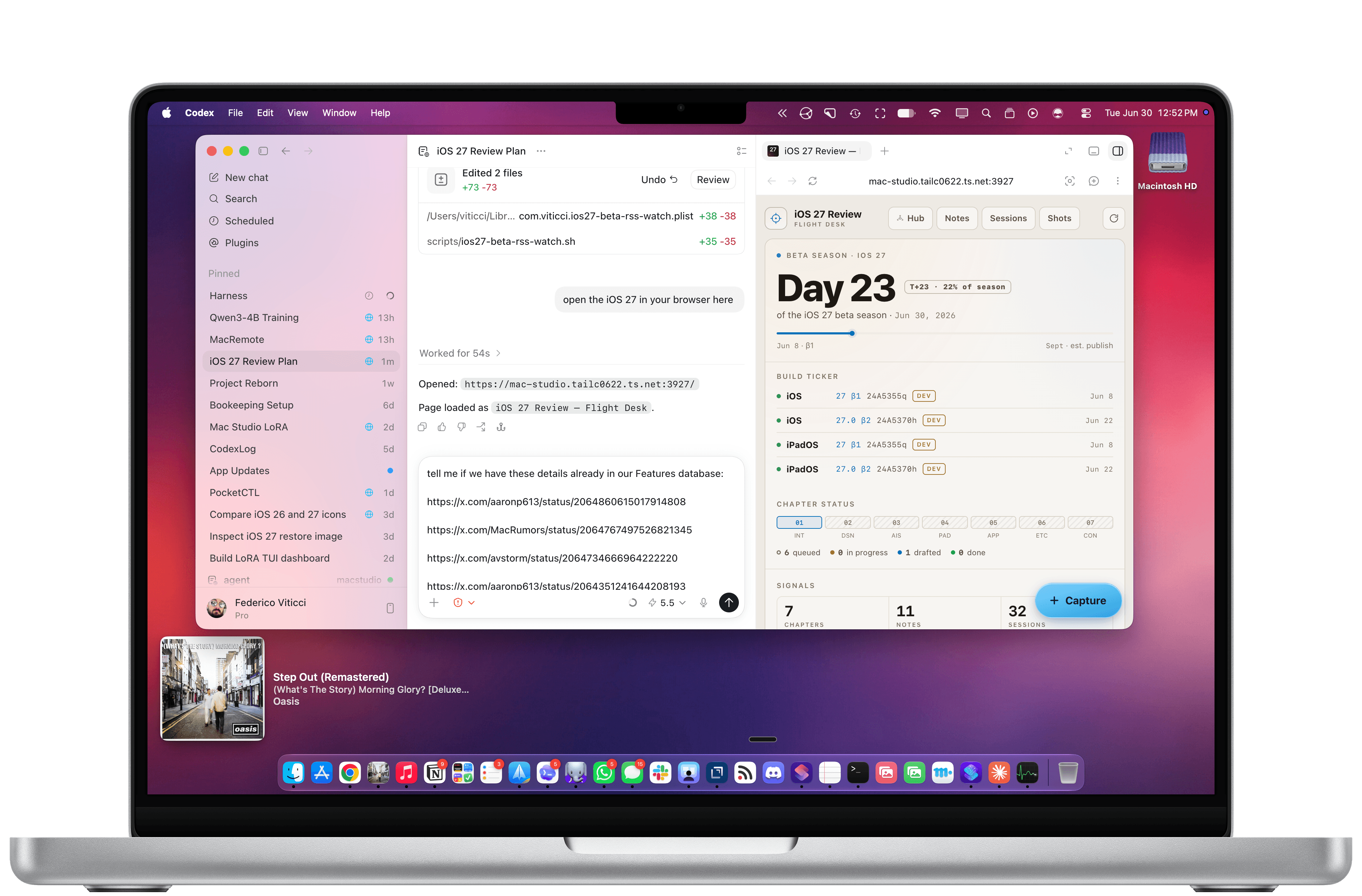
MacStories founder Federico Viticci argues in a June 30, 2026 column that iPadOS's app sandboxing and lack of an open filesystem have reduced the iPad to "a remote control for agents," as coding agents like Codex and Claude Cowork become full productivity tools that only run on macOS. Viticci, who says he now works daily on his Mac through OpenAI's Codex, writes that iPadOS 26's multitasking and Files improvements were not intended to "reinvent the wheel," a framing he ties to prior comments from Apple's Craig Federighi. This is a single-author opinion piece rather than reported news, so treat its claims about Apple's product direction as one practitioner's argument, not confirmed company plans. For teams building agentic developer tools, it is a concrete data point on how OS-level sandboxing shapes where local automation can realistically run today.
Editorial analysis
Federico Viticci, founder and editor-in-chief of MacStories, published a June 30, 2026 column arguing that iPadOS's app sandboxing and the absence of an open filesystem have relegated the iPad to acting as "a remote control for agents" in an era where coding agents like OpenAI's Codex and Anthropic's Claude Cowork are becoming general productivity tools rather than narrow coding assistants. This is a first-person opinion and analysis piece, not a reported news story, and it is a single-source item with no independent pickup found elsewhere; its claims about Apple's product direction and Codex's capabilities should be read as one practitioner's argument, not as confirmed facts about Apple's roadmap.
What happened
Viticci writes that despite iPadOS 26 bringing genuine productivity gains, including new windowing, a menu bar, and an improved Files app, that a full agentic workflow comparable to what he runs on macOS remains impossible on the iPad because of its sandboxed, closed filesystem model. He connects this to earlier on-record comments from Apple software chief Craig Federighi, whom he says confirmed iPadOS 26 was not designed to fundamentally rework the platform. Viticci describes running most of his work through Codex on a Mac Studio and MacBook Pro, including generating thousands of Shortcuts and coordinating multiple agent threads, tasks he says are Mac-only because iPadOS lacks system-wide filesystem access, background processes, and accessibility APIs that agent tools depend on. He notes the only iPad workaround is remote access to a Mac via apps like Codex's ChatGPT integration or third-party screen-sharing tools, which he calls a "companion" experience rather than a substitute.
For practitioners
The argument maps onto a broader, verifiable pattern: agent tools that need to run shell commands, read and write arbitrary files, or maintain long-running background processes require an OS with an open filesystem and fewer sandbox restrictions, which is why most current desktop-agent products (Codex, Claude Cowork, and similar tools) target macOS, Windows, or Linux rather than tablet or mobile operating systems. Teams evaluating where to run agentic developer workflows should weigh this constraint directly: a sandboxed tablet OS can serve as a remote client for monitoring and light interaction, but not as a primary host for agents that need local build tools, file access, or persistent background execution.
What to watch
Whether Apple introduces any sandboxed terminal, agent framework, or expanded App Intents support for iPadOS that narrows this gap; whether Siri AI gains the ability to act as a more capable, App-Intents-connected agent on iPad as Viticci speculates; and whether other AI companies expand remote-companion apps for iOS and iPadOS, which would reduce, but not eliminate, the practical gap Viticci describes.
Key Points
- 1A MacStories opinion column argues iPadOS's sandboxing and closed filesystem block full agentic developer workflows that run on macOS.
- 2Coding agents like Codex and Claude Cowork require open filesystem access and background processes that iPadOS does not currently provide.
- 3The only current iPad workaround is remote access to a Mac, which the author calls a companion experience rather than a true substitute.
Scoring Rationale
A single-source, first-person opinion column making a plausible but subjective argument about platform limitations for agentic developer tools. It is a useful practitioner perspective on where desktop agents can realistically run today, but it carries no independent reporting or corroboration and makes forward-looking claims about Apple's product direction that are the author's inference, not confirmed company plans. Capped in the minor range given single-source status and opinion framing.
Sources
Public references used for this report.
Practice with real Ad Tech data
90 SQL & Python problems · 15 industry datasets
250 free problems · No credit card
See all Ad Tech problems