Apple introduces Spatial Reframing to iOS 27 Photos
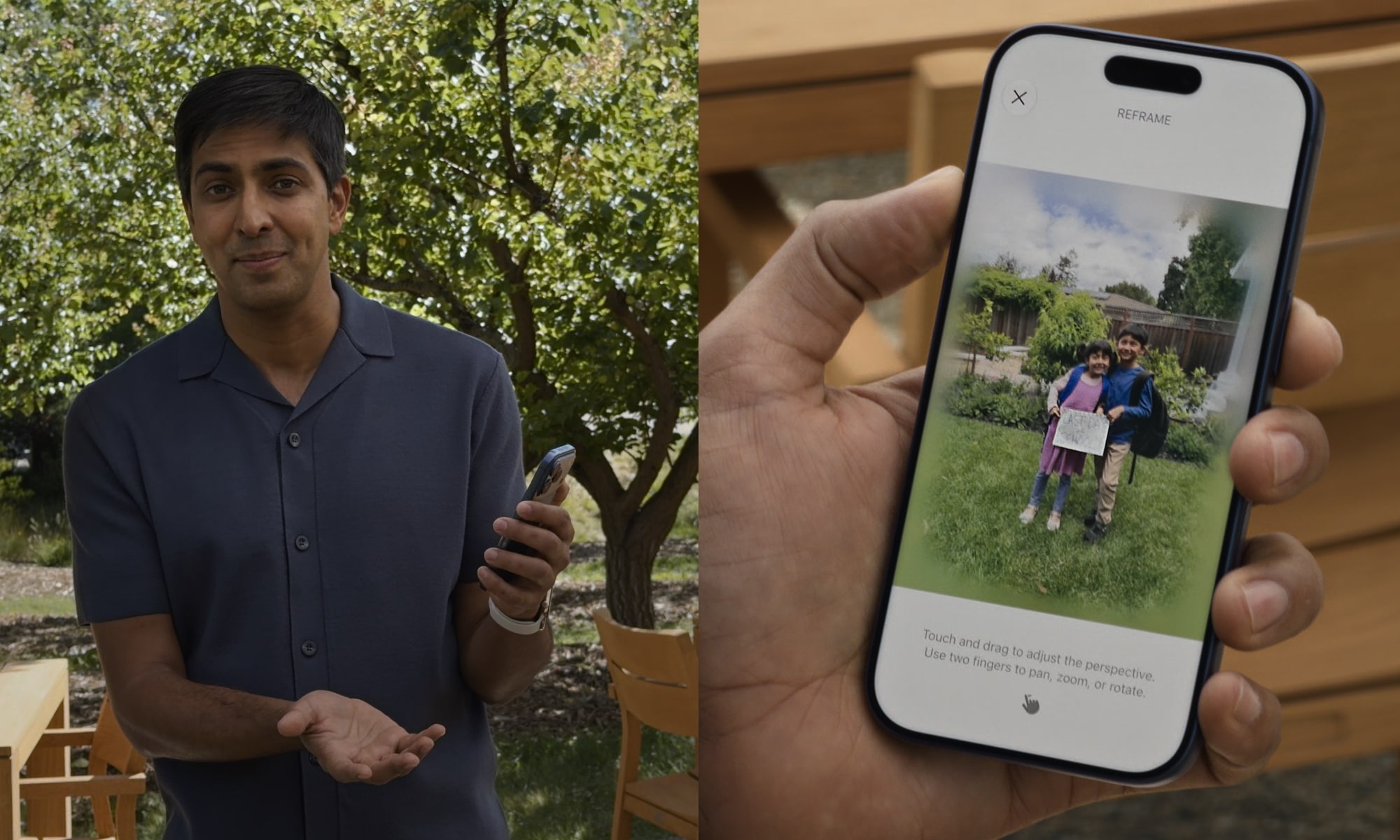
At WWDC26 Apple unveiled iOS 27 and a suite of photo-editing upgrades powered by Apple Intelligence, including a new Spatial Reframing tool for the Photos app, according to Apple's press release and MacRumors coverage. Per MacRumors and Apple's announcement, Spatial Reframing lets users shift a photo's virtual camera angle after capture and generates new image content only where perspective gaps appear. Apple also announced an upgraded Clean Up feature and a new Extend tool for filling and expanding scenes. Hands-on reports from Tom's Guide and iDropNews on the iOS 27 developer beta found Spatial Reframing genuinely novel and often convincing on clear, well-lit subjects, but both outlets reported visible artifacts and face distortions on complex scenes. Core claim caveat: the feature remains in active beta, and Apple has not yet published performance or failure-rate data.
Spatial Reframing is Apple's clearest public example yet of a generative image model running entirely on-device at consumer scale, and the WWDC26 hands-on reports on it are as informative for its failure modes as for its capability: reviewers found it genuinely novel, but still visibly rough on faces and complex scenes two beta cycles in.
What happened
Apple announced iOS 27 and the next generation of Apple Intelligence at WWDC26, including three new generative tools for the Photos app: Spatial Reframing, an upgraded Clean Up feature, and a new Extend tool, according to Apple's press release and reporting by MacRumors. Spatial Reframing lets a user shift a photo's virtual camera angle after it was taken, generating new image content only in the gaps exposed by that shift; Extend goes further, letting users zoom out beyond what Spatial Reframing alone allows. Hands-on testing on the iOS 27 developer beta by iDropNews and Tom's Guide found the tool genuinely novel and often convincing on clear, well-lit subjects, but both outlets reported visible failures on faces and complex backgrounds, consistent with the feature still being in active beta.
Technical context
Features that synthesize new image content from a single photo after the fact typically combine depth estimation or lightweight 3D scene reconstruction with a conditional inpainting model: the system detects the region exposed by a virtual camera shift, estimates scene geometry, then generates pixels to fill it coherently. Running this fully on-device, rather than in the cloud, trades model size and latency against visual fidelity, which is consistent with iDropNews's and Tom's Guide's reports that Spatial Reframing works best on simple, well-lit scenes and degrades on faces and cluttered backgrounds.
For practitioners
On-device generative image editing raises concrete engineering questions once it ships beyond a demo: model quantization and memory footprint on mobile NPUs, latency and battery cost at scale, and how failure modes such as facial-geometry errors and texture mismatches are measured and communicated to users. It also raises content-provenance questions, since generating new pixels after capture changes what a photo can be taken as evidence of; how Apple labels or discloses AI-altered images once Spatial Reframing ships broadly is worth tracking for anyone building similar on-device pipelines.
What to watch
- •Whether Apple documents Spatial Reframing's resource profile (latency, memory, energy) for developers once it moves out of beta.
- •Failure-mode patterns across device types and scene complexity as the beta matures, given consistent early reports of facial and background artifacts.
- •Whether Apple exposes Spatial Reframing and Extend via developer APIs or keeps them confined to the built-in Photos app.
- •How generated or altered images are flagged for authenticity, given Apple's broader WWDC26 emphasis on safety.
Key Points
- 1Apple's Spatial Reframing generates only the exposed pixels when a photo's virtual camera angle shifts, rather than rebuilding the whole image.
- 2Beta testers report convincing results on simple, well-lit scenes but visible face and background artifacts on complex shots, per Tom's Guide and iDropNews.
- 3On-device generative photo editing raises quantization, latency, and content-provenance questions practitioners will face as similar features reach production.
Scoring Rationale
Apple's Spatial Reframing is a notable product-level advance in on-device generative imaging that matters to ML engineers working on mobile inference and image synthesis, corroborated by Apple's own announcement and multiple independent hands-on beta reviews with consistent findings (convincing on simple scenes, artifact-prone on faces and complex backgrounds). It is not a fundamental research breakthrough, but it is a concrete case study in the production constraints of deploying generative models on consumer hardware at scale.
Sources
Public references used for this report.
View 4 more sources
- iOS 27's New 'Reframe' Feature Is Unlike Anything Apple Has Done Beforeidropnews.com
- Spatial Reframing will fix your bad iPhone photos with iOS 27appleinsider.com
- Apple's new AI-powered Extend and Reframe image tools reviewcultofmac.com
- I tested 200+ iOS 27 features and changes, here are 10 of my favorites [Video]9to5mac.com
Practice interview problems based on real data
1,625 SQL & Python problems across 15 industry datasets — the exact type of data you work with.
Try 250 free problems