Supreme Court Quashes Orders Over AI-Generated Precedents
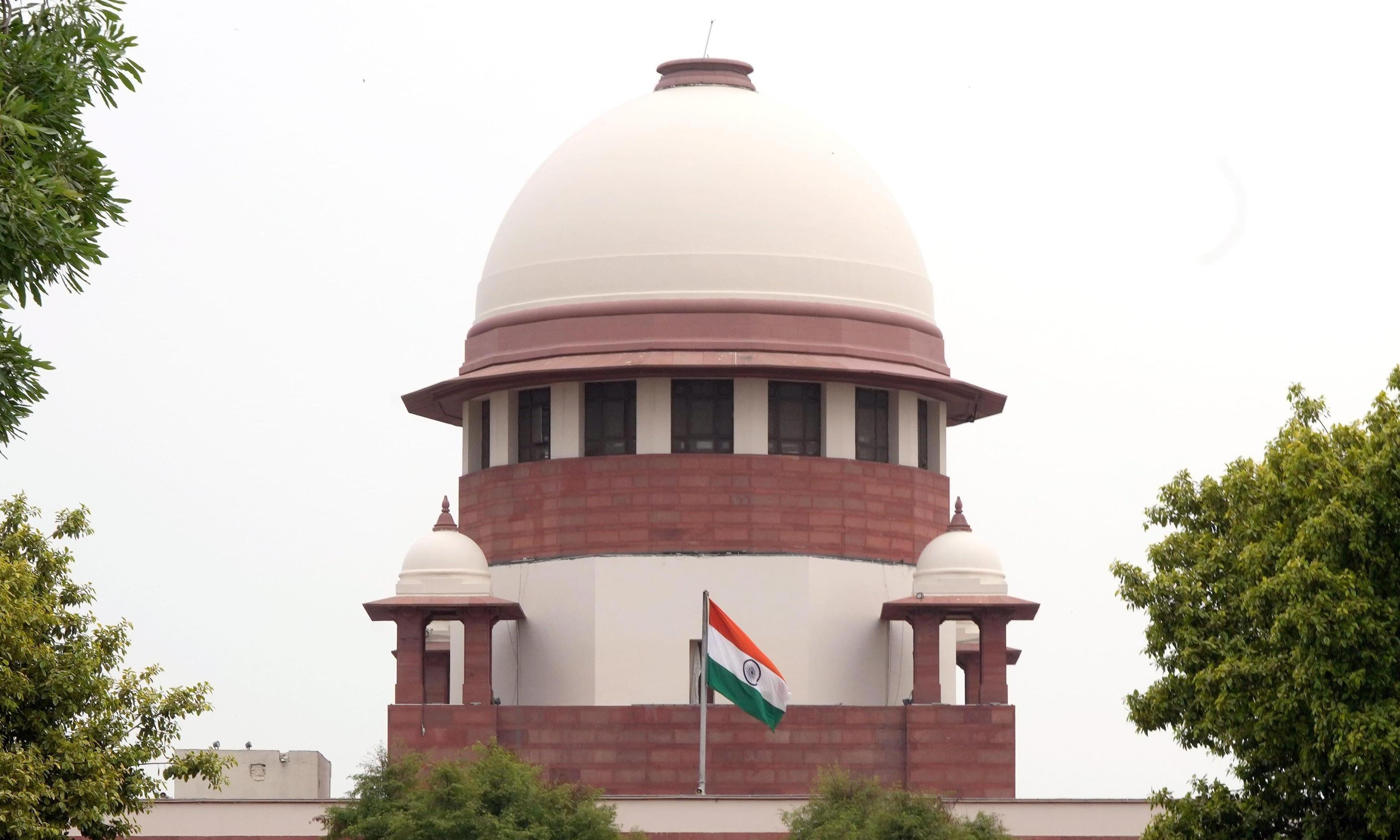
The Supreme Court of India on July 2, 2026 set aside orders of the National Company Law Tribunal (NCLT) and National Company Law Appellate Tribunal (NCLAT) after finding both tribunals had relied on non-existent, AI-hallucinated case citations in an insolvency dispute involving Essel Infraprojects, according to LiveLaw. A bench of Justices P.S. Narasimha and Alok Aradhe found the NCLT's August 28, 2024 admission order, which recorded an 87.43-crore-rupee default, and the NCLAT's affirmation on September 11, 2025, cited three purported precedents that could not be traced in any legal database. The court compared unchecked AI hallucinations in adjudication to the release of "methyl isocyanide in the province of law," ordered a rehearing, and directed the Bar Council of India to form an expert committee on AI use in courts. This is the same bench's second recent intervention on fabricated AI citations in Indian courts.
What happened
The Supreme Court set aside orders from the NCLT and NCLAT in an insolvency case after finding both tribunals had relied on fake, AI-hallucinated judicial precedents, according to LiveLaw. The underlying dispute arose from insolvency proceedings that Jammu & Kashmir Bank initiated under Section 7 of the Insolvency and Bankruptcy Code against Essel Infraprojects Ltd., which had furnished a corporate guarantee for credit facilities extended to Pan India Utilities Distribution Company Ltd. The NCLT's Mumbai bench admitted the application on August 28, 2024, recording a default of 87.43 crore rupees, and the NCLAT affirmed that order on September 11, 2025, per LiveLaw.
Senior Advocate Madhavi Divan, representing suspended Essel Infraprojects director Pooja Ramesh Singh, told the court the tribunals had relied on six judicial decisions that either did not exist or did not support the propositions attributed to them. LiveLaw reports the impugned orders cited purported precedents including "State Bank of India v. Shree Ram Urban Infrastructure", "Everest Kento Cylinders v. Union of India", and "ICICI Bank v. Urban Infrastructure Real Estate" -- none of which could be traced in any recognized legal database. A bench of Justices P.S. Narasimha and Alok Aradhe accepted the submission, holding that judgments founded on non-existent precedents cannot stand, and remanded the matter to the NCLT for fresh, fact-based consideration.
What the court said
Per LiveLaw's verbatim report, the bench described the fabrication of AI-generated citations as "like the release of methyl isocyanide in the province of law and justice, invisibly insidious and catastrophic by the time anyone notices." The court said it would not rule on the technical causes of AI hallucination -- "it is for the engineers and scientists to deal with them" -- but stressed that adjudication must remain under "total and absolute control" of humans, "with a human in the loop at every stage." The bench also directed the Bar Council of India to constitute a committee of experts to examine AI's use in adjudication.
For practitioners
This is the same bench's second recent public intervention on AI-fabricated citations: LiveLaw notes Justice Narasimha previously flagged a trial court's use of AI-generated fake judgments as professional misconduct in an earlier matter, and the Supreme Court published draft AI-use regulations for the judiciary last month. For teams building legal-research, retrieval-augmented, or citation-generation tools, the ruling underscores that outputs lacking auditable, verifiable links to primary case law carry real legal exposure -- not just for the model provider, but for any professional or tribunal that relies on them without independent verification.
What to watch
The Bar Council of India's expert committee, and any resulting guidance on mandatory citation verification or disciplinary standards for lawyers and courts using generative AI tools in filings and adjudication.
Key Points
- 1The Supreme Court quashed NCLT and NCLAT insolvency orders after finding both tribunals cited three fabricated, untraceable AI-generated case precedents.
- 2Fake citations can pass through multiple levels of adjudication undetected, showing why legal-AI tools need auditable, verifiable source links to primary case law.
- 3The court ordered the Bar Council of India to form an expert committee, signaling incoming guidance on AI use in Indian legal filings and adjudication.
Scoring Rationale
A Supreme Court ruling that voids tribunal orders because they cited fabricated AI-generated case law is a concrete, well-corroborated instance of AI hallucination causing real judicial harm, with direct implications for legal-AI tool builders and an incoming Bar Council of India committee. Scored in the notable range rather than higher because it is a domestic (India) tribunal-level matter rather than a landmark constitutional ruling, though the repeat nature (second such intervention by this bench) adds governance significance.
Sources
Public references used for this report.
Practice interview problems based on real data
1,625 SQL & Python problems across 15 industry datasets — the exact type of data you work with.
Try 250 free problems