China Deploys UBTech Walker S2 at Vietnam Border
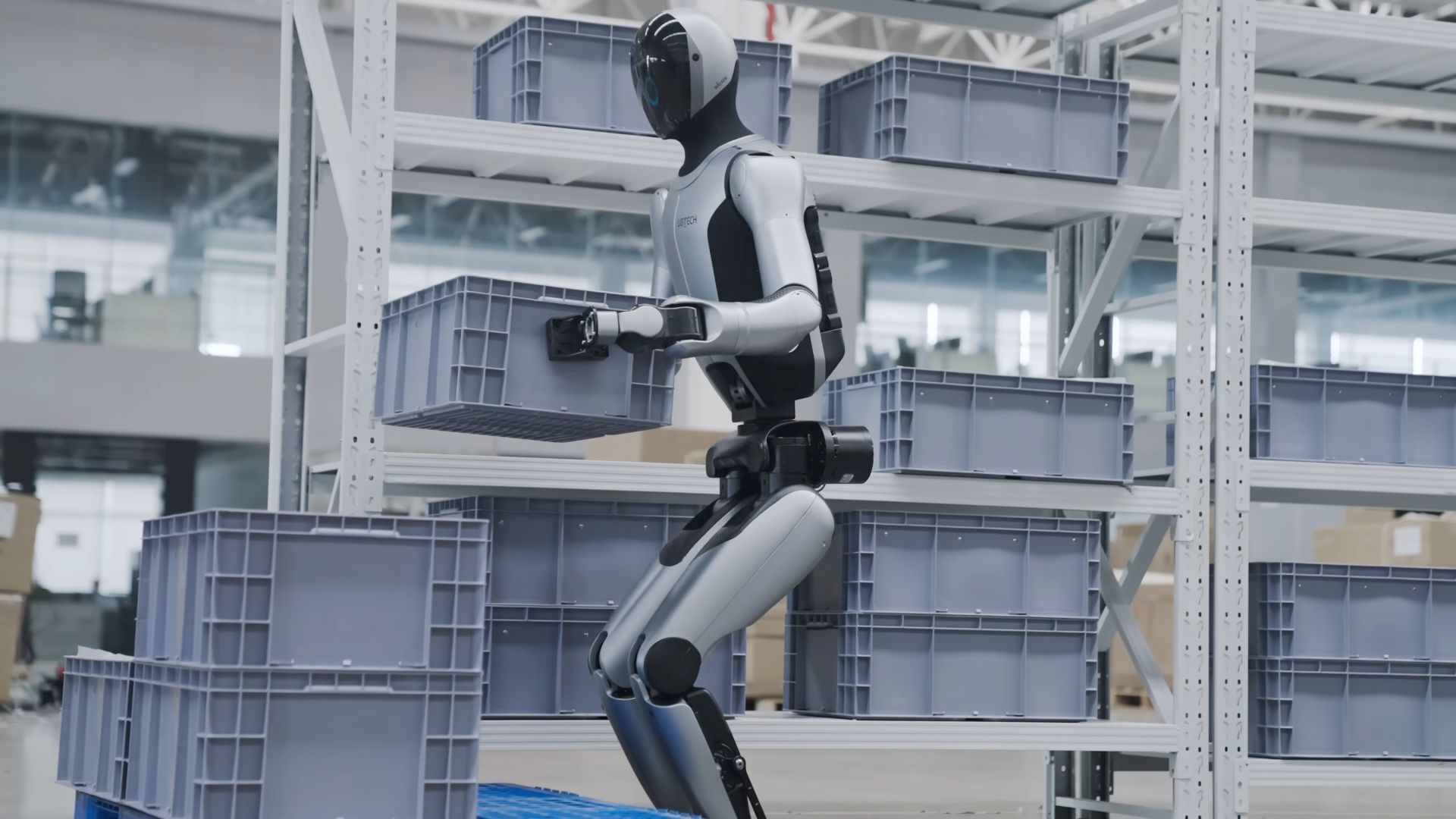
China has begun deploying UBTech's Walker S2 humanoid robots at the Fangchenggang border crossing in Guangxi on the China-Vietnam frontier, under a 264 million yuan (about US$37 million) contract first reported in November 2025, with Interesting Engineering confirming on July 2, 2026 that initial units are now live at the crossing. The robots handle passenger queue guidance, multilingual traveler instructions, corridor patrols, and cargo-lane inspections, using optical scanners to read container IDs and manifests before relaying results to human officers. For robotics and ML teams, Fangchenggang is a real-world stress test of perception and safety systems in a crowded, multilingual environment quite unlike a factory floor. The exact number of deployed units and performance metrics remain undisclosed in public reporting.
Border crossings are a demanding proving ground for embodied AI because they combine sustained throughput requirements, narrow failure tolerances, and constantly shifting conditions - crowds, weather, multiple languages - that most industrial humanoid deployments never face. Fangchenggang gives practitioners a rare real-world data point on how far commercial humanoid robotics has actually progressed toward that bar.
What happened
UBTech secured a 264 million yuan (about US$37 million) contract, first reported by the South China Morning Post in November 2025, to supply Walker S2 humanoid robots to a pilot at the Fangchenggang border crossing in Guangxi, near the Vietnam border. Deliveries were expected to begin in December 2025. Interesting Engineering, reporting on July 2, 2026, confirms deployment is now underway: robots are active at the crossing, helping ease congestion from cargo trucks, buses, and commuters during customs inspections. The exact number of units in service has not been disclosed.
Timeline
- •November 25, 2025: South China Morning Post first reports UBTech's US$37 million Walker S2 contract for the Fangchenggang border crossing.
- •December 2025: Initial Walker S2 deliveries to the border crossing were expected to begin, per SCMP and TechRadar.
- •July 2, 2026: Interesting Engineering reports the robots are actively deployed and operating at the crossing.
Technical context
According to Interesting Engineering, the robots use onboard AI to detect crowd build-ups in the passenger terminal, direct travelers into queues, and give real-time, multilingual transit instructions. In the freight area, robots equipped with optical scanners read barcodes, serial numbers, and shipping manifests on cargo containers, cross-checking them against customs databases before relaying results to human officers at central command centers. UBTech describes the Walker S2 as 1.76 meters tall with 52 degrees of freedom, a 15-kilogram per-arm payload, and a self-swapping dual-battery system that supports near-continuous operation; the company attributes navigation and balance to its BrainNet 2.0 AI stack and stereo vision system, per Interesting Engineering. Public reporting does not disclose deeper details of the on-board perception models or compute hardware used in the field units.
For practitioners
Unlike a controlled factory floor, Fangchenggang operates under high humidity, dust, variable weather, and constant passenger and freight movement, so the pilot is a genuine test of whether sensor fusion, low-latency links to command centers, and safety controllers hold up outside the lab. Teams building similar public-facing or logistics robots should expect this kind of environment to expose edge cases that curated benchmarks miss, particularly around crowd-density estimation and multilingual dialogue robustness.
What to watch
Interesting Engineering reports Chinese authorities view Fangchenggang as a pilot for wider rollout to airports, railway stations, and seaports if it succeeds, and the deployment raises open questions about liability when a robot errs during an inspection or passenger interaction. Practitioners should watch for published throughput or error-rate data, any independent safety or privacy audits, and UBTech disclosures about on-board compute or model architecture, none of which are yet public.
Key Points
- 1UBTech's Walker S2 humanoids have begun operating at a live China-Vietnam border crossing under a $37 million contract.
- 2Reported duties combine passenger-facing guidance with cargo inspection, requiring reliable multilingual dialogue and optical ID reading.
- 3Public reporting confirms deployment has started but omits unit counts and performance data, limiting independent assessment.
Scoring Rationale
Real-world humanoid deployment now confirmed live (not just a signed pilot contract) at a high-throughput public border crossing, giving practitioners a rare data point on embodied AI maturity outside factory settings. Score holds close to prior calibration; kept below 'major' because public reporting still lacks unit counts, error rates, and technical disclosure of the perception stack, limiting how much can be concluded about real capability.
Sources
Public references used for this report.
View 8 more sources
- UBTech Deploys Humanoid Robots At China's Border - Silicon UKsilicon.co.uk
- Why China is deploying humanoid robots at its Vietnam border right ...futura-sciences.com
- China To Deploys Humanoid Robots For Border Patrol Duties Along Vietnam Frontierarise.tv
- China Deploys Humanoid Robot Patrols at Vietnam Borderhungarianconservative.com
- China spends $37 million on robotic soldiers to patrol its border with ...vozpopuli.com
- China Deploying Humanoid Robots For Vietnam Border Patroldmarketforces.com
- UBTECH Walker S2 humanoids move toward border deploymenthumanoid.guide
- Robots at the Border: China's Big Move to Automate Border Control with Non-Human Workersnewo.ai
Practice interview problems based on real data
1,625 SQL & Python problems across 15 industry datasets — the exact type of data you work with.
Try 250 free problems