Ollama Raises Series B to Expand Open Model Platform

For practitioners, local-to-cloud tooling can reduce deployment friction when teams need to test open-weight models on private data or move larger workloads to managed GPU capacity. Ollama raised a $65 million Series B led by Theory Ventures, TechCrunch reports, bringing total funding to $88 million. The company provides a one-command workflow for running open models on local hardware and offers cloud access for models that exceed local capacity. According to Ollama's funding announcement, the platform reports 8.9 million developers, more than 67,000 community integrations, and use within 85% of the Fortune 500.
Why the funding matters for model deployment
For practitioners, the relevant technical pattern is not simply another AI funding round. Local-first model runners can give teams a common interface for experimentation, privacy-sensitive prototyping, and production inference across device and cloud environments. In comparable deployments, the key engineering questions are model compatibility, hardware-specific performance, data handling, observability, and the point at which cloud GPU costs outweigh local execution.
Ollama raised a $65 million Series B led by Theory Ventures, according to TechCrunch and the company's July 9, 2026 funding announcement. The round brings the Palo Alto company's total funding to $88 million. The announcement lists Benchmark, 8VC, Y Combinator, Pace Capital, 49 Palms, and GTMFund among participants.
TechCrunch reports that Ollama, launched in 2023, helps developers run open-weight AI models on PCs. The company announcement describes a local-to-cloud workflow: a model runs on local hardware when capacity permits, while larger models can run in Ollama's cloud without a separate API or account configuration. TechCrunch also reports cloud subscriptions ranging from free to $100 per month, with GPU-time-based usage tracking rather than token limits.
Reported platform scale
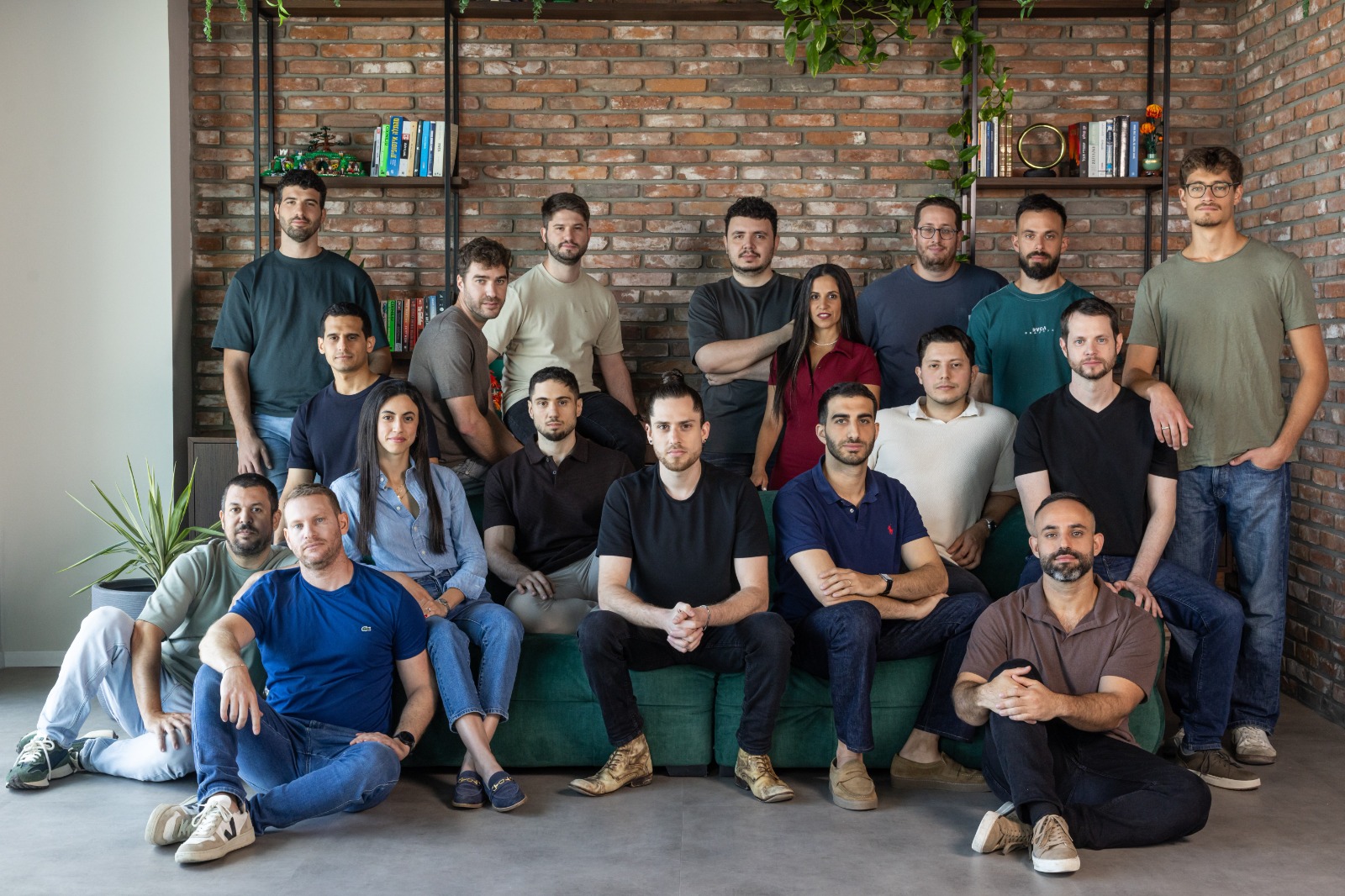
According to Ollama's announcement, the platform has 8.9 million developers, more than 67,000 community-built integrations, and users within 85% of the Fortune 500, including organizations in government, healthcare, and finance. TechCrunch reports that the company has 14 employees and that its GitHub project has 176,000 stars and nearly 17,000 forks.
Jeffrey Morgan, Ollama's CEO and co-founder, said that open models should be easy to run, easy to build with, and available wherever people need them, on their own machine, in the cloud, or both. The same announcement states that Ollama does not train on user data and that data remains on a user's machine during local execution.
Morgan and co-founder Michael Chiang previously built Kitematic, which Docker acquired in 2015, according to TechCrunch and BetaKit. TechCrunch reports that their work contributed to Docker Desktop.
Editorial analysis - technical context
Editorial analysis
A stable abstraction across local and hosted inference is valuable because teams commonly begin with developer laptops, then encounter memory, throughput, or concurrency constraints as workloads grow. A single developer interface can reduce integration work, but it does not eliminate the need to validate model versions, quantization settings, context limits, latency, and provider-specific data controls.
For practitioners
The local execution claim is most consequential for workloads containing sensitive prompts, documents, or source code, because it can limit network data transfer during development. However, teams using hosted capacity should separately evaluate cloud retention, access controls, audit logging, regional availability, and the precise terms governing model and prompt data. Those controls vary across platforms and deployment modes.
Industry context
The reported integration count reflects a broader ecosystem pattern in which model runners become connective layers between open-weight models, coding agents, document workflows, and hardware backends. For ML platform teams, portability is useful only if the same interface retains predictable behavior across local CPUs, GPUs, and managed accelerators.
Key Points
- 1Ollama raised $65 million for an open-model platform that connects local execution with hosted GPU capacity through a common developer workflow.
- 2For practitioners, comparable local-to-cloud tools can simplify prototyping, but hardware performance, governance, and model-version validation remain deployment-critical concerns.
- 3Ollama reports 8.9 million developers and 67,000 integrations, indicating substantial distribution for open-weight model tooling across developer environments.
Scoring Rationale
This is a notable funding round for a widely used open-model developer platform with a local-to-cloud deployment model. The reported user base and integrations make the story relevant to ML engineers evaluating open-weight inference workflows, although it is not a new model or a broadly transformative infrastructure release.
Sources
Primary source and supporting public references used for this report.
Practice interview problems based on real data
1,625 SQL & Python problems across 15 industry datasets — the exact type of data you work with.
Try 250 free problems