Hark Partners With NVIDIA on Personalized Agents
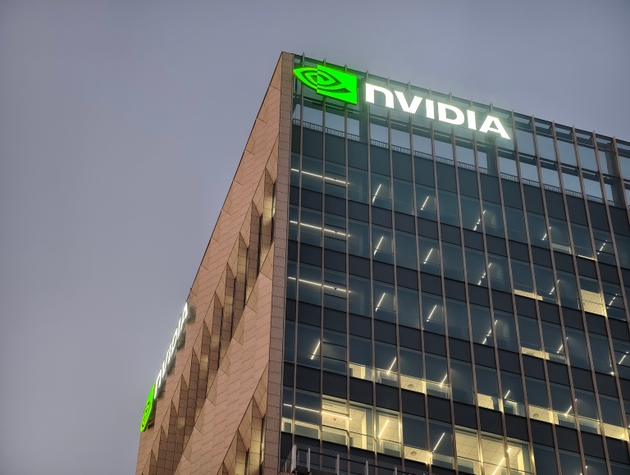
Hark announced a multi-year partnership with NVIDIA on August 27 to develop personalized intelligent agents using NVIDIA's Vera Rubin platform. Seeking Alpha reports that Hark has not yet launched its AI platform. GuruFocus describes the collaboration as using next-generation, gigawatt-scale compute, although technical specifications and product availability were not disclosed.
Hark announced a multi-year partnership with NVIDIA on August 27 focused on developing personalized intelligent agents. According to Seeking Alpha, Hark intends to use NVIDIA's Vera Rubin platform and has not yet launched its AI platform.
GuruFocus reports that the collaboration is intended to use next-generation, gigawatt-scale compute. Neither retrieved report provides technical specifications for the Hark platform, model architecture, training data, deployment environment, pricing, or a launch date.
Compute commitment before product launch
The announcement places a pre-launch AI company alongside NVIDIA's Vera Rubin platform, described in the source as next-generation. The sources characterize the arrangement as a multi-year partnership, but do not disclose the quantity of hardware, commercial terms, data center location, or whether Hark will train foundation models, fine-tune existing models, or primarily run inference.
Hark was founded by Brett Adcock, according to the original RSS record. Public reporting describes the partnership's stated focus as personalized and agentic AI, terms that generally refer to systems designed to use user-specific context and take multi-step actions. The retrieved coverage does not identify which tools agents would access, how user data would be handled, or what evaluation and safety controls would be applied.
For ML teams, the announcement underscores a broader infrastructure pattern: agentic systems that maintain persistent context can raise both inference-compute requirements and privacy-design complexity. In comparable deployments, practitioners commonly need to evaluate memory retention, tool-permission boundaries, latency under multi-step execution, and the separation of customer data across sessions. Those considerations are general implementation issues, not details disclosed by Hark or NVIDIA in the retrieved reports.
The key open question is whether the partnership produces a public product or technical release that clarifies Hark's architecture and workloads. The available reports establish the agreement and its intended use of Vera Rubin, but leave the operational scope and product capabilities unreported.
Key Points
- 1Hark and NVIDIA announced a multi-year Vera Rubin collaboration, linking a pre-launch agent platform to next-generation AI infrastructure.
- 2The retrieved reports disclose neither hardware volume nor model architecture, leaving training, inference, and deployment scope unresolved.
- 3Comparable persistent-agent deployments commonly require careful evaluation of context retention, tool permissions, latency, and user-data isolation.
Scoring Rationale
The partnership ties an emerging personalized-agent company to NVIDIA's next-generation Vera Rubin platform, making it relevant to teams tracking future AI compute ecosystems. Its immediate practitioner impact is constrained because Hark remains pre-launch and the reports disclose no technical architecture, hardware scale, or product timeline.
Sources
Public references used for this report.
Practice interview problems based on real data
1,625 SQL & Python problems across 15 industry datasets — the exact type of data you work with.
Try 250 free problems