Astronomers Use AI To Find 1,300 Anomalies
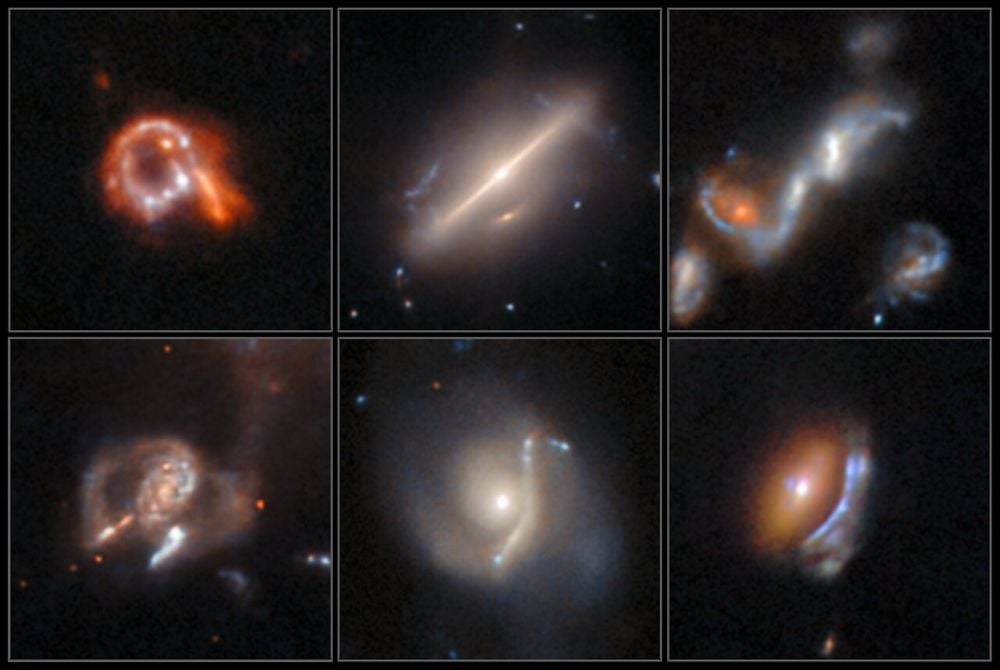
ESA researchers David O'Ryan and Pablo Gómez report in Astronomy and Astrophysics they used the AnomalyMatch framework to scan nearly 100 million Hubble Legacy Archive image cutouts and identified about 1,300 anomalous objects, more than 800 previously undocumented. The tool processed the dataset in two to three days on a single GPU, surfacing 417 merging galaxies, 86 candidate gravitational lenses and 35 jellyfish galaxies, demonstrating scalable AI can boost discovery in archival and upcoming survey data.
Key Points
- 1Detected about 1,300 anomalies, over 800 previously undocumented, from 100 million Hubble cutouts
- 2Processes data rapidly: AnomalyMatch runs ≈100 million predictions in 2–3 days on one GPU
- 3Enables discovery of lenses, merging galaxies, jellyfish galaxies, improving archival science and survey readiness
Scoring Rationale
Scalable, peer-reviewed demonstration of AI-driven discovery with high utility; scope limited mainly to astronomical archival data.
Practice interview problems based on real data
1,625 SQL & Python problems across 15 industry datasets — the exact type of data you work with.
Try 250 free problems