Xbox Integrates AI Imaging into Project Helix Hardware
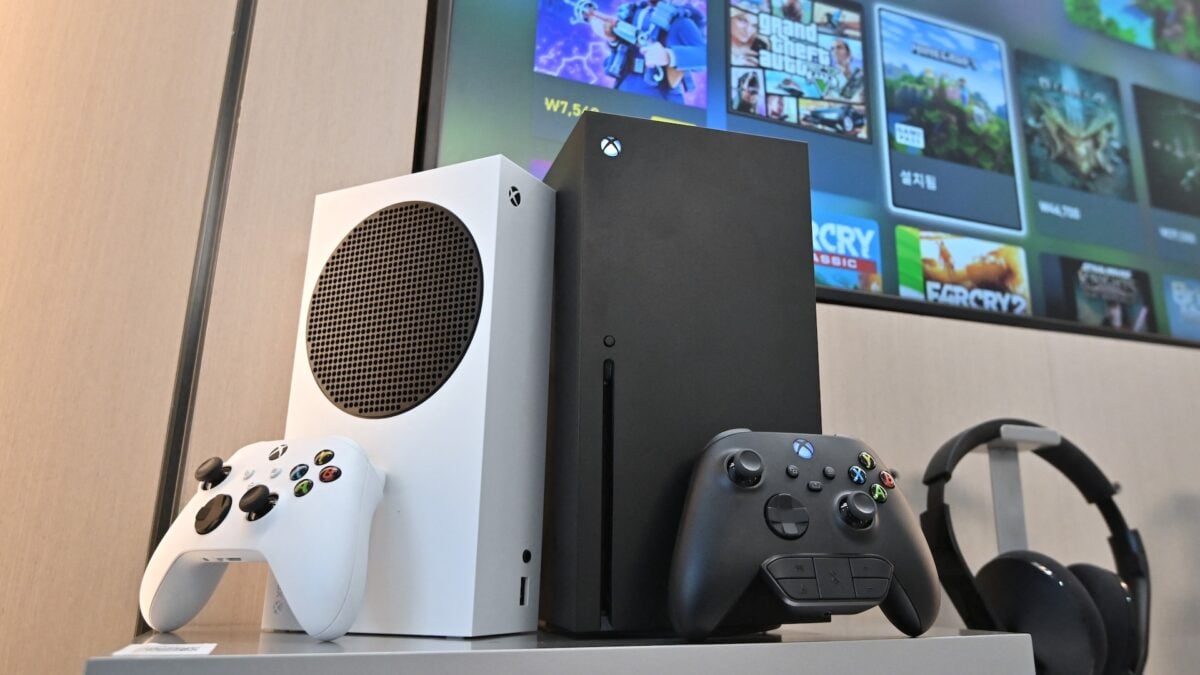
Xbox announced technical details for Project Helix at GDC and in a March Xbox Wire post, emphasising a custom AMD SoC, next-generation DirectX support, and ML-driven rendering features (Xbox Wire, March 11). Jason Ronald said Project Helix "delivers an order of magnitude leap in ray tracing performance and capability" (Xbox Wire). Reporting by Tweaktown and Overclock3D details support for FSR Diamond (ML upscaling), multi-frame generation, ray regeneration, path tracing, Neural Texture Compression, and DirectStorage + Zstd. Separately, Gizmodo reports Xbox CEO Asha Sharma said, "We will begin winding down Copilot on mobile and will stop development of Copilot on console," while other hires from Microsoft CoreAI have moved into Xbox (Gizmodo). Alpha hardware for developers is planned to ship beginning in 2027, per Xbox Wire.
What happened
Per an Xbox Wire keynote summary published March 11, 2026, Project Helix is Microsoft's next-generation Xbox console, co-designed with AMD and built around a custom AMD SoC, targeting a new generation of DirectX and FSR capabilities (Xbox Wire). Jason Ronald, Vice President of Next Generation, Xbox, said the platform "delivers an order of magnitude leap in ray tracing performance and capability" (Xbox Wire). The Xbox Wire post also states Microsoft plans to ship alpha versions of the hardware to developers beginning in 2027 (Xbox Wire).
Gizmodo reports that Xbox CEO Asha Sharma said, "We will begin winding down Copilot on mobile and will stop development of Copilot on console," and that several hires from Microsoft's CoreAI team have joined Xbox leadership, including Jared Palmer and others (Gizmodo).
Technical details
Reporting by Tweaktown, Overclock3D, and other outlets summarizes the rendering and AI features that Microsoft and AMD described at GDC. Sources list the following capabilities for Project Helix and the AMD collaboration:
- •ML-powered upscaling via the next-generation FSR Diamond implementation (Tweaktown, Overclock3D)
- •Multi-frame generation driven by machine learning to synthesize intermediate frames (Tweaktown, Overclock3D)
- •Ray regeneration to assist real-time path tracing workloads (Tweaktown, Overclock3D)
- •Support for full path tracing on select titles, enabled by the SoC and FSR innovations (Tweaktown, Overclock3D)
- •Neural Texture Compression and DirectStorage + Zstd for improved memory and IO efficiency (Overclock3D)
These technical descriptions come from Microsoft's GDC disclosures and contemporaneous coverage by Tweaktown and Overclock3D; specific implementation details and performance targets beyond the quoted material were not published in the sources.
Editorial analysis - technical context
Companies integrating ML-driven upscaling and frame synthesis into GPU pipelines are aiming to trade rendering cost for software-driven image quality, allowing higher effective resolutions or smoother frame rates on fixed-power consoles. Industry-pattern observations: adopting features like ML multi-frame generation and ray regeneration typically shifts workload from brute-force rasterization to mixed raster-ray pipelines, which raises engineering needs for latency management, deterministic frame timing, and validation across diverse developer assets.
Context and significance
Microsoft framing Project Helix around AMD's ML-enhanced FSR and path tracing places console hardware squarely in the contemporary graphics trend where machine learning accelerates perception-first rendering tasks. For game developers and graphics engineers, that trend reduces the pure-raw-GPU-power equation and increases the importance of software toolchains, middleware, and platform-provided upscalers. Reporting of Copilot winddown (Gizmodo) separates player-facing chatbot experiments from the platform-level, low-latency ML features targeted at rendering and systems performance.
What to watch
For practitioners and tools vendors, the observable signals to follow are
whether Microsoft publishes SDKs or middleware details for FSR Diamond and multi-frame generation workflows; developer documentation or reference implementations for Neural Texture Compression; performance numbers from AMD for the custom SoC; compatibility and certification guidance for path-traced titles; and the behavior of alpha hardware rollouts beginning in 2027 as cited by Xbox Wire.
Key Points
- 1Project Helix embeds ML-driven rendering (upscaling, frame generation, ray regeneration), shifting visual workloads from raw rasterization to hybrid ML pipelines.
- 2Console-level path tracing plus FSR Diamond could raise baseline graphics expectations, increasing reliance on platform middleware and developer tooling.
- 3Separation of player-facing chat features from low-latency ML rendering highlights divergent use cases for AI in games: UX agents versus systems-level imaging.
Scoring Rationale
The technical integration of ML upscaling, multi-frame generation, and console-capable path tracing is notable for graphics engineers and game developers, but the story is primarily hardware-innovation reporting rather than a frontier AI breakthrough. Multiple source dates fall earlier than today, which reduces freshness.
Sources
Public references used for this report.
Practice interview problems based on real data
1,625 SQL & Python problems across 15 industry datasets — the exact type of data you work with.
Try 250 free problems