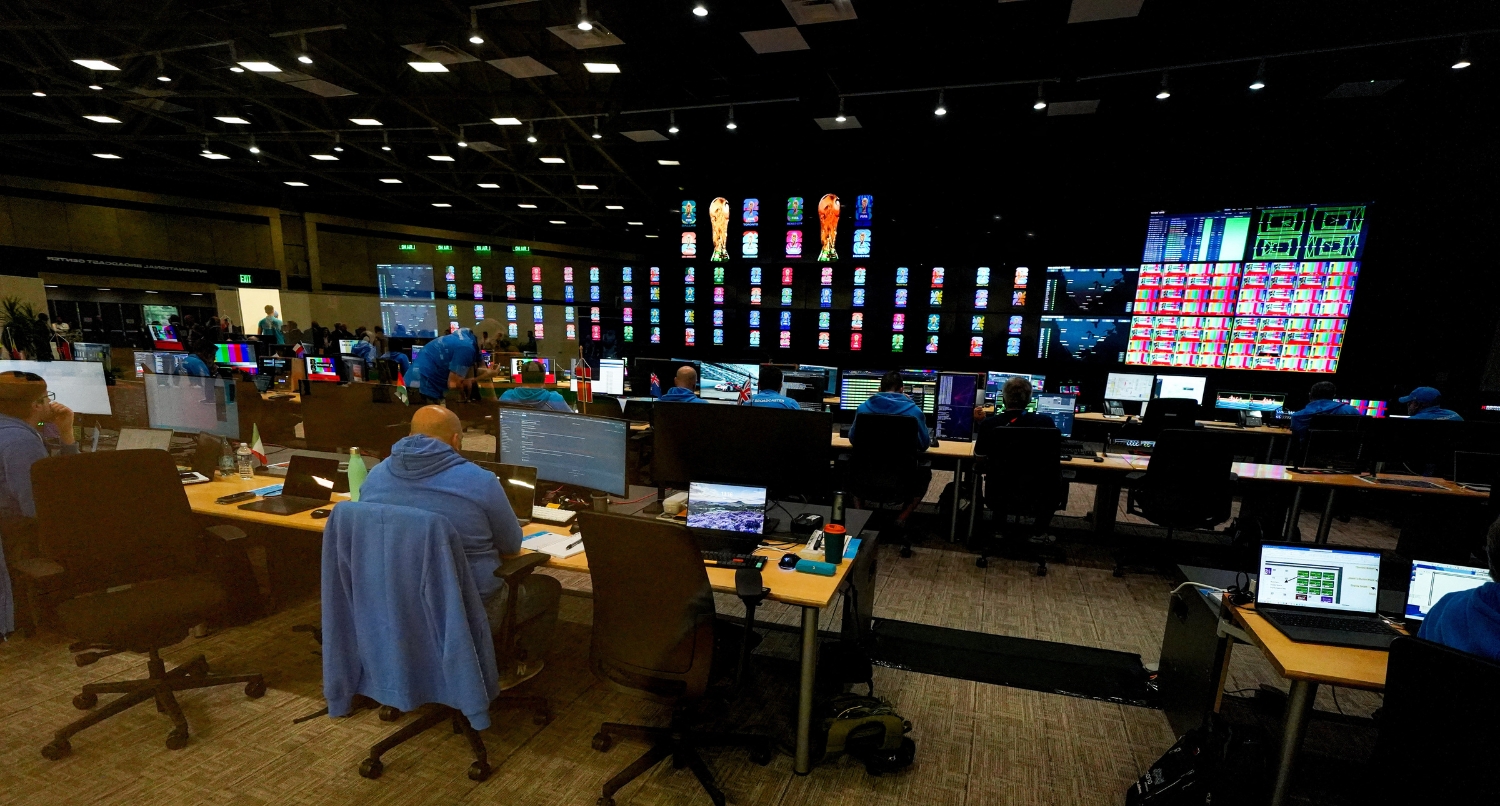
World Cup Deploys Real-Time AI for 2026 Matches

Per SCMP and Lenovo, the 2026 FIFA World Cup will use an AI system called "Football AI Pro" to deliver real-time match analysis, 3D player scans, and stadium "digital twins". Bank of America Global Research wrote in a May 6 note that AI could "democratise data and give everyone a similar chance," as reported by SCMP and the Economic Times. SCMP reports the system can process hundreds of millions of FIFA data points and more than 2,000 football-related metrics, and SanDisk estimated the tournament could generate over 90 petabytes of data. The Economic Times and Bank of America coverage highlight an acceleration in edge computing demand and higher valuations for specialised AI chipmakers and data-centre REITs. For practitioners, the deployment creates a large low-latency streaming and inference use case that will stress edge infrastructure, real-time pipelines, and model explainability.
What happened
Per SCMP, FIFA will deploy a suite of real-time AI systems at the 2026 World Cup that organisers and partners describe as providing team-specific model-driven analysis, 3D player scans and stadium-scale virtual replicas. SCMP reports the platform, called "Football AI Pro" and developed by Lenovo, can analyse hundreds of millions of Fifa data points and process more than 2,000 football-related metrics, delivering outputs as text explanations, charts and short video clips. SCMP also reports players will be digitally scanned in about one second to create accurate 3D avatars, and that each of the 16 host stadiums will have a "digital twin" for operations, crowd monitoring and security. SanDisk estimated the tournament could generate more than 90 petabytes of data, according to SCMP. The Economic Times cites a Bank of America Global Research note that the event could become the first "fully AI-driven and data-intensive mega sporting event," and quotes Bank of America: "If in the past rich teams had an advantage, in 2026 AI will democratise data and give everyone a similar chance."
Technical details
Per SCMP and Lenovo materials, the deployed stack emphasises low-latency ingestion and on-site computation: live video feeds feed models that extract pressing, movement, tactics and transition metrics at scale, and the system produces short video clips and 3D simulations for tactical review. The Economic Times and Bank of America reporting frame this as an edge-heavy architecture that complements cloud backends; the sources link the shift to increased demand for specialised AI chips and stadium-level compute capacity.
Editorial analysis
Industry context
Major live-sport deployments concentrate three operational pressures for ML practitioners. First, the combination of ultra-high ingest rates and tight decision windows makes end-to-end latency the binding constraint. Second, delivering interpretable outputs to coaches and referees raises requirements for explainability and concise visualisations. Third, the expected data volumes and edge topology shift cost and procurement decisions toward specialised chips, site-level networking and hybrid cloud-edge orchestration.
What to watch
Observers should track measured latency and accuracy for officiating tasks (for example, offside adjudication), announcements from FIFA or Lenovo with technical benchmarks, real-world bandwidth and storage telemetry from venues, and market signals cited by the Economic Times on chipmaker and data-centre REIT valuations.
Key Points
- 1Large live-sport AI deployments prioritise sub-second inference, creating strong requirements for edge compute and low-latency networking.
- 2Delivering usable outputs to coaches and referees increases the importance of model explainability and concise visualisation pipelines.
- 3Tournament-scale data volumes shift economic value toward specialised chips, on-site compute and hybrid cloud-edge architectures.
Scoring Rationale
The story describes a large, production-scale AI deployment with real-time requirements that will matter to infrastructure, ML ops and model-explainability practitioners. It is not a frontier-model release but is notable because of scale, edge requirements and industry demand signals for chips and data-centre capacity.
Sources
Public references used for this report.
Practice interview problems based on real data
1,625 SQL & Python problems across 15 industry datasets — the exact type of data you work with.
Try 250 free problems