Apple Automates Password Fixes With Agentic AI
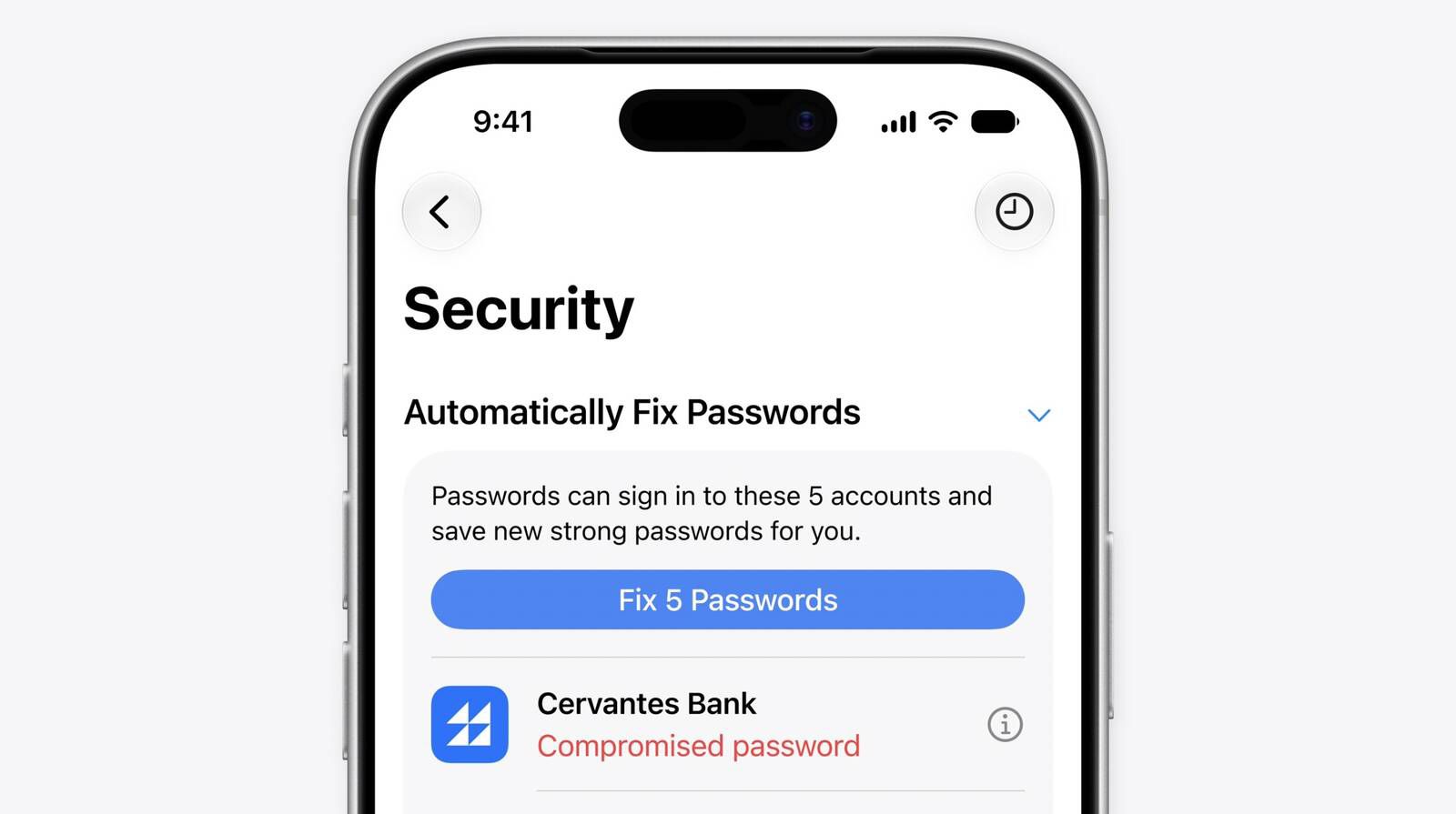
Apple announced that its Passwords app can automatically update weak and compromised passwords using Apple Intelligence and Safari, according to MacRumors and Barron's. MacRumors reports the feature builds on Passwords' existing credential-alerting capability by automating end-to-end password changes in the background, with an initial user tap and a Live Activity shown while the agent operates. MacRumors reports the system uses Safari to navigate sites and sign in as part of the automated process. Apple says the feature will arrive with iOS 27 later this year, with a developer beta available now, and that it runs with privacy protections including on-device processing and Private Cloud Compute (MacRumors; 9to5Mac).
What happened
Apple announced that the Passwords app can automatically update weak and compromised passwords using Apple Intelligence and Safari, per MacRumors and Barron's. MacRumors reports the capability extends Passwords' prior alerting behavior by performing end-to-end credential changes in the background after an initial user tap, and that the activity appears as a Live Activity while running. Barron's places the Passwords update alongside other agentic AI features in Safari that take actions for users, such as tab organization and page-change alerts. Apple says the capability will arrive with iOS 27 later this year, with a developer beta available now, and that it runs with privacy protections including on-device processing and Private Cloud Compute (MacRumors; 9to5Mac).
Editorial analysis - technical context
Agentic automation that signs into websites and submits password-change flows requires interacting with diverse web authentication patterns, including multi-page logins, two-factor prompts, and anti-bot measures like CAPTCHAs. Companies building similar automation typically invest in robust DOM parsing, heuristic fallbacks for nonstandard forms, and secure credential handling to limit exposure during automated sessions.
Industry context
Observed patterns in similar product launches show that embedding automation into browsers and password managers reduces user friction but raises integration and auditing questions. Competing password managers have offered varying degrees of automated credential rotation and form-filling, and public reporting frames Apple's move as alignment with that broader product trend.
What to watch
Observers should follow how the feature handles multi-factor authentication, CAPTCHAs, and sites with uncommon login flows; whether Apple exposes logs or change histories for user review; and how the agentic actions are constrained by permissions and privacy safeguards. Apple frames the feature as privacy-first, citing on-device processing and Private Cloud Compute, but the cited coverage does not include detailed implementation documentation or independent security review.
For practitioners
Embedding agentic AI into client platforms changes operational trade-offs around reliability, test coverage, and secure session management. Industry teams assessing similar functionality typically plan for systematic QA across high-traffic sites and for mechanisms to surface failed automations to users for manual remediation.
Key Points
- 1Apple's Passwords app now automates password updates, removing manual steps and reducing user friction during credential remediation.
- 2Agentic browser-driven automation must handle diverse login flows, two-factor prompts, and anti-bot measures, increasing engineering complexity.
- 3Embedding automation in platform-level tools aligns with industry product trends but raises auditability and permissioning questions for security teams.
Scoring Rationale
Apple is embedding an agentic AI feature into a core security tool (Passwords), using Apple Intelligence and Safari to automatically rotate weak and compromised credentials at platform scale for hundreds of millions of users. It is a notable, security-relevant deployment of agentic browser automation, tempered slightly because it ships with iOS 27 later this year and is currently in developer beta rather than generally available.
Sources
Public references used for this report.
Practice interview problems based on real data
1,625 SQL & Python problems across 15 industry datasets — the exact type of data you work with.
Try 250 free problems