Feagine Releases Fi0 for Cross-Embodiment Robotics
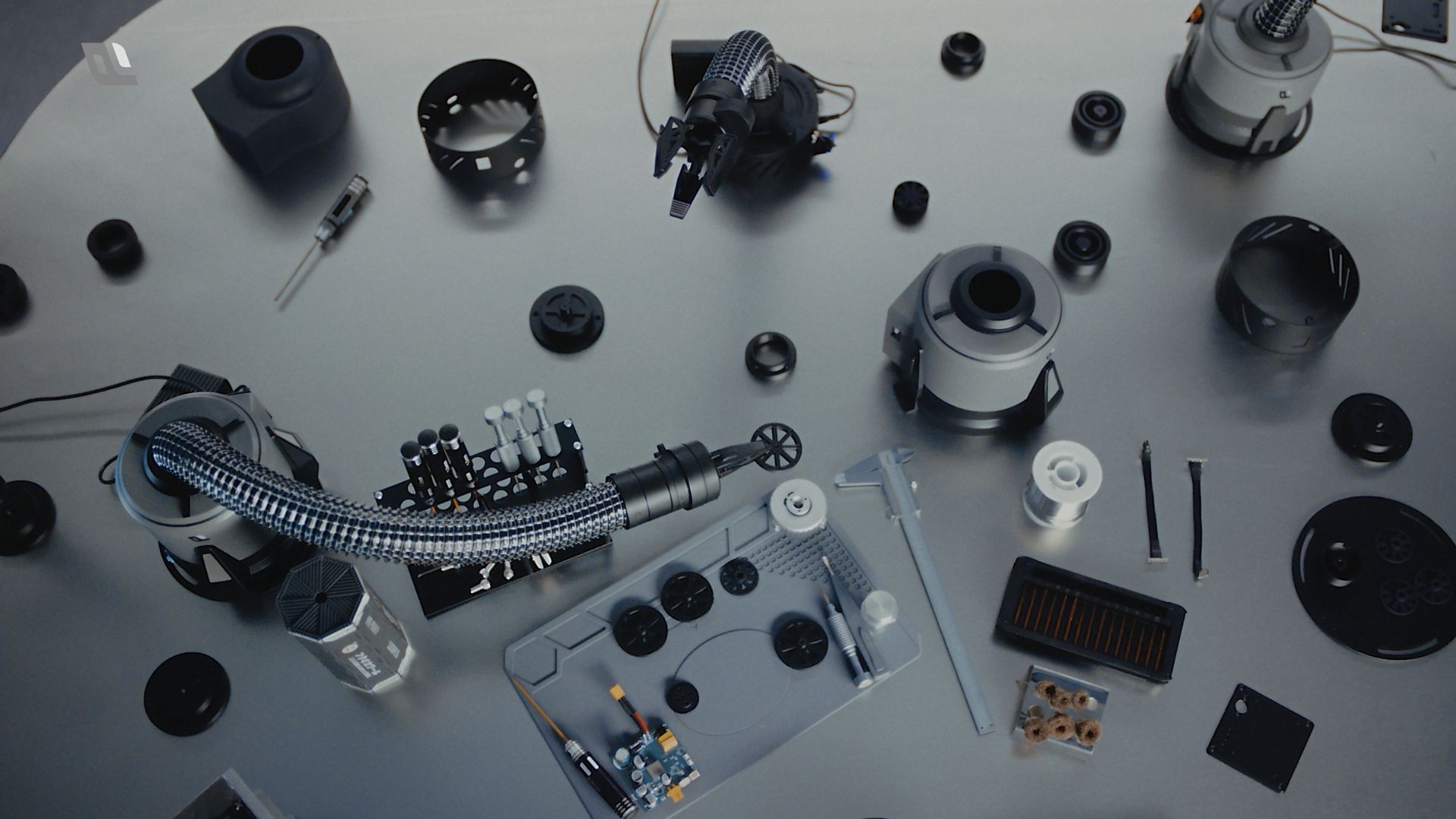
Feagine Robotics released Fi0, a cross-embodiment foundation model, alongside three tendon-driven soft manipulators on August 13. According to the company's PR Newswire announcement, Fi0 is designed to retain task knowledge across robot bodies with different lengths, segment counts, and degrees of freedom; Interesting Engineering reports that the A01, A02, and A03 provide progressively more complex physical configurations for testing that premise.
Feagine Robotics released Fi0, a model for cross-embodiment robot learning, with three tendon-driven biomimetic soft manipulators, the FEAGINE A01, A02, and A03, on August 13. In its PR Newswire announcement, the Shenzhen-based company described Fi0 as a first-generation foundation model intended to preserve task knowledge when a robot's physical body changes.
Fi0 stands for Foundation Intelligence Across Embodiments. According to Feagine, the model is intended to operate across robots with differing arm lengths, segment counts, and degrees of freedom. The company calls the combined hardware and model effort "soft embodied intelligence."
Three variations of a soft robot body
The manipulators provide controlled changes in morphology rather than a single fixed robot platform. Interesting Engineering reports the following configurations:
- •A01: one flexible segment, two degrees of freedom, 750 grams in weight, and a 200-gram payload.
- •A02: two segments, four degrees of freedom, and a 400-gram payload.
- •A03: three segments, 6+1 degrees of freedom, a 50-centimeter arm length, and a 600-gram payload.
Feagine's announcement states that the variants differ in length, segment count, reachable workspace, motion path, and contact behavior. Those differences are consequential for robot control: an action policy that works on a short, two-segment arm cannot necessarily be executed unchanged on a longer or more articulated soft manipulator.
Interesting Engineering reports that Fi0 incorporates information about a robot's physical structure and current state when generating actions. The available reporting does not specify the model architecture, training corpus, evaluation tasks, success rates, or whether Fi0 is publicly available for researchers and developers.
Why cross-embodiment evaluation matters
The release targets a persistent robotics problem. Robot learning systems are often tied closely to the kinematics, actuators, sensors, and control limits of the hardware on which they were trained. Changing those constraints can require new data collection, policy adaptation, or retraining.
In comparable embodied-AI research, testing across systematically different bodies is useful because it separates task-level representations from morphology-specific control. For practitioners, meaningful evidence of transfer typically requires task-level comparisons across embodiments, including controls against per-robot policies and reporting on data, safety constraints, latency, and recovery from contact or deformation. None of those results were included in the retrieved announcements.
The practical significance of Fi0 therefore rests on future technical validation rather than the announcement alone. If cross-body task transfer is demonstrated under repeatable conditions, it could reduce the engineering overhead of adapting learned skills to specialized soft-robot designs. For now, Feagine has introduced a hardware-and-model testbed centered on that question.
Key Points
- 1Feagine introduced Fi0 with three soft manipulators, targeting task-knowledge transfer across robot bodies with different morphology and control constraints.
- 2A01 through A03 vary segments, degrees of freedom, reach, and payload, creating a controlled setup for cross-embodiment experiments.
- 3Comparable robotics programs require transfer benchmarks, baselines, and safety metrics before claimed reductions in retraining can be assessed.
Scoring Rationale
Fi0 addresses a relevant technical challenge in embodied AI: transferring learned robot behavior across different physical forms. The announcement offers useful hardware specifications but no disclosed architecture, benchmark results, or availability details, limiting its immediate value for production ML teams.
Sources
Public references used for this report.
Practice interview problems based on real data
1,625 SQL & Python problems across 15 industry datasets — the exact type of data you work with.
Try 250 free problems