OpenAI confidentially files for IPO, readies Wall Street debut
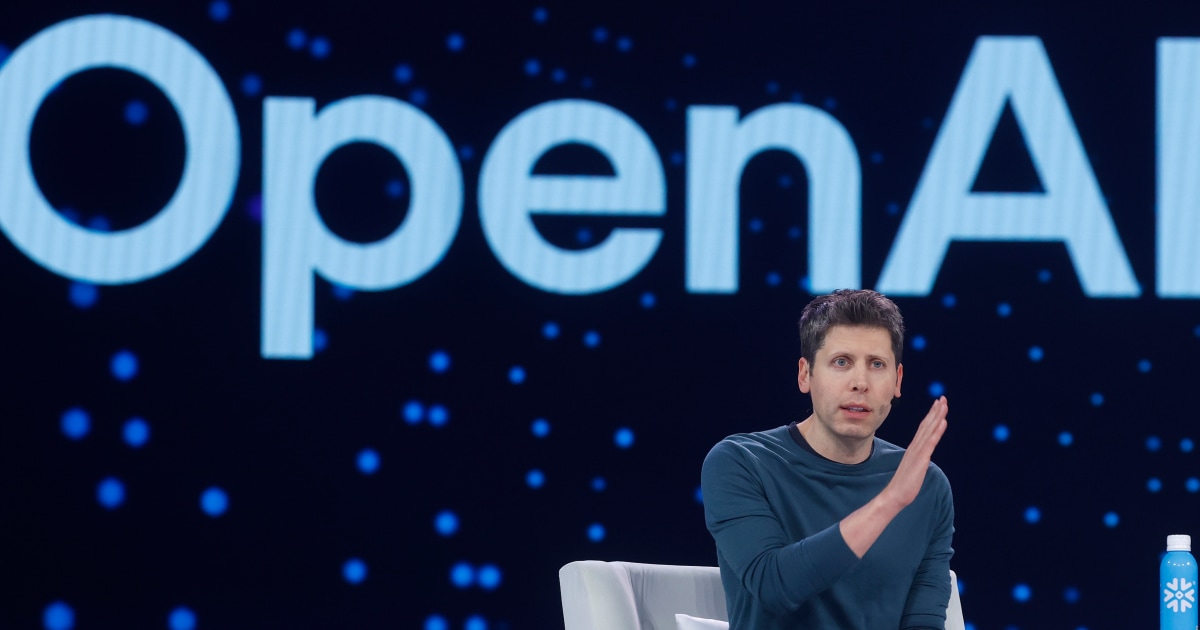
OpenAI said on June 8, 2026 that it has confidentially submitted an S-1 registration statement to the U.S. Securities and Exchange Commission, an early step toward a potential initial public offering. Per CNBC, the company is targeting a listing as soon as the fourth quarter and ChatGPT now supports more than 900 million weekly active users. Multiple outlets, including the Associated Press and Bitcoin News, report the filing values OpenAI at about $852 billion, with Goldman Sachs and Morgan Stanley leading the process. The disclosure lands a week after Anthropic filed confidentially and days before SpaceX is set to begin trading, a cluster that could produce three of the largest IPOs on record.
What happened
OpenAI disclosed on June 8, 2026 that it recently submitted a confidential S-1 registration statement to the U.S. Securities and Exchange Commission, the paperwork that precedes an initial public offering. The company's public post, as quoted by CNBC, reads: "We recently submitted a confidential S-1. We expect it to leak so we're just announcing it. We have not decided on timing yet; it may be a while because there are things we want to do that are likely easier as a private company. But it's a complicated set of tradeoffs and this gives us the option to go public sooner if that ends up being best."
Valuation and bankers
Multiple outlets, including the Associated Press, Yahoo Finance and Bitcoin News, report that the filing values OpenAI at roughly $852 billion, in line with a recent funding round, and that Goldman Sachs and Morgan Stanley are leading the offering. CNBC reports OpenAI has weighed going public as soon as the fourth quarter of 2026, with some reporting suggesting the company could ultimately seek a valuation approaching $1 trillion in a debut.
Market context
The disclosure is the latest in a cluster of frontier-AI and space listings. Reporting places OpenAI's filing about a week after Anthropic filed confidentially and days before SpaceX is set to begin trading; collectively, the three could rank among the largest IPOs ever. CNBC reports ChatGPT now exceeds 900 million weekly active users, a scale that underpins investor interest but also invites scrutiny of monetization and cost structure.
Editorial analysis - what a confidential S-1 signals
As a general industry pattern, companies that file confidentially use the non-public review period to refine audited financials, share-class structure and risk disclosures before the document becomes public and a roadshow begins. For machine-learning teams and platform engineers, the eventual public S-1 is the document to read closely: it typically discloses revenue composition, gross margins, research-and-development and compute spend, customer concentration, and capital commitments to data centers and chips.
What to watch
Key items in any public filing will include the revenue and margin trajectory, the scale of compute and infrastructure commitments, named underwriters and a valuation range, share-class and governance terms tied to OpenAI's capped-profit and nonprofit structure, and lockup and timing details. Financial-press analysis also notes OpenAI continues to operate at a substantial loss despite rapid revenue growth, so disclosed profitability metrics will be closely parsed against the headline valuation.
Key Points
- 1OpenAI confidentially filed an S-1 with the SEC at a reported $852 billion valuation, signaling a possible fall 2026 IPO.
- 2A confidential filing lets OpenAI finalize audited financials and governance disclosures before a public S-1 and roadshow.
- 3Practitioners should watch the eventual public S-1 for revenue, margins, and compute-spend detail affecting pricing and platform stability.
Scoring Rationale
OpenAI's confidential S-1 filing at a reported $852B valuation is a landmark event in AI's public-market history, arriving alongside Anthropic's and SpaceX's filings. The filing signals imminent public disclosure of revenue composition, compute spend, and governance structure - material for every practitioner building on OpenAI APIs. Score below 9.0 because the confidential filing is a preparation step, not the completed IPO or public S-1; final terms and timing remain undecided.
Sources
Public references used for this report.
Practice interview problems based on real data
1,625 SQL & Python problems across 15 industry datasets — the exact type of data you work with.
Try 250 free problems