World Cup Demonstrates Value of Smart Glasses in Sports
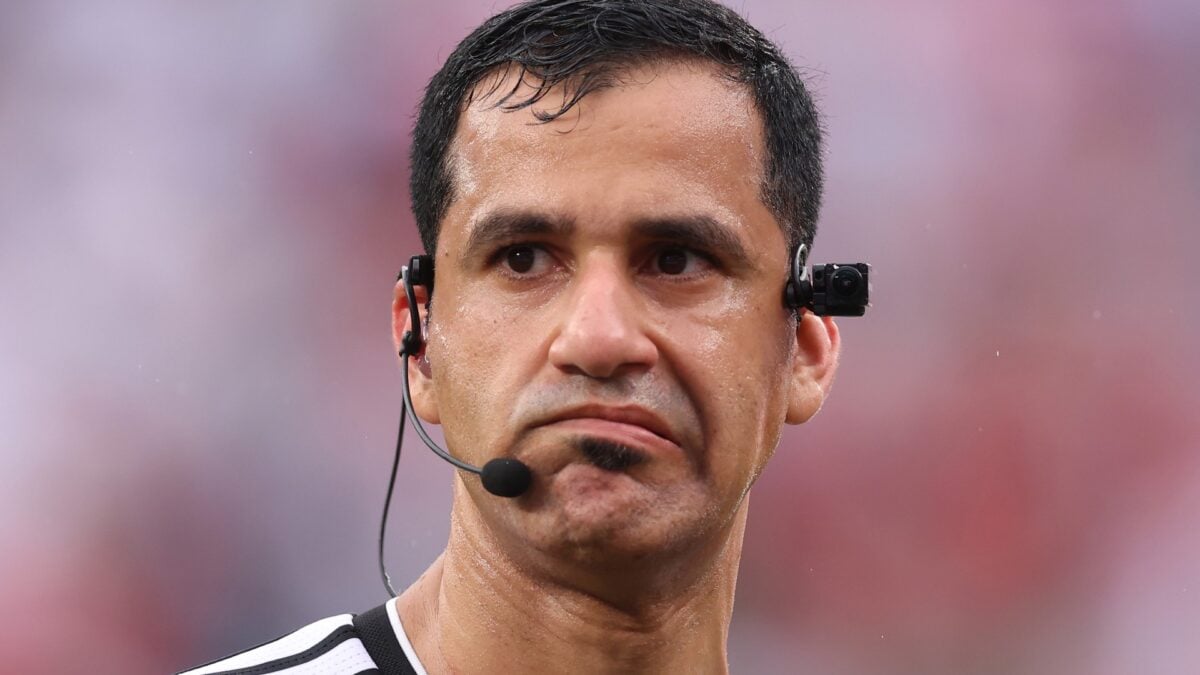
During the 2026 FIFA World Cup, referees wore head-mounted "ref cam" headsets that delivered a first-person view of on-field action, with footage reaching TV replays in near-instant time, according to Gizmodo. FIFA partnered with Lenovo on real-time stabilization software that the companies say cut blur and shakiness by up to 50%, and referee body cameras were deployed across all 104 games of the tournament, per Digital Camera World and Yahoo Sports. Gizmodo frames the ref-cam headset as visually similar to consumer smart glasses and argues the coverage offers a practical case for head-worn optics in sports broadcasting. For AI and computer-vision practitioners, the deployment is a real-world stress test of low-latency ingest, on-device stabilization, and multi-camera synchronization at broadcast scale.
The interesting engineering story here isn't the World Cup itself, it's that FIFA and Lenovo shipped a specific, measurable stabilization claim, up to 50% less blur and shake, across all 104 tournament matches, which is a rare public benchmark for real-time on-device video stabilization at genuine broadcast scale.
What happened
Gizmodo reports that at the 2026 FIFA World Cup, referees wore head-mounted "ref cam" headsets that delivered a first-person view of on-field action, with the broadcast pipeline from headset to TV replay appearing near-instant. The article embeds a Fox Sports tweet showing ref-cam footage and frames the headset's form factor as visually similar to consumer smart glasses. Separately, FIFA partnered with Lenovo on real-time stabilization technology; the companies say their software reduced blur and shakiness by up to 50%. Digital Camera World and Yahoo Sports report that referee body cameras were used across all 104 games of the tournament, following testing at the 2025 FIFA Club World Cup and use in various leagues during the 2025-26 season.
Technical context
First-person sports video at this scale stress-tests several engineering requirements: low-latency ingest and transport for near-live replay, robust on-device stabilization and exposure control under heavy motion, lightweight on-device preprocessing to reduce upstream compute, and deterministic timecode alignment between head-worn and fixed broadcast cameras for multi-angle reconstruction. FIFA and Lenovo's public 50% stabilization figure is a useful reference point for teams evaluating on-device video-stabilization approaches, though the companies have not published a detailed technical methodology alongside the claim.
For practitioners
Teams building or operating vision stacks should treat referee and headset footage as a production-scale use case for edge inference and streaming telemetry. Similar adoptions in policing and extreme sports have previously driven investment in low-power codecs, hardware-accelerated stabilization, and metadata tagging at capture time; tracking which of these approaches FIFA and Lenovo actually used, once more technical detail becomes available, will be useful for teams evaluating vendors for similar broadcast or field-capture deployments.
What to watch
Whether FIFA or Lenovo publish more detailed technical specifications behind the stabilization claim, and whether other major sports leagues adopt similar head-worn, referee-perspective camera systems following the World Cup's visibility.
Key Points
- 1FIFA deployed referee head-cams across all 104 World Cup matches, with Lenovo's real-time stabilization software cutting blur and shake by up to 50 percent.
- 2First-person ref-cam footage stress-tests low-latency ingest, on-device stabilization, and deterministic timecode alignment across multiple broadcast camera streams.
- 3Gizmodo frames the ref-cam headset as functionally similar to consumer smart glasses, positioning live sports as a proving ground for head-worn optics.
Scoring Rationale
A niche but practical, now multi-source-confirmed signal for teams building real-time vision and streaming infrastructure, with a concrete public benchmark (50% stabilization improvement across 104 matches) that raises it slightly above a single-outlet trend piece.
Sources
Public references used for this report.
Practice with real Ad Tech data
90 SQL & Python problems · 15 industry datasets
250 free problems · No credit card
See all Ad Tech problems