Waymo Adds Gemini to Ojai Robotaxi Cabin
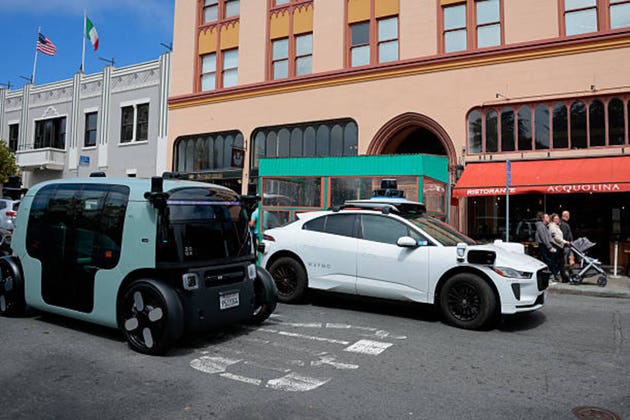
Waymo added Google's Gemini AI assistant to the cabin of its Ojai autonomous vehicle on July 29, according to Seeking Alpha, with new features intended to let riders personalize their trips. Digital Trends reports that the Ojai has three interior screens for settings including music and cabin temperature, while early public access is due to begin in San Francisco, Phoenix, and Los Angeles.
Waymo has added Google's Gemini AI assistant to the cabin of its Ojai autonomous vehicle, Seeking Alpha reported on July 29. The publication described the addition as part of new features for the vehicle's premium passenger space, intended to support ride personalization.
The available Seeking Alpha excerpt does not detail Gemini's supported commands, the model configuration, data handling, or whether the assistant can interact with vehicle-driving functions. Those boundaries are material in an autonomous-vehicle setting, where cabin controls and the driving stack have substantially different safety requirements.
Cabin interface and accessibility
Digital Trends reports that the Ojai cabin includes three large screens through which passengers can adjust settings such as music and cabin temperature. The outlet also describes accessibility features including braille markings, screen-reader support, and seat-integrated handles.
According to Digital Trends, the Ojai uses the sixth generation of the Waymo Driver and builds on more than 20 million fully autonomous trips completed in major US cities. The outlet reports that Waymo is preparing early public access in San Francisco, Phoenix, and Los Angeles, with free rides offered while feedback is collected.
What remains unclear
The source material establishes the in-cabin Gemini addition, but it does not provide API-level or operational details that developers would need to assess the integration. In comparable automotive assistant deployments, meaningful implementation questions include whether requests are processed on-device or in the cloud, how passenger identity and conversation data are handled, and which cabin controls are explicitly allowlisted.
Separating conversational interfaces from safety-critical vehicle controls is also a common design constraint for AI-enabled mobility systems. The reported feature appears focused on passenger experience, while the available coverage does not describe Gemini as part of the autonomous driving system.
Digital Trends further reports prospective expansion activity in Denver, Las Vegas, and San Diego, though the available report does not establish timing or availability for the Gemini-equipped Ojai in those locations.
Key Points
- 1Seeking Alpha reports that Waymo added Gemini to Ojai, extending AI interaction into the robotaxi passenger cabin.
- 2Digital Trends describes three cabin screens and accessibility features, placing Gemini within a broader passenger-interface redesign.
- 3Comparable automotive assistants require clear boundaries between conversational controls, user data processing, and safety-critical driving systems.
Scoring Rationale
The reported Gemini integration is a notable deployment of a major AI assistant in an autonomous-mobility passenger environment. Technical implementation details remain unavailable, limiting immediate developer evaluation, but the story is relevant to multimodal interfaces, automotive AI, and AI product integration.
Sources
Primary source and supporting public references used for this report.
Practice with real Ride-Hailing data
90 SQL & Python problems · 15 industry datasets
250 free problems · No credit card
See all Ride-Hailing problems