U.S. Government Broadens Scrutiny of Advanced AI Models
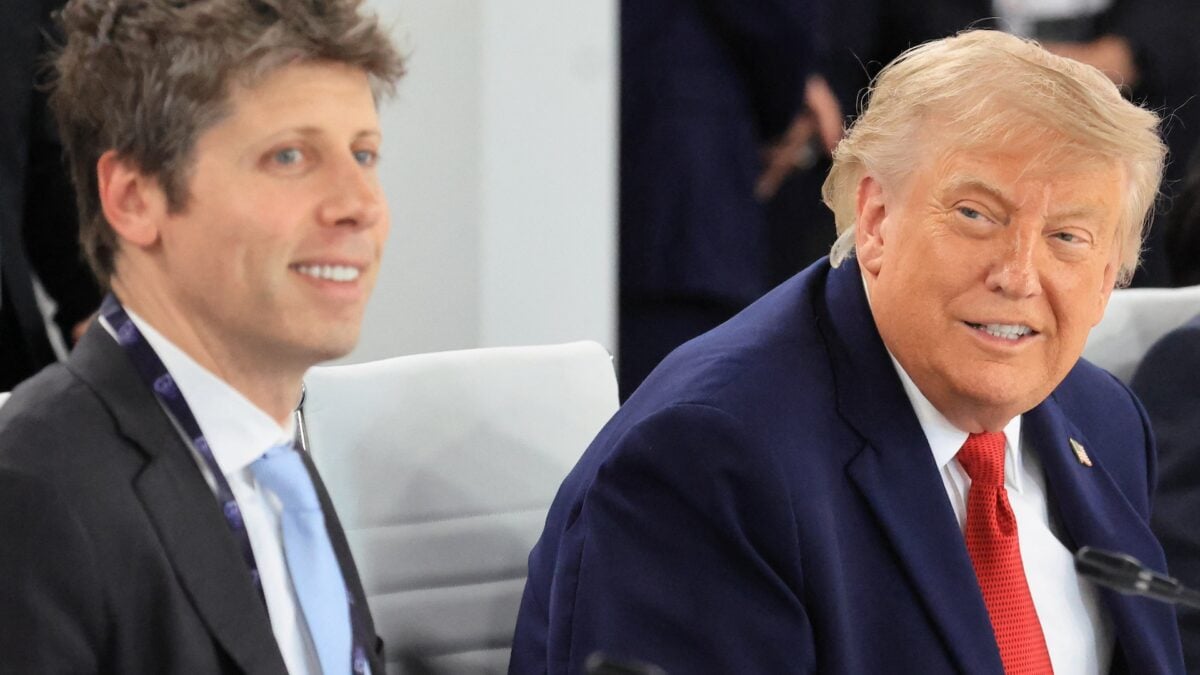
AP reports that the U.S. government issued export-control directives that forced Anthropic to take its latest models Fable 5 and Mythos 5 offline to prevent foreign-nationals' access. Fortune and the Wall Street Journal report the escalation began after Amazon researchers found a documented jailbreak and Amazon CEO Andy Jassy raised the finding with White House officials. Gizmodo, citing The Information, reports OpenAI postponed a general release of GPT-5.6 after requests from the Office of National Cyber Director Sean Cairncross and the Office of Science and Technology Policy led by Michael Kratsios; Gizmodo also reports an internal memo from Sam Altman saying the government will vet access "customer by customer" during a staggered rollout. Industry coverage frames these moves as a broader expansion of U.S. export and model-access controls with international and talent-policy consequences.
What happened
AP reports that the U.S. government issued export-control directives that prompted Anthropic to take its most advanced models, Fable 5 and Mythos 5, offline to block access by foreign nationals. Fortune and the Wall Street Journal report the episode escalated after Amazon researchers documented a jailbreak and Amazon CEO Andy Jassy raised the issue with White House officials during a scheduled call. Gizmodo, citing The Information, reports OpenAI postponed a broad release of GPT-5.6 following requests from the Office of National Cyber Director Sean Cairncross and the Office of Science and Technology Policy under Michael Kratsios; Gizmodo also reports an internal memo from Sam Altman saying the government will approve GPT-5.6 access "customer by customer" during a phased rollout.
Editorial analysis - technical context
Industry-pattern observations: high-capability language models and multimodal systems increasingly demonstrate emergent behaviors that can be repurposed for cybersecurity tasks, including code generation and exploit synthesis. Security researchers and vendor red teams routinely find jailbreaks and prompt-engineering workarounds that reduce guardrails; those findings are the proximate cause cited in multiple reports about the Anthropic incident. For practitioners, this means adversarial-testing and threat-modeling for high-capability models are becoming a de facto element of responsible deployment.
Context and significance
public reporting frames the U.S. action as more than a one-off enforcement step. The Financial Times, The Information, and Axios coverage (summarized in broader reporting) link the export-control decision to wider debates about restricting technology transfers, vetting foreign access, and how U.S. policy might affect talent mobility. International outlets such as The Diplomat and DW highlight diplomatic friction and operational disruption for partners and customers abroad. Observers quoted across outlets warn that export controls or customer-by-customer vetting could complicate cloud and API access models that many organizations rely on.
What to watch
- •Whether U.S. agencies publish guidance or a public justification for the export controls; current coverage notes officials have cited "national security concerns" without a detailed public rationale (AP, Fortune).
- •How major cloud providers and enterprise customers react to customer-by-customer access models reported for GPT-5.6 (Gizmodo).
- •Congressional or executive-branch follow-ups that codify vetting processes or narrow/expand the scope of controls, and statements from allied governments about reciprocal access and talent flows (Axios, The Diplomat).
For practitioners
legal teams, platform engineers, and security operations should track formal guidance from U.S. agencies and vendor notices. The reported events underscore the operational risk of sudden access controls for hosted model providers and for customers relying on continuous API availability. Independent red-teaming, explicit export-control risk assessments, and clear contractual change-management clauses are industry-standard mitigations that observers often recommend when cross-border access might be restricted.
Reported caveats
Reporting remains incomplete on the full technical details of the documented jailbreaks and on any classified rationale the government used for the controls. Multiple outlets note officials have not publicly shared the specific national-security findings that underpinned the Anthropic directive (Fortune, AP, The Information).
Key Points
- 1U.S. export controls forced Anthropic to take Fable 5 and Mythos 5 offline, illustrating regulatory reach over model access.
- 2Reports link the Anthropic action to an Amazon-discovered jailbreak and White House escalation, showing vendor security findings can trigger policy moves.
- 3Industry-pattern observations: tighter access controls raise operational and talent-friction risks for cloud-hosted AI services and international customers.
Scoring Rationale
First documented instance of U.S. export controls forcing suspension of frontier AI models, covering Anthropic (Fable 5, Mythos 5) and influencing OpenAI's GPT-5.6 rollout. The action sets a regulatory precedent with broad operational and geopolitical implications for cloud AI services, international customers, and talent mobility, making it a landmark policy event for AI/ML practitioners.
Sources
Public references used for this report.
View 12 more sources
- When the Trump administration cracks down on Anthropic, who benefits?techcrunch.com
- Inside Trump's Anthropic crackdown - Fortunefortune.com
- Anthropic says it has taken its latest AI models offline to comply with new export controlsapnews.com
- Trump says he no longer views Anthropic as a national security threat after G7 meeting with CEOthenextweb.com
- Exclusive: Trump tells 'The Axios Show' that Anthropic was a national security threataxios.com
- Anthropic's Export Control Crackdown Leaves South Korea Caught in Washington's AI Crossfirethediplomat.com
- Trump's Anthropic Crackdown Sets Off AI Alarms for US Alliesfinance.yahoo.com
- US curbs Anthropic AI access, raising global concerns - DW.comdw.com
- Lutnick's Anthropic crackdown claims new power over AI modelsmercurynews.com
- Amazon voiced concerns about Anthropic AI models before US crackdown, source saysm.economictimes.com
- Trump Administration to Meta: Pretty Please Let Us Vet Your AI Models?gizmodo.com
- US orders Anthropic to disable AI models for all foreign nationalsaljazeera.com
Practice interview problems based on real data
1,625 SQL & Python problems across 15 industry datasets — the exact type of data you work with.
Try 250 free problems