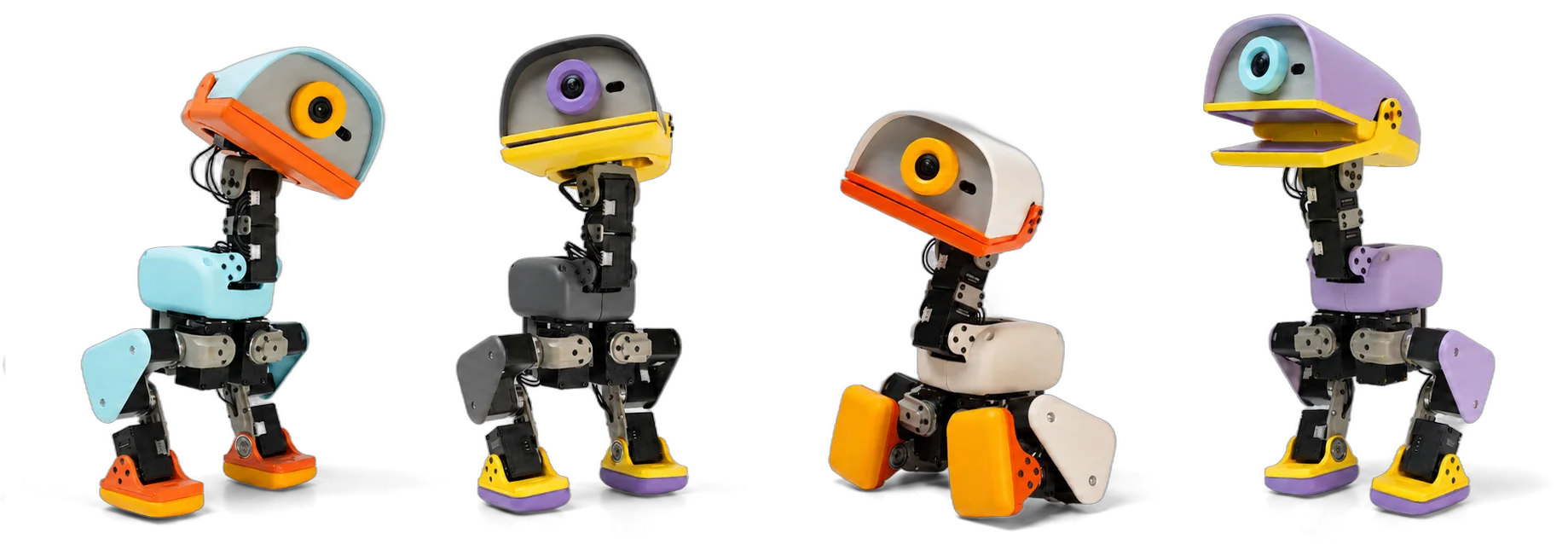
Tiangong Ultra Runs 100 Meters in 8.86 Seconds

Tiangong Ultra ran 100 meters in 8.86 seconds in a semifinal at Beijing's World Humanoid Robot Games on August 25, Reuters reported through Al Jazeera, setting the fastest result in the supplied coverage. The time improved on its 9.39-second opening-day heat and X-Humanoid's separately announced 9.32-second result. Both performances were faster than Usain Bolt's 9.58-second record, but came in a separate robot competition.
Tiangong Ultra, a humanoid robot developed by the Beijing Humanoid Robot Innovation Center, ran 100 meters in 8.86 seconds during a large-size division semifinal at the World Humanoid Robot Games in Beijing, Reuters reported through Al Jazeera on August 25. That mark is 0.72 seconds faster than Usain Bolt's 9.58-second men's 100-meter world record from 2009.
The event produced several reported timings over its opening days. Reuters initially reported that Tiangong Ultra won an opening-day preliminary heat in 9.39 seconds, ahead of Honor's Lightning at 9.47 seconds. X-Humanoid, in an August 25 press release, announced a 9.32-second TianGong Ultra result and said its teams reset the event record repeatedly over roughly two hours of racing. The later 8.86-second semifinal result reported by Reuters is the fastest time in the supplied coverage.
A robot-event benchmark, not an athletics record
Bolt remains the official men's 100-meter world-record holder recognized by World Athletics. Fox News noted that the humanoids competed under separate rules in a distinct event, so the robot times do not replace the athletics record.
The races also illustrated unresolved physical-control and safety issues. Reuters reported that Tiangong Ultra struck a thick stopping mat after its 8.86-second run, collapsed, and showed a small fire in its torso. In another semifinal, a robot disassembled during the race. During the opening-day heat, Reuters reported that both Tiangong Ultra and Lightning collided with the stopping area after crossing the finish.
These outcomes matter technically because a high-speed bipedal system has to coordinate perception, locomotion control, actuator output, balance recovery, and braking. Comparisons across robot races also require attention to competition class, track setup, timing protocol, robot dimensions, and whether a result came from a heat, semifinal, or preparatory test.
Rapid improvement at the Beijing games
Reuters reported that Tiangong Ultra won the corresponding 100-meter event at the inaugural games last year in 21.50 seconds. The reported 8.86-second performance therefore represents a large improvement in the competition's published results, although the supplied reporting does not establish which hardware, control-system, or rule changes account for it.
More than 2,000 robots from 666 teams were competing across 51 events, Reuters reported. Those events included football, dancing, industrial-task contests, and sprinting. Reuters also reported that Lightning's legs were lengthened by 10 cm ahead of the games, citing CCTV, an example of how embodied-system performance can reflect mechanical changes as well as software and control improvements.
The sprint is a visible benchmark rather than a complete measure of humanoid usefulness. Industry comparisons of mobile humanoids typically need to weigh speed against repeatability, stopping reliability, fall tolerance, energy use, and task performance, particularly when a robot must operate near people or equipment.
Key Points
- 1Reuters reported an 8.86-second Tiangong Ultra semifinal, the fastest supplied result and faster than Bolt's 9.58-second human record.
- 2Separate robot-event rules mean the sprint does not alter World Athletics' official human 100-meter record, limiting direct sporting comparability.
- 3High-speed bipedal benchmarks expose a broader engineering tradeoff: faster locomotion must be evaluated alongside stopping control, robustness, and safety.
Scoring Rationale
The reported sub-nine-second humanoid sprint is a notable embodied-AI and robotics-control benchmark, with unusually rapid improvement over the prior year's event result. Its practical importance is moderated by the separate competition rules and by reported stopping failures, a reminder that speed alone does not establish deployment readiness.
Sources
Primary source and supporting public references used for this report.
View 4 more sources
- Chinese robots beat Usain Bolt's 100m world record at Beijing gamesreuters.com
- Chinese robot Tiangong clocks sub-9-second 100 metres in Beijingaljazeera.com
- Humanoid robot outruns Usain Bolt record as China races aheadfoxnews.com
- Humanoid robots shatter Usain Bolt's 100m record, hits 23.8 mph before crashing into foam pads — video shows Tiangong Ultra logging 9.39-second sprint before colliding with padded walltomshardware.com
Practice interview problems based on real data
1,625 SQL & Python problems across 15 industry datasets — the exact type of data you work with.
Try 250 free problems