Tesla Integrates Voice Intent into FSD Driving Decisions
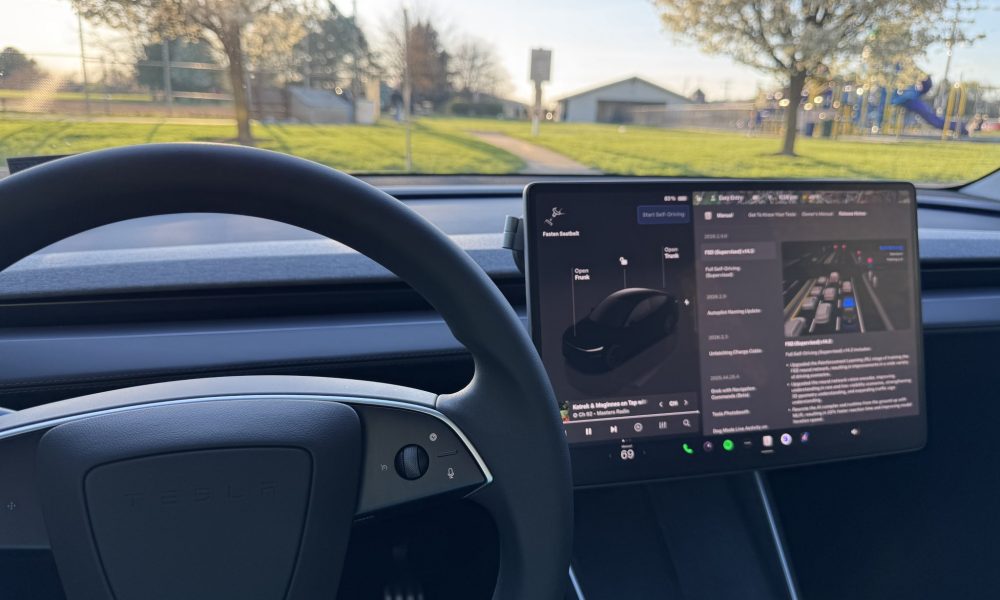
On July 8, 2026, Tesla was reported to be developing voice-intent support that would let drivers give contextual instructions to FSD, including which driveway, house, or local landmark should guide a trip endpoint. Teslarati and Benzinga tie the update to Tesla VP of AI Software Ashok Elluswamy's X confirmation, while Tesla's support page still describes Grok as beta and separates current navigation requests from vehicle-control commands. For autonomy teams, the important shift is not the assistant UI but the validation problem: free-form speech, remembered locations, and safety-critical planning create new edge cases around ambiguity, latency, privacy, and driver supervision.
Natural-language intent inside a driving stack is not just a convenience layer. It changes the interface between a human supervisor, a probabilistic language system, and the real-time planner that decides where a vehicle goes next. The practitioner question is whether Tesla can turn conversational requests into bounded, testable driving intents without letting ambiguous or adversarial language leak into unsafe behavior.
What happened
Teslarati reported that Tesla VP of AI Software Ashok Elluswamy confirmed on X that Tesla is working on FSD support for contextual spoken instructions, such as helping the car identify the correct driveway or house near a destination. Benzinga corroborated the same exchange and framed it as a neighborhood-navigation improvement. Tesla's own support page says Grok can currently help initiate navigation requests in supported vehicles, but it also says Grok is beta and does not include voice commands for vehicle controls such as media or climate.
Technical context
The load-bearing distinction is between navigation assistance and driving authority. Asking Grok to set a destination is a lower-risk interface problem than allowing a language model to affect the planning layer that handles turns, drop-offs, pullovers, and parking choices. Once the system can remember preferred destination behavior, Tesla also has to prove that location memory, speech recognition, and route planning remain bounded under noisy inputs, stale landmarks, and conflicting driver instructions.
For practitioners
Autonomy teams should read this as a validation and data-governance story. Voice intent can make supervised autonomy more useful in the last mile, where map pins often fail, but it expands the test matrix: accents, ambiguous landmarks, private driveways, temporary obstacles, and malicious prompts all become production scenarios. Product teams also need clear UX boundaries so drivers know which requests are advisory, which are remembered, and which can change the vehicle's immediate path.
What to watch
The next useful signal is whether Tesla documents the boundary between Grok, navigation, and FSD planning when the feature ships. Watch for hardware limits, Premium Connectivity requirements, explicit privacy language for stored destination preferences, and safety disclosures that distinguish convenience interventions from critical safety interventions.
Key Points
- 1Voice-to-planning integration turns ambiguous language into a safety validation problem, not just a better in-car assistant feature.
- 2Persistent parking preferences create value when maps fail, but they also raise retention and location-privacy questions.
- 3Tesla support still describes Grok as beta, so rollout claims need distinction between current navigation and future driving authority.
Scoring Rationale
This is a notable autonomy product change because it moves natural-language intent closer to a safety-critical planning workflow. The impact is below major platform-shift territory until Tesla ships documented boundaries, safety validation details, and broad availability.
Sources
Public references used for this report.
Practice interview problems based on real data
1,625 SQL & Python problems across 15 industry datasets — the exact type of data you work with.
Try 250 free problems